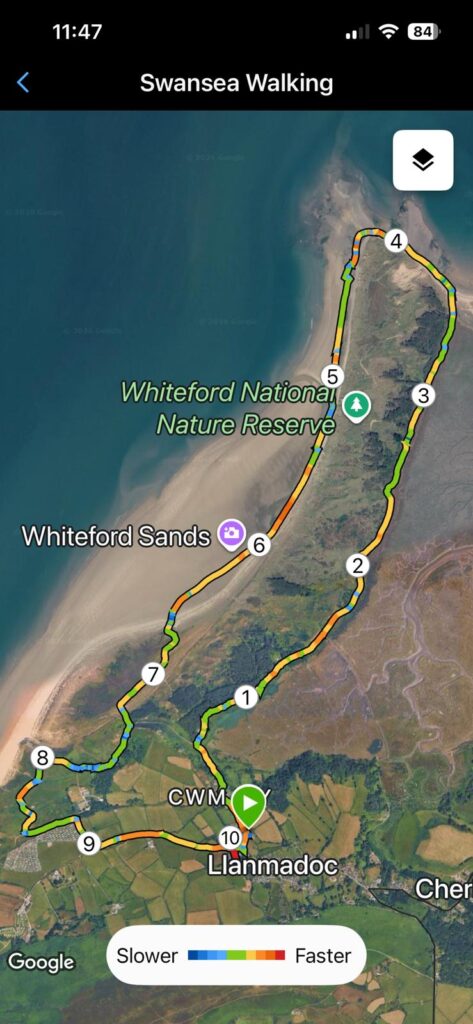
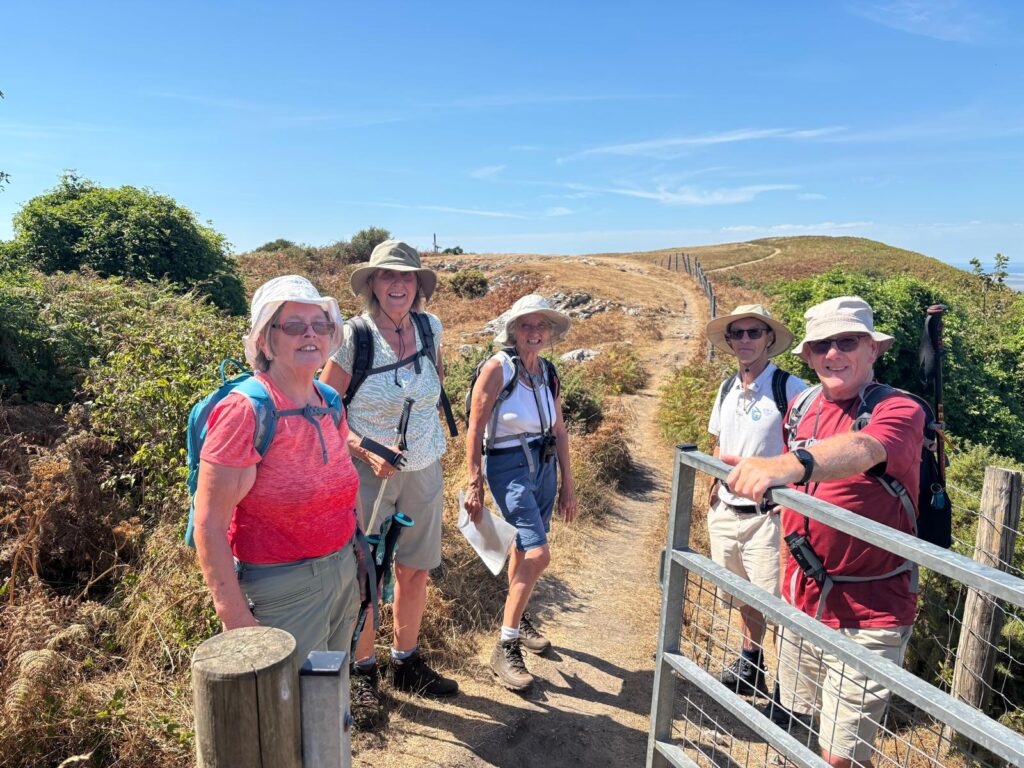
Six brave souls turned up on what was to be one of the hottest days of the year in some parts of the country, for the planned walk in Whiteford Burrows - a Nature Reserve on the Gower Peninsula. A deliberately gentle pace was set and most of the 6 mile walk was on the flat with the added benefit of a gentle breeze off the sea.
There were a number of points of interest along the way. As far as the flora was concerned the glorious spring flowers had long since gone leaving us with plenty of Marsh Mallow.
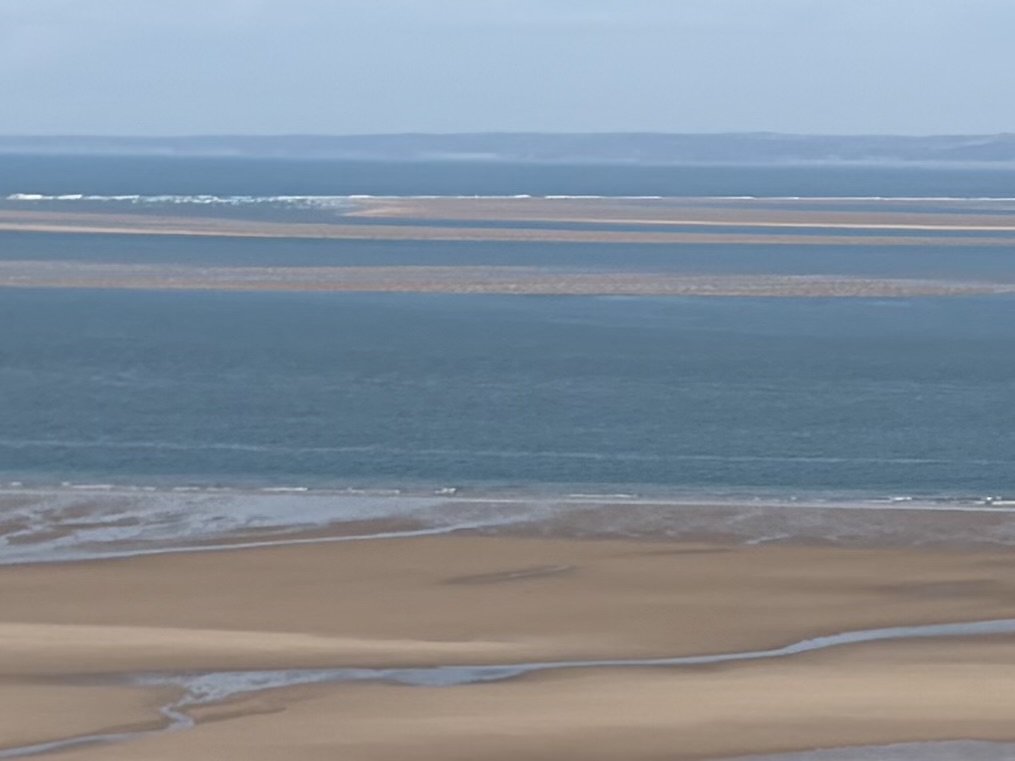
Previously, in this area, there had been an extensive freshwater marsh, but since the sea wall was breached by the sea in 2014, it is reverting to salt marsh. The skeletal remains of the resulting dead trees serve as an eerie reminder of the past. There were a few wading birds at the water’s edge but the walk had to be timed for low-tide so they were in the far distance. A common lizard was spotted however and plenty of butterflies - many common blues and at least one clouded yellow.
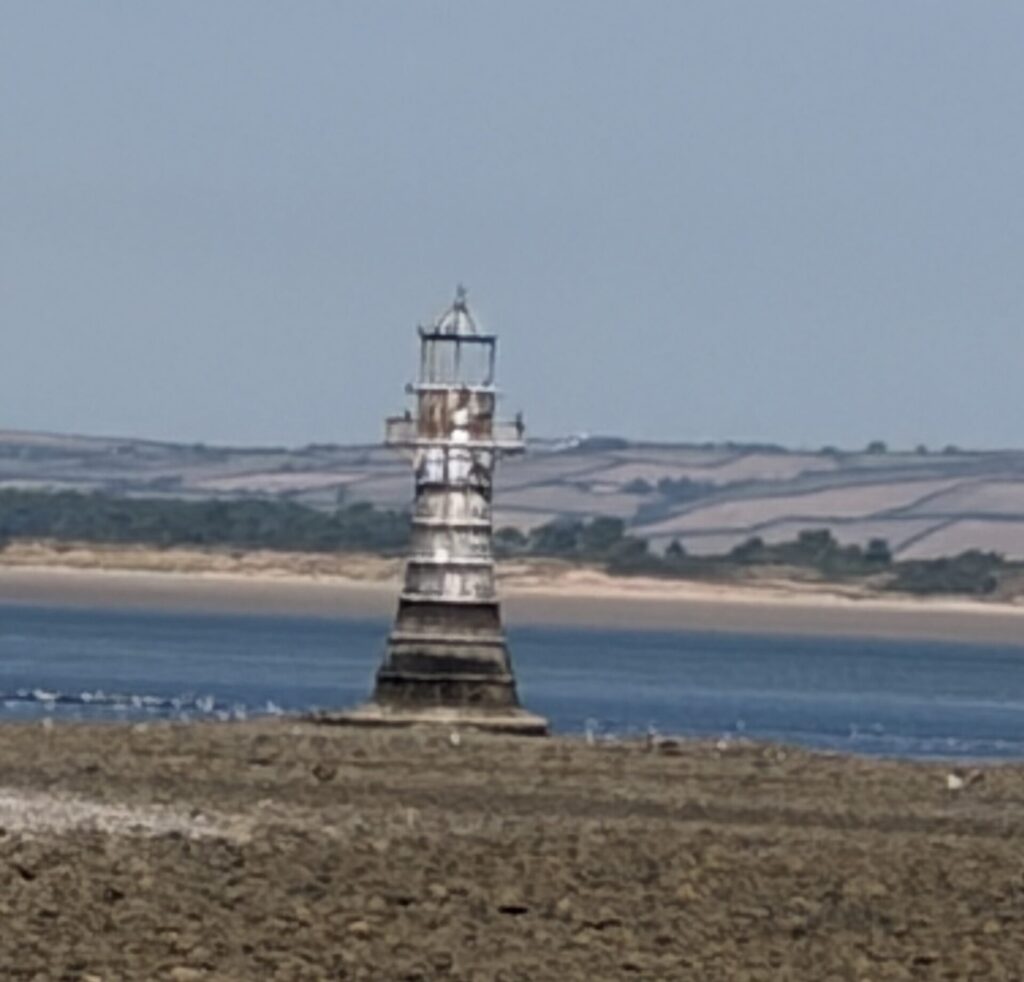
Beyond Whiteford Point stands the de-commissioned cast-iron lighthouse, built in 1865—a striking landmark. We resisted the temptation to walk the extra mile to inspect it and carried on along Whiteford Sands. Here, in places, there are areas of peat formation and we looked for evidence of fossilised wood but instead found a huge driftwood tree trunk to sit on to eat our picnic lunch.
The Sands were almost completely deserted apart from a couple who were sun-bathing stark naked, whom we passed discreetly, continuing to the end of the beach, before heading inland. This was the only difficult part of the walk as there is a steep, uphill trudge on sand to tackle before the rewards of the spectacular views from Hills Tor. The Tors are Carboniferous Limestone (350 million years old) and were once coastal cliffs. The sand dunes which form the spit of Whiteford Point, are founded on a glacial terminal moraine from the last glacial episode, about 20,000 years ago.
It was mainly gently downhill from there. After passing a caravan park, the last half a mile or so was on a country road, ending at Llanmadoc Church, which itself has a rich history and was briefly explored by some.
Having changed our boots and dumped our bags, we enjoyed a very welcome cup of tea (and cakes!) in the Cwm Ivy café and following that, some felt the need for further refreshment in the Britannia Inn at the other end of Llanmadoc village.
TJ