Eight pilgrims set off from Tonyrefail to complete the last two stages of the pilgrimage route from Llandaff cathedral to Penrhys, two years after we did the first stages.
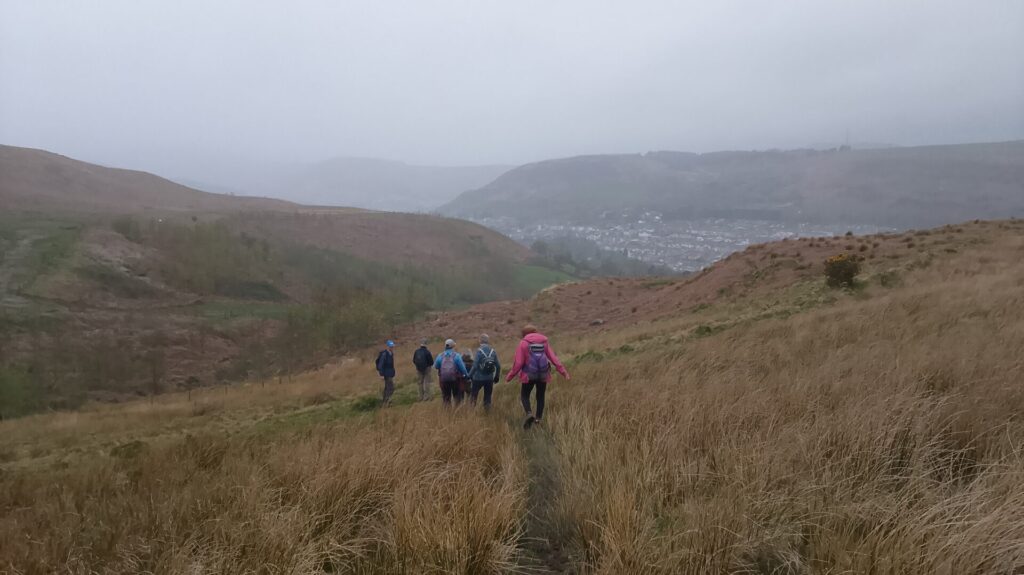
It was quite chilly after a few warm days but we soon warmed up as we climbed the hillside out of the town. The track led through Trebanog and out onto the common. Thick mist now came over and although it did not actually rain we started to get wet. The path was uphill until we saw a view of Dinas Rhondda, to be our lunch stop, in the distance. Downhill was past sheep and donkeys until we reached the road into Dinas. There were about 230 steps back out of the town followed by a fairly steep road until we reached Garth Park where we stopped for our picnic. This 10 acre park was donated to Rhondda UDC by Sir Rhys Rhys-Williams in 1913. He was a Welsh barrister and politician and his son was Brandon Rhys Williams who once owned Miskin Manor. Originally the park had many facilities including an open air swimming pool but all that is left are the football field and a playground.
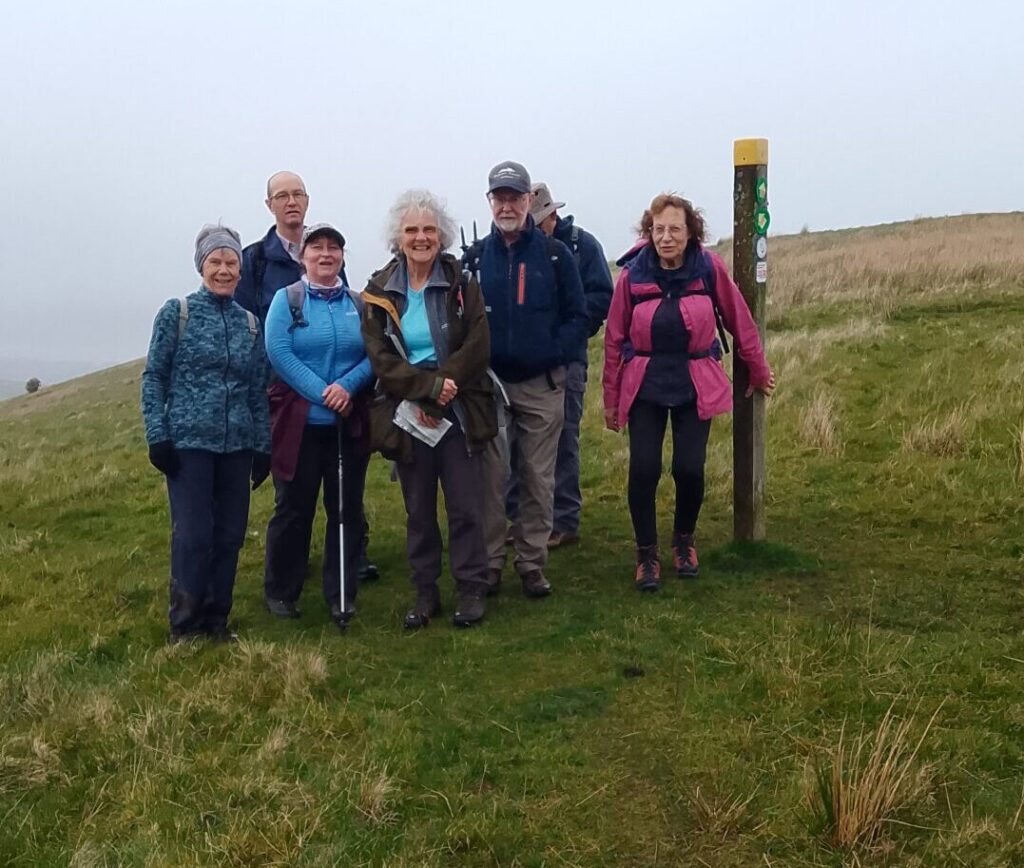
Now came the steepest part of the walk, up a grassy field until at the top we reached the golf course. The strong wind had blown the rain away, and also the golfers as the course was deserted. The plan was to stop at the club house for coffee but as the bus home was due soon we went on to the monument for a quick photo and were soon on the bus back to Tonyrefail. We had to save Mary’s well for a later visit but all agreed that the day had been a great success.
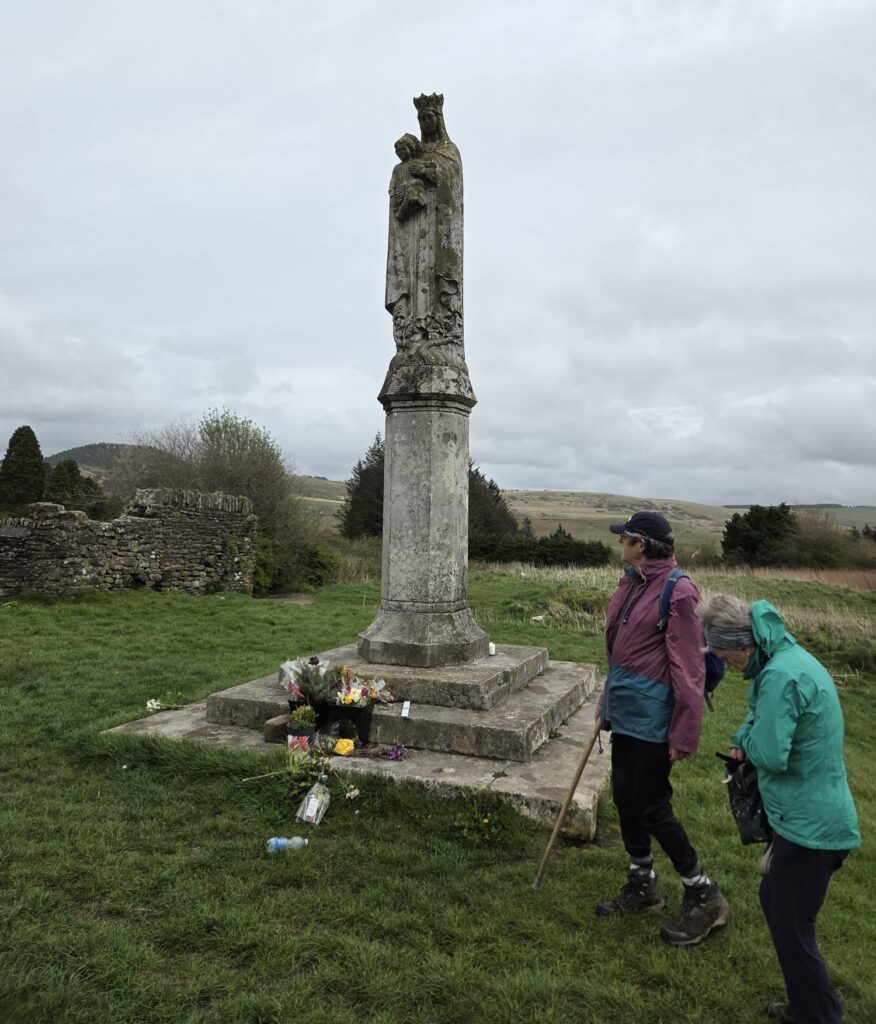
According to legend, now thought unreliable, the name Pen Rhys (ap Tewdwr) commemorates the sad end of this king of Deheubarth at a battle in the area. The site was a grange of Llantarnam Abbey, first documented in 1203. A chapel and hostelry, probably to accommodate pilgrims, were built on the site now occupied by the statue of Mary. There is still a small building further down the hillside in which is Ffynnon Mair, Mary’s well. It also contained a statue of Mary which was taken to London and burned in 1538 during the dissolution of the monasteries. The statue here now was set up in 1953.