BRITAIN’S FORGOTTEN TERRORISTS
Cowbridge U3A History group heard at their meeting in October 2019 that the dictionary definition of a terrorist was: ‘someone who uses unlawful violence and intimidation in the pursuit of political aims’. Taken in conjunction with the definitions enshrined in the Terrorism Act of 2000, many in the audience were surprised to hear that Emmeline Pankhurst's suffragette movement would be classed as a terrorist organisation today.
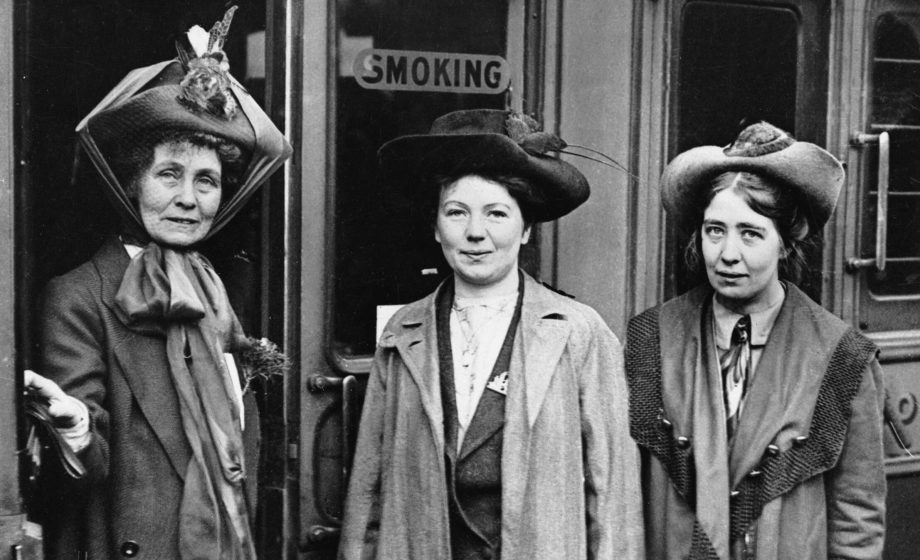
| Emmeline Pankhurst and two daughters |
They are ‘Britain’s Forgotten Terrorists’ and would be proscribed under the current law, which criminalises not only those attempting to commit or facilitate terrorist acts, but also those funding such activities. The suffragette movement of the early 20th century was financed by wealthy women, many of them titled, who would run the risk of lengthy prison sentences under the present legislation.
Today, many associate the suffragettes with acts of nuisance and vandalism, such as chaining themselves to railings, knocking policemen’s helmets off, smashing windows and setting pillar boxes alight in their quest for the enfranchisement of women.
The slogan of the suffragette movement was ‘deeds, not words’ and an analysis of their actions quickly shows that many of these deeds involved serious damage to property, far beyond the cost to businesses of replacing expensive plate glass windows.
,,
Incendiary devices were put directly into pillar boxes or posted in the mail, causing severe burns to postmen (many of whom also did not have a vote) in the course of their normal work.
A sustained campaign of bombing and arson attacks resulted in nearly 100 large houses and hotels, 30+ churches and some 17 sports’ grandstands being severely damaged, if not gutted, by suffragette activists. The claim that the houses were empty when targeted meant that the owners were away, but domestic staff were often still in residence when buildings were set ablaze.
,,,,
Railway stations, trains, canals and dams were also attacked by suffragettes.
As a result of their reign of destruction, the suffragettes were, unsurprisingly, loathed by the general public. Their membership massively declined and they were reduced to a small rump of much-hated, hard-core activists. By 1913, suffragette marches and rallies had to be given police protection as there was so much hostility towards them from the public (women as well as men).
The history of the suffragette movement has now been sanitised and only their rightful aim of wanting the vote for women (but only for ‘ladies’, not working class females) is remembered today, not their terrorist activities. The peaceful suffragist organisation, with a far greater membership, has essentially been forgotten.
In the 1890s, the majority of MPs had pledged support for the enfranchisement of women, so why didn’t any women get the vote until 1918, 15 years after the suffragette movement was formed? There are numerous reasons, but one is that the militant, violent actions of the suffragettes actually prevented it – no Government, of whatever persuasion, wanted to be seen to capitulate to a group trying to advance a political cause by threatening, illegal intimidation.
Steve Monaghan