COWBRIDGE TOWN HALL FIRE STATION
When I was consulting the “People’s Collection Wales” (a free website dedicated to bringing together Wales's rich heritage) for photographs of Cowbridge’s open air swimming pool, I found a boyhood reminiscence about the fire engines in the Cowbridge Town Hall fire station.
This was news to me and I was left wondering where the vehicles were kept; was there a building, now gone, at the rear of the Town Hall?
I was soon enlightened. A photograph on the same heritage website showed that the fire engine (see 1) was garaged in the part of the Town Hall that is now the Lesser Hall’s kitchen and ante-room.
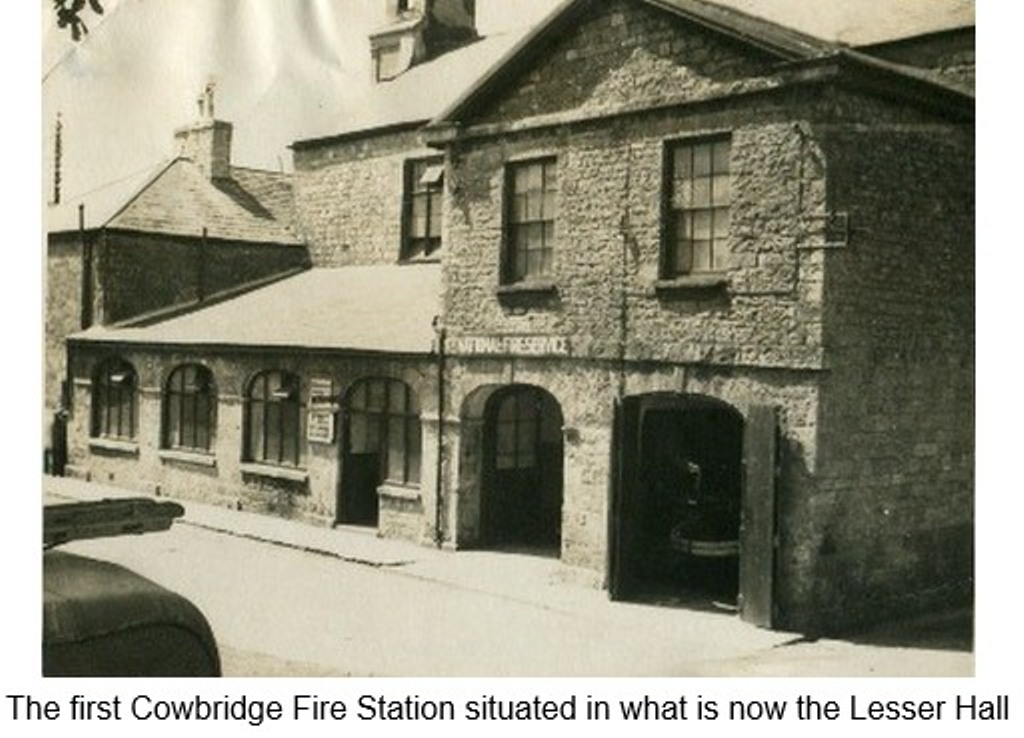


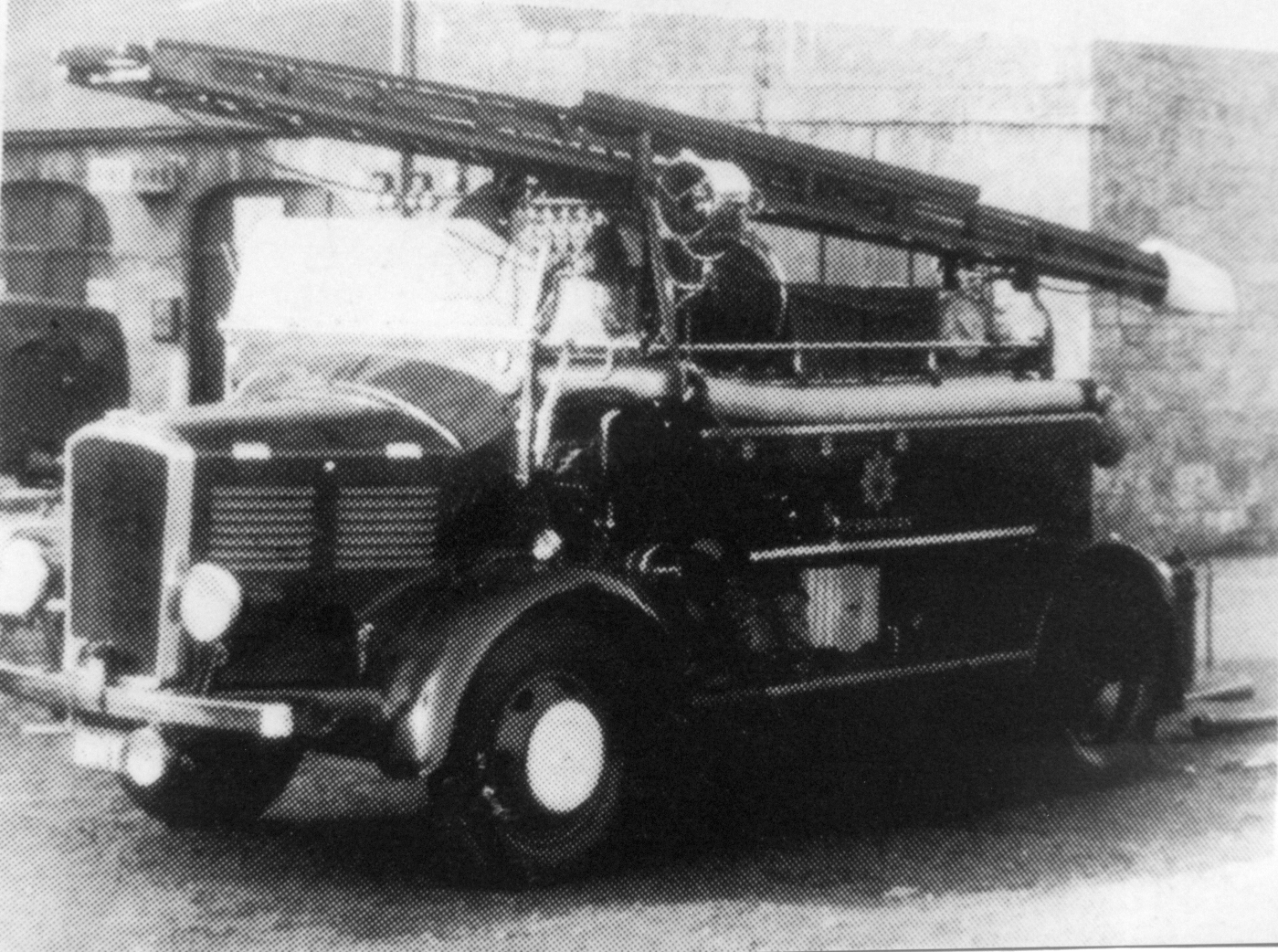
The fire station moved to its current location in 1960, when a new building was constructed on the site of the former railway goods yard off Old Station Approach in Cowbridge. I suspect one reason for the move was that the existing engine (which seemed to be a Dennis Ace, manufactured in the mid 1930s, but I stand to be corrected) had been replaced and the more modern appliance (probably a Dennis F8, with a Rolls-Royce diesel engine) was wider, thus making the Town Hall openings a very “snug fit”. There is a report that the new vehicle had to be parked at the rear of the “Horse and Groom” public house.
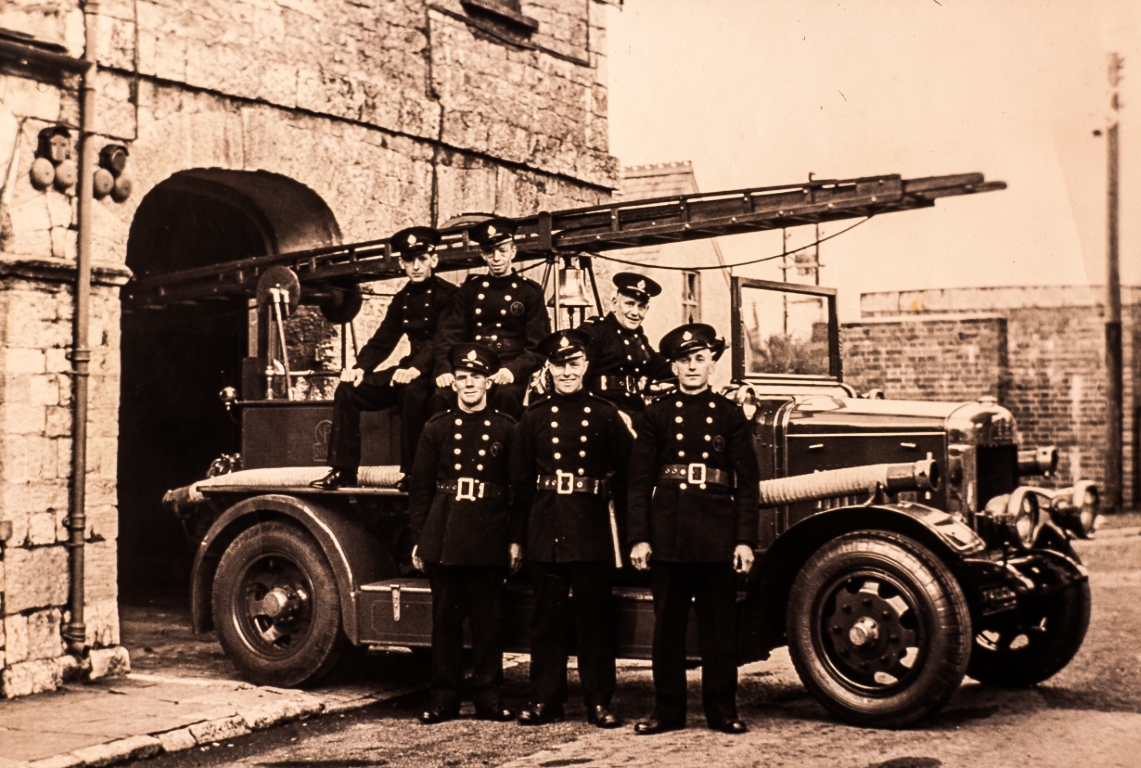
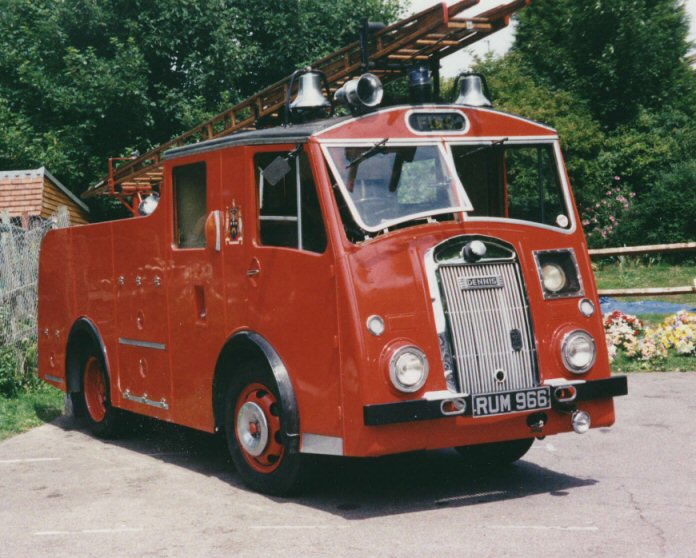


It appears that the 1936 Dennis Ace pump used at Cowbridge was sold to a Hollywood film company in the mid 1950s and subsequently appeared in the 1967 film “Tobruk” and later in the 1970s TV series “Emergency”, about the Los Angeles County Fire Department. This vehicle still exists, it seems, but in a very poor condition.
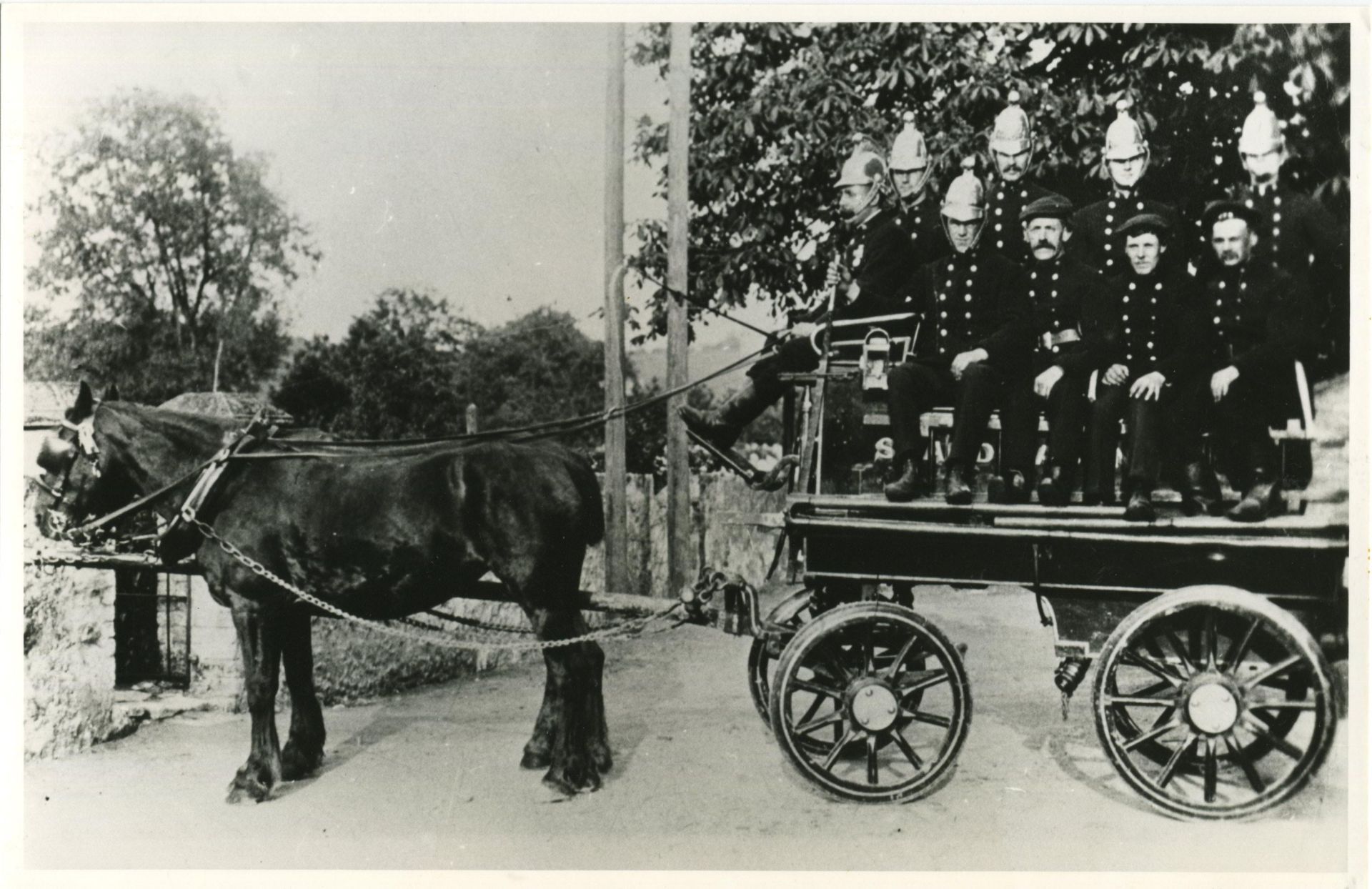
Cowbridge Fire Brigade itself was formed in September 1901 after a manual fire engine had been purchased for the town, with David Tilley (see 2), who became its first leader, being invited to organise recruitment and training. The force was soon in action to extinguish fires at the three storey hotel near the station (the building is now called the “New Druids”), a cottage behind the Town Hall and a thatched storehouse in The Limes. Farm fires were not uncommon, for example, a hay rick blaze in 1904 near St Mary Church was started by sparks from a passing locomotive on the railway line.
The equipment was primitive and the amount of hose limited. In Cowbridge, only about a third of the town could be served by water pumped from the river. Elsewhere, buckets, wells or water carts had to be used. It’s hard for many of us to imagine water not being available on tap, but a mains supply didn’t come to Cowbridge until 1926/7 – only 95 years ago.

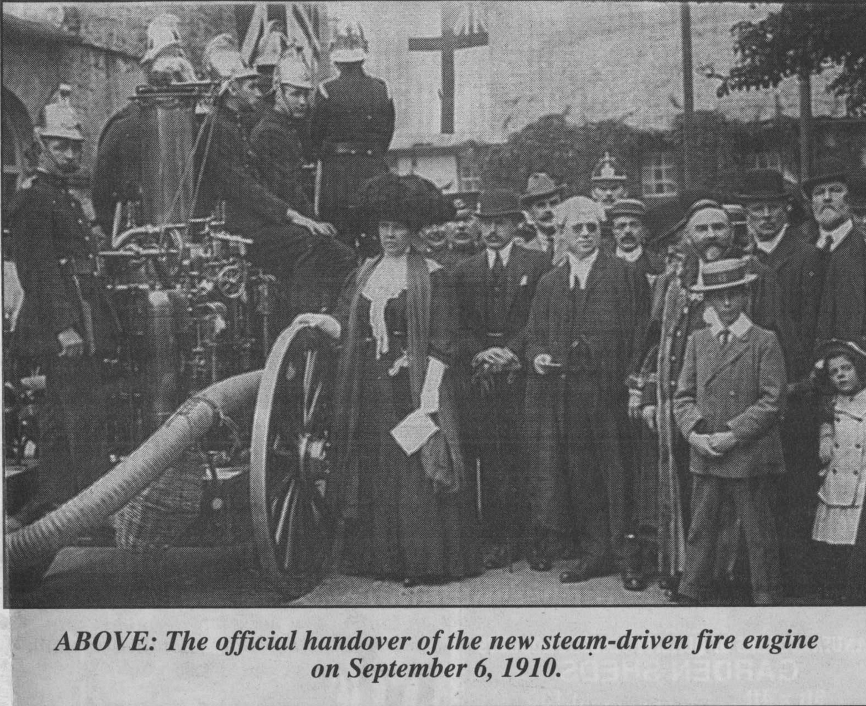
Captain Tilley began fundraising for a new, steam-powered, horse-drawn fire engine when he was Cowbridge’s Mayor (in 1909 and 1910) and the new appliance, capable of pumping 300 gallons per minute, was purchased for £378 (around £45,000 today), in 1910. The only drawback was that the Town Hall fire station, in what is now the Lesser Hall kitchen, had to be enlarged at a cost of £10.
Again, farm fires featured prominently in “shouts” involving the new fire engine. Steam vehicles were obviously a fire hazard, as a thatched roof in Cowbridge was set alight in 1914 by a spark from a traction engine.
During WWI, one member of the fire service was killed in action and another died in an accident in an iron ore mine.
David Tilley, “father of the fire service”, was the man in charge of Cowbridge Fire Brigade for 22 years and he developed a highly-efficient unit, with a strong sense of comradeship and community service, combined with cheerfulness. These attributes are still characteristics of today’s National Fire Service.
In the 1920s, the horse-drawn fire engine was replaced by a motorised fire appliance with bone-shaking, solid rubber tyres.
During World War II, Cowbridge Fire Brigade moved to 56 High Street (then the West End Garage, now the Cancer Research Charity shop), which it shared with a branch of the Auxiliary Fire Service (AFS). One of the biggest fires they had to deal with during the duration of the war had nothing to do with enemy activity; it was a devastating blaze at the cinema in Eastgate in April 1942. The cause was believed to be a cigarette end dropped into a box of film. Rumour has it that Cardiff cinemas had sent films to the Cowbridge establishment for safe-keeping, as there was less risk of loss from enemy bombing!
The AFS was disbanded at the end of hostilities and the Town Hall fire station was re-occupied. It would seem from photographs that by then, or soon after, the service had at least one Dennis Ace appliance.
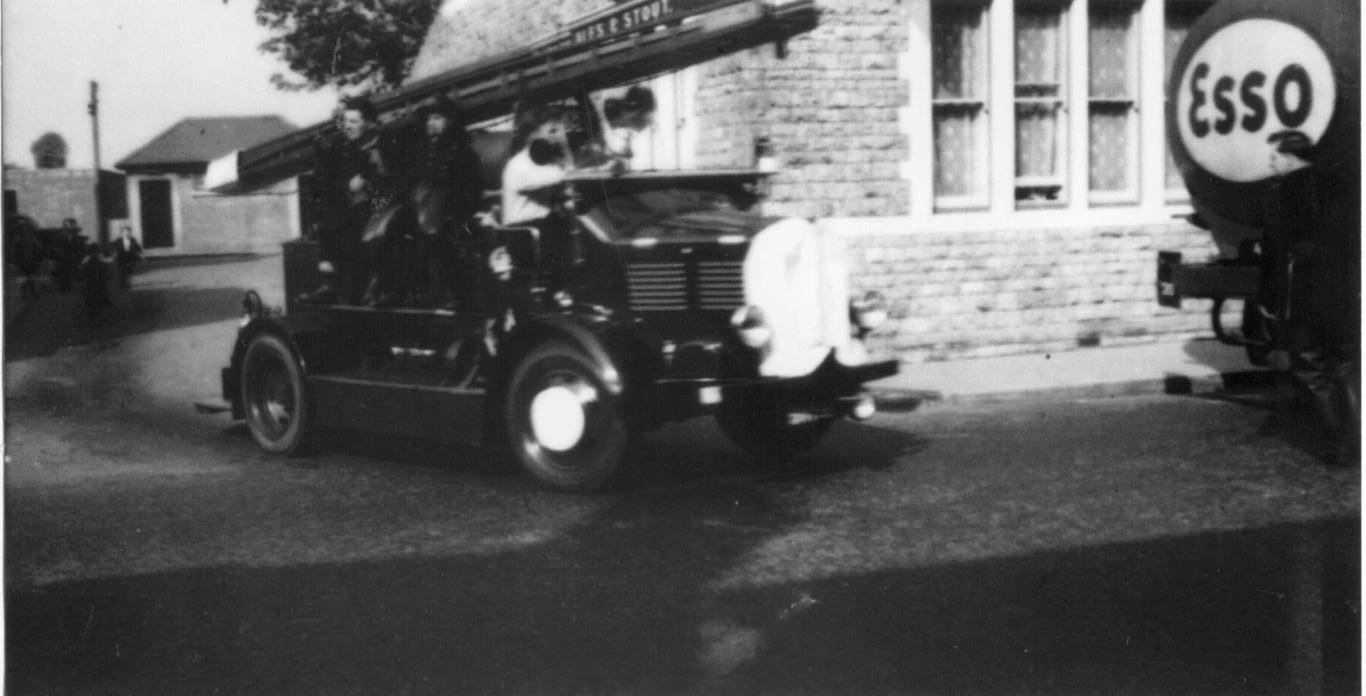
Another major fire occurred in 1946 at the Bridge Garage in Cowbridge. A petrol tanker delivering fuel had strayed too close to a coal-burning stove, resulting in a blaze that engulfed several new cars, as well as badly-damaging the premises (see 3). Bridge Garage was later demolished when Riverside Mews was built.
The Cowbridge appliance was the first to arrive at the scene of the Llandow air crash in 1950.
Records show that Cowbridge Fire Brigade was called out 503 times in 1999, to fires, road accidents and other emergencies. By 2008-2009, however, the town fire station was handling only 120 incidents, including one residential fire, five other property fires and attending 25 road traffic collisions (four of which involved fatalities). South Wales Fire Service stated that, as Cowbridge was dealing with fewer than 300 incidents a year, it was not seen as a viable station. The answer the fire authority decided on was to change the fire station staffing from day-crewed to retained (i.e. on call) firefighters. It was planned to switch the station over completely to “retained status” by January 2012.
Apart from a few hours a week for training sessions and to carry out other pre-arranged duties, retained firefighters only attend the fire station when they have received an emergency call out. For much of the time, a retained fire station is unmanned.
Cowbridge is currently listed as an “on call” fire station i.e. it is manned only by retained staff.
In 2018, Cowbridge had 75 call-outs. For comparison, two nearby “on call” stations at Llantwit Major and Pontyclun had 110 and 253 call-outs respectively.
In early 2021, South Wales Fire and Rescue Service had 783 firefighters, 557 retained firefighters, 353 support staff and 44 control room staff.
Steve Monaghan
Several of the photographs come from "The People's Collection Wales" and were uploaded onto that site from the "Cowbridge History Society Archive".
Much of the information was obtained from material gathered and recorded by Jeff and Betty Alden.
1 I have been unable to ascertain definitively whether there were one or two appliances at Cowbridge Town Hall fire station, but I suspect there was just the single vehicle.
2 David Tilley was born in 1855 and educated in Cowbridge. He became a wheelwright and developed farming equipment (some of which is now held at St Fagan’s National Museum of History).
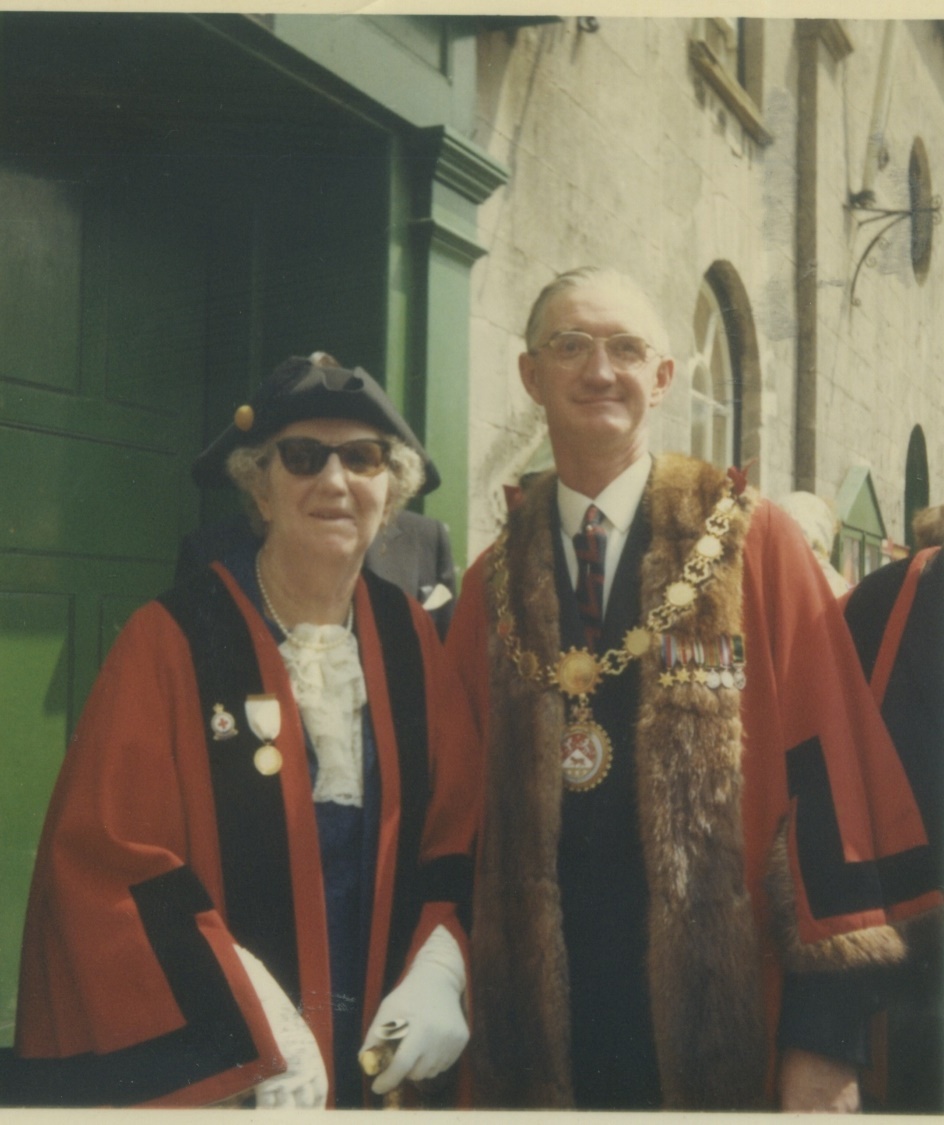
Mayor of Cowbridge David Tilley in 1910 As a prominent businessman in Cowbridge, he owned several properties in the local area. He also served on the Borough Council for 30 years, including holding the office of Mayor three times. He was involved in the creation of the town open air swimming pool, the town fire brigade, instrumental in improving the course of the river through the town (the plaque on the old bridge, opposite “Eastgate Barbers”, bears his name), and one of the founders of the Young Men's Institute (the building now houses “Sara Caroline; Floral Design” and “Strawberry Fields”). He was also involved in the establishment of the Boy Scout movement in the town. Mayor David Tilley & his mother in 1968
His second wife, Gwenllian, served twice as Mayor of Cowbridge and his son, also called David, was Mayor once.

3 The Wolseley 12, belonging to the father of Cowbridge U3A member Alun Jenkins, was one of the vehicles burnt out in the 1946 Bridge Garage fire. It had been left there for service whilst he went on honeymoon to Torquay on the train (he was unable to buy sufficient petrol for the trip).
