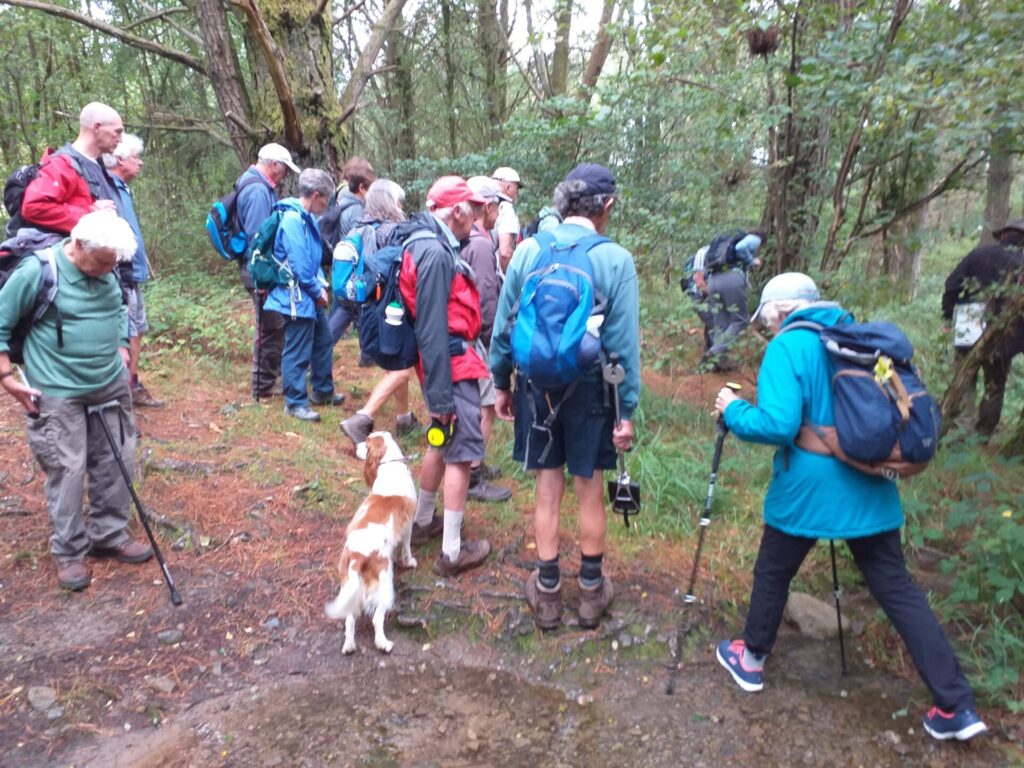
The group has had a successful series of events this year, all of which are outdoors, with very good attendance numbers. A large contingent of the membership come from the Swansea area, but the members are drawn from all over South Wales.
Prospective new members should be aware that although great care is taken with safety, in order to study the rocks it is often necessary to walk on rough paths and/ or rocks and pebbly beaches and a degree of clambering may be involved. It is not for anyone with cardiac, general health or mobility issues.
The first of our meetings in 2024 was to have been in April, but the very wet weather caused it to be postponed, so there was no meeting until May when the group went to Merthyr Mawr (near Bridgend) walking between Candleston and Newton Burrows, exploring a re-exposed Triassic landscape which has been modified by geological events during the Tertiary and Quaternary periods. The oldest rocks are the Carboniferous age Pembrokeshire Limestone group, overlain unconformably by Upper Triassic and Lower Liassic sediments. The youngest sediments include Pleistocene sands and gravels along with Holocene blown sands. This very well attended event was led by Stephen Howe, who also supplied a very comprehensive hand-out.
In June, there was a 2 -part excursion to Gower, led by Peter Kokelaar. Part 1 was at Cefn Bryn to consider the last glacial maximum of the Welsh Ice Age of 23,000 years ago, taking in Neolithic and Bronze Age monuments. Part 2 was in Caswell Bay to review the geological structures there, paying special attention to micro-rill evidence of long- lost sand dunes.
July saw our trip to Barry with Chris Lee as leader looking at the geological, geomorphological and historical features between Jackson’s Bay and Old Harbour. Chris supplied a detailed hand-out which he explained in simple terms for those of us less conversant with the technical terms.
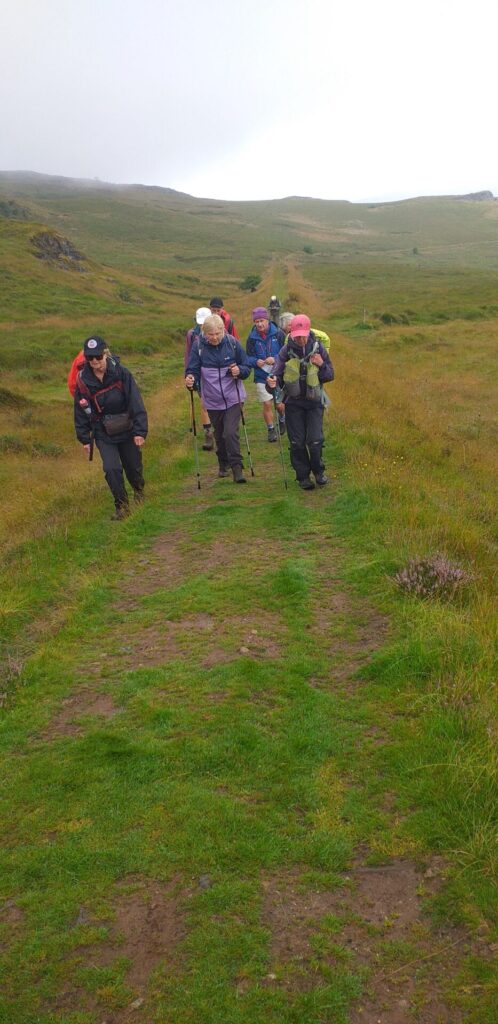
The postponed trip to Penwyllt in the Swansea Valley was held in August with Geraint Owen leading. This involved a walk of approximately 5 miles looking at not only the geology, but the related industrial archeology and geomorphology. We studied quarries in the Carboniferous Limestone and Twrch Sandstone, lime kilns, limestone pavements and sink holes. The walking was easy, on the route of a former tramway, which was a bonus as the rain that day seemed to be confined to where we were. When we emerged mid-afternoon and made our various ways home, we found that everywhere else had been dry all day.
We travelled to Pembrokeshire in September, somewhat further afield for most of us, and met Sid Howells for a day at Manorbier and Swanlake Bay. We learned about the different features of the Old Red Sandstone , geological history from the late Silurian to early Carboniferous , the Variscan Orogeny, the Ice Age and coastal landforms, archaeology and general history which included an explanation for the name of Swanlake Bay, which has nothing to do with swans or lakes and more to do with a Viking called King Sweyn and his forked beard. (The same one that gave his name to Swansea).
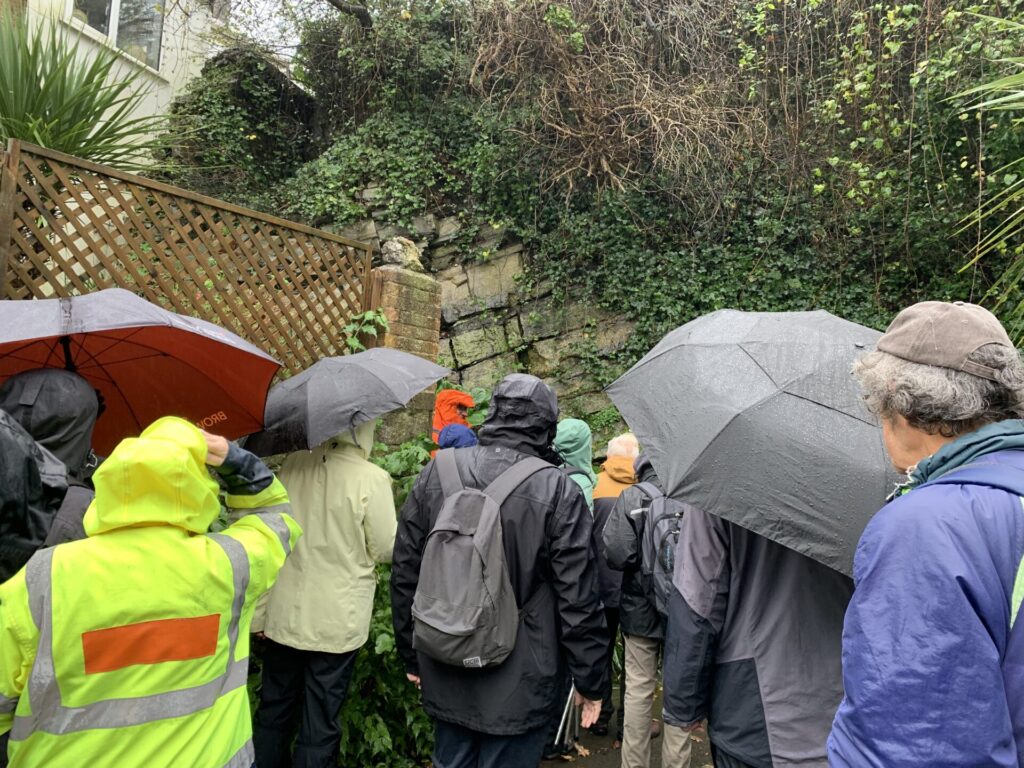
Our final event for the year at the end of October was in Mumbles to look at various quarry exposures and building stones in the area. This trip was led by Ian Prothero. The weather was somewhat damp, which although forecast, was a bit disappointing as the days before had been gloriously sunny, but there was a good turnout and as well as learning about the geology from Ian, we also had the benefit of invaluable historical information from a guest who is a volunteer guide in Oystermouth Castle which we visited as part of the excursion.
Geology can be a very complicated subject, but our leaders almost always are retired teachers and lecturers and have the ability to express difficult concepts in simple terms for the many, as well as challenging the few more knowledgeable members of the group including the occasional mature student.
Teresa Jenkins