COWBRIDGE’S OPEN AIR SWIMMING POOL
Many will be familiar with the public footpath that starts at the far corner of the main car park behind Cowbridge Town Hall. It runs alongside the River Thaw, then swings right to cross a pedestrian bridge, before, with allotments on its left, heading towards the Comprehensive School.
Perhaps what is less well known is that there is another footpath which carries straight on at the bridge into a field. There is no signage, but the Ordnance Survey map clearly shows the route as a public footpath. What has always intrigued me is that the path ends at a small farm bridge that crosses the river. Why?
It wasn’t until I read “A Journey down the Thaw Valley”(see 1) recently (a Christmas present) that the answer was made clear. The farm bridge marked the upstream end of Cowbridge’s open air swimming pool, sited on the Thaw.
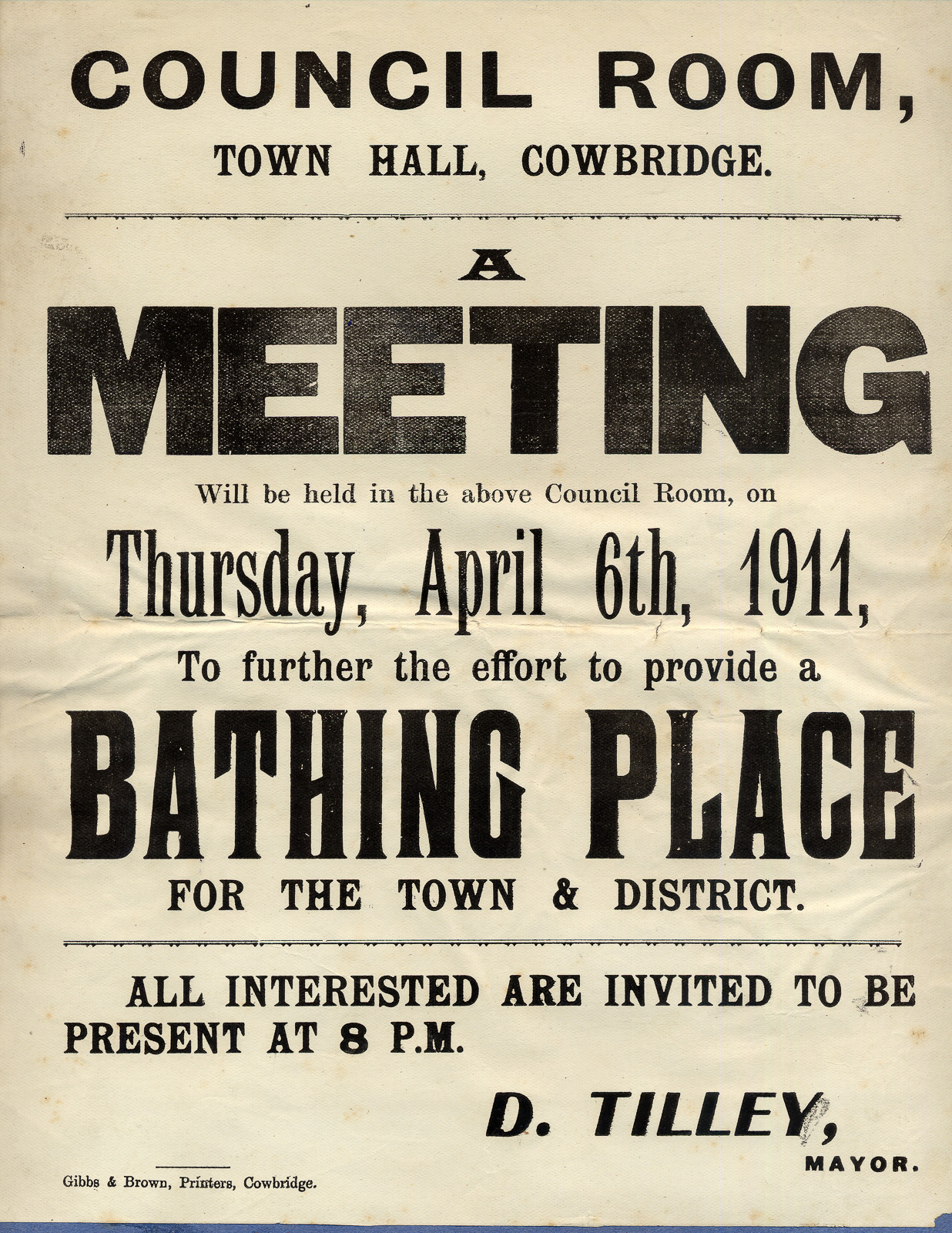
It was in April 1911 that the Mayor of Cowbridge Borough Council advertised a meeting to further the efforts to provide a bathing place for the town. The project obviously attracted popular and financial support, as the official opening of the swimming pool was later that year.

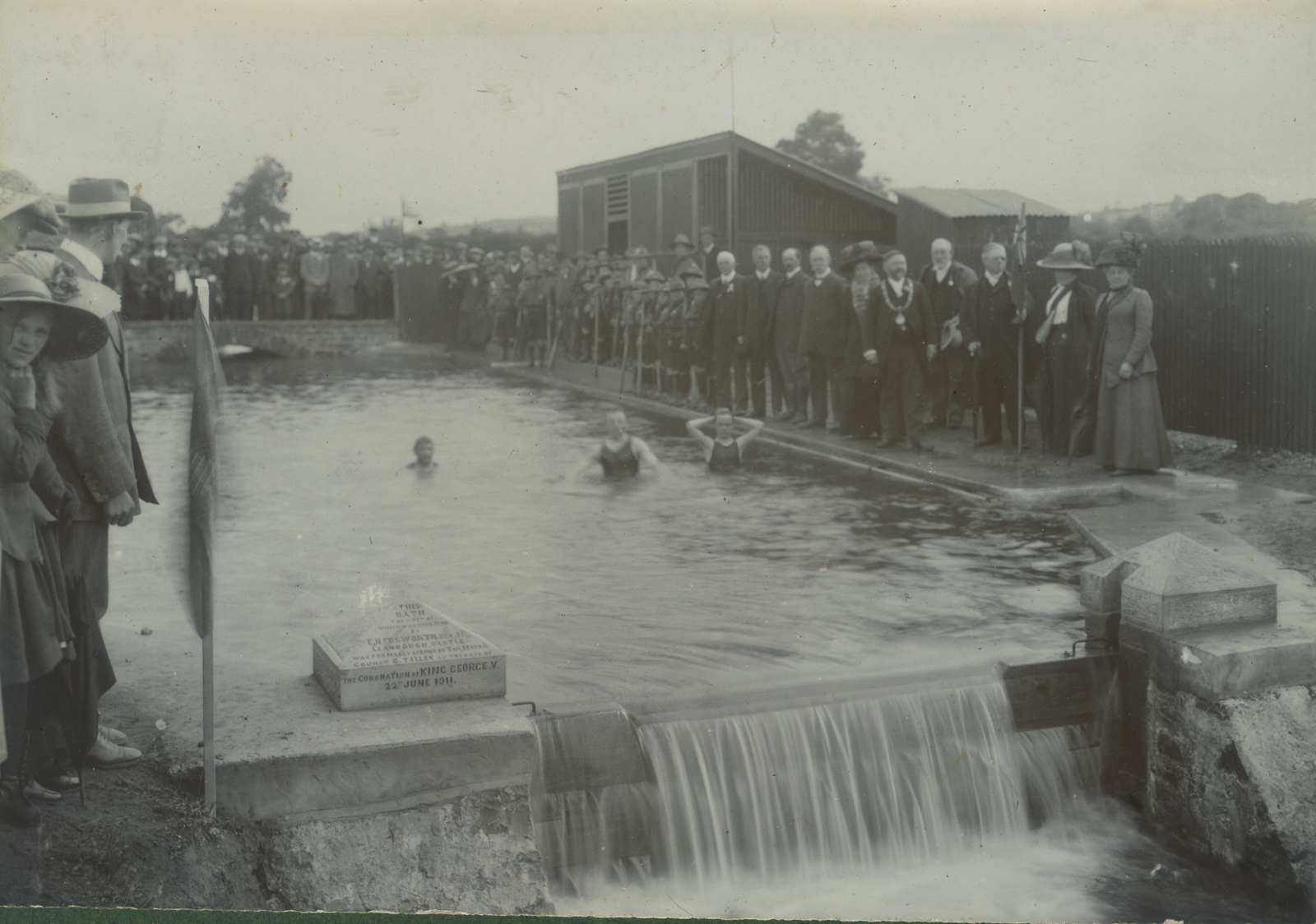
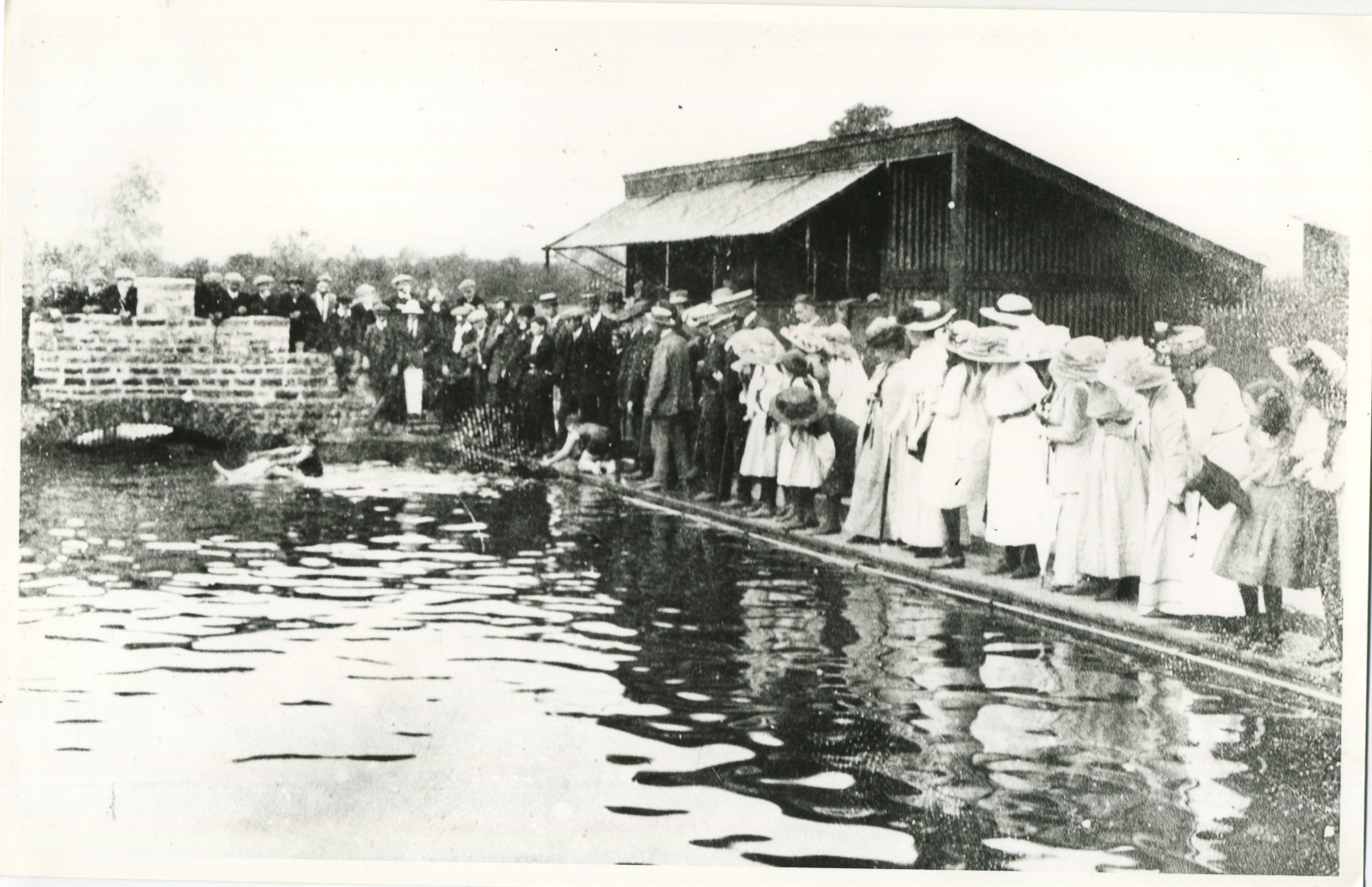
A site had been chosen on the Thaw just upstream of Cowbridge. The bed of the river was excavated out and a section lined with masonry, capped with stone slabs. A downstream dam of wooden planks, slotted into stone recesses, created the swimming area, which had an upstream deep end of 5-6 feet.
The changing and storage areas were fairly basic, being constructed of galvanised, corrugated sheeting on a timber frame. A bridge was built at the upstream end of the pool; this can clearly be seen in some of the photographs of the swimming area (the bridge walls were added sometime between 1913 and 1926).
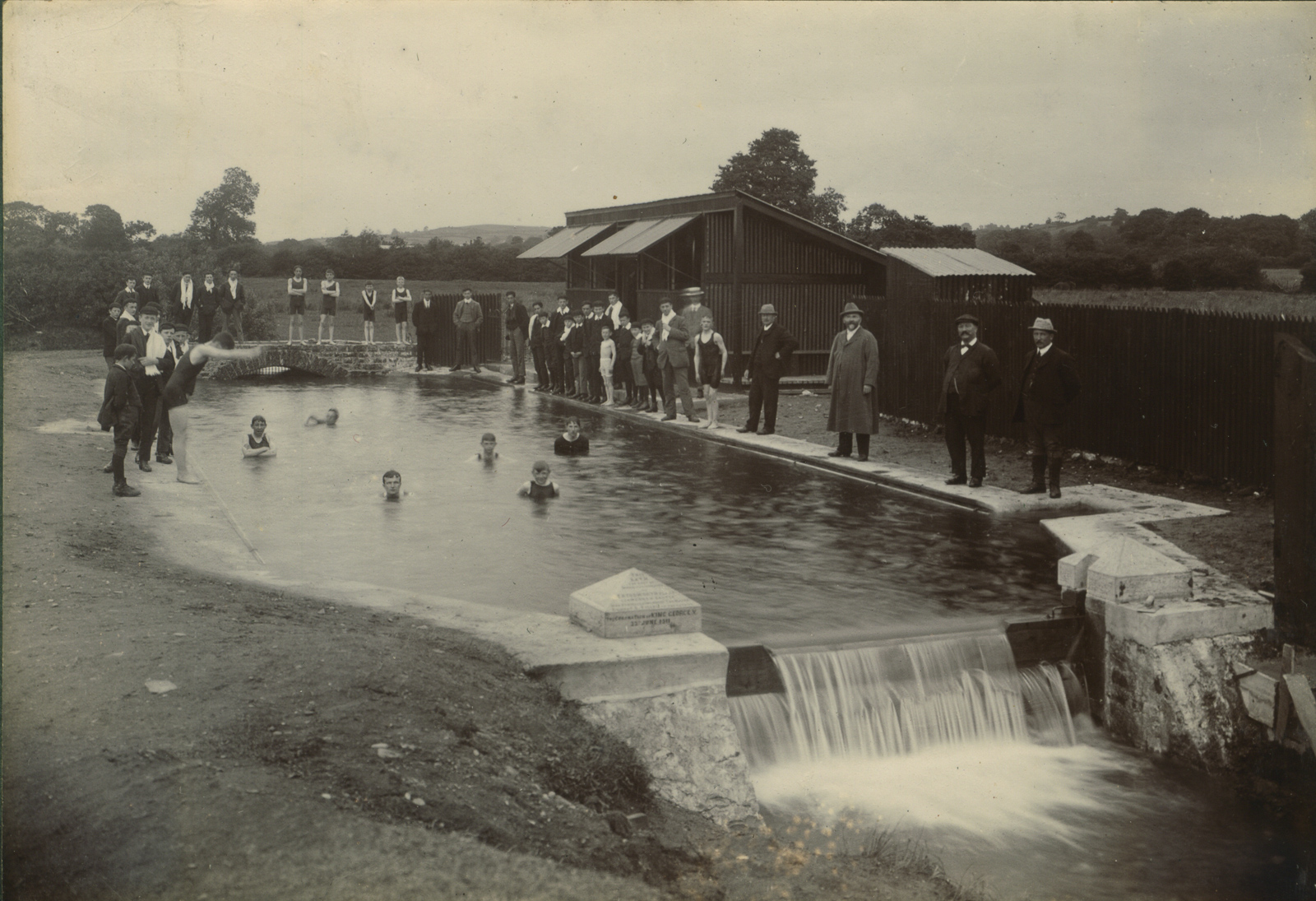
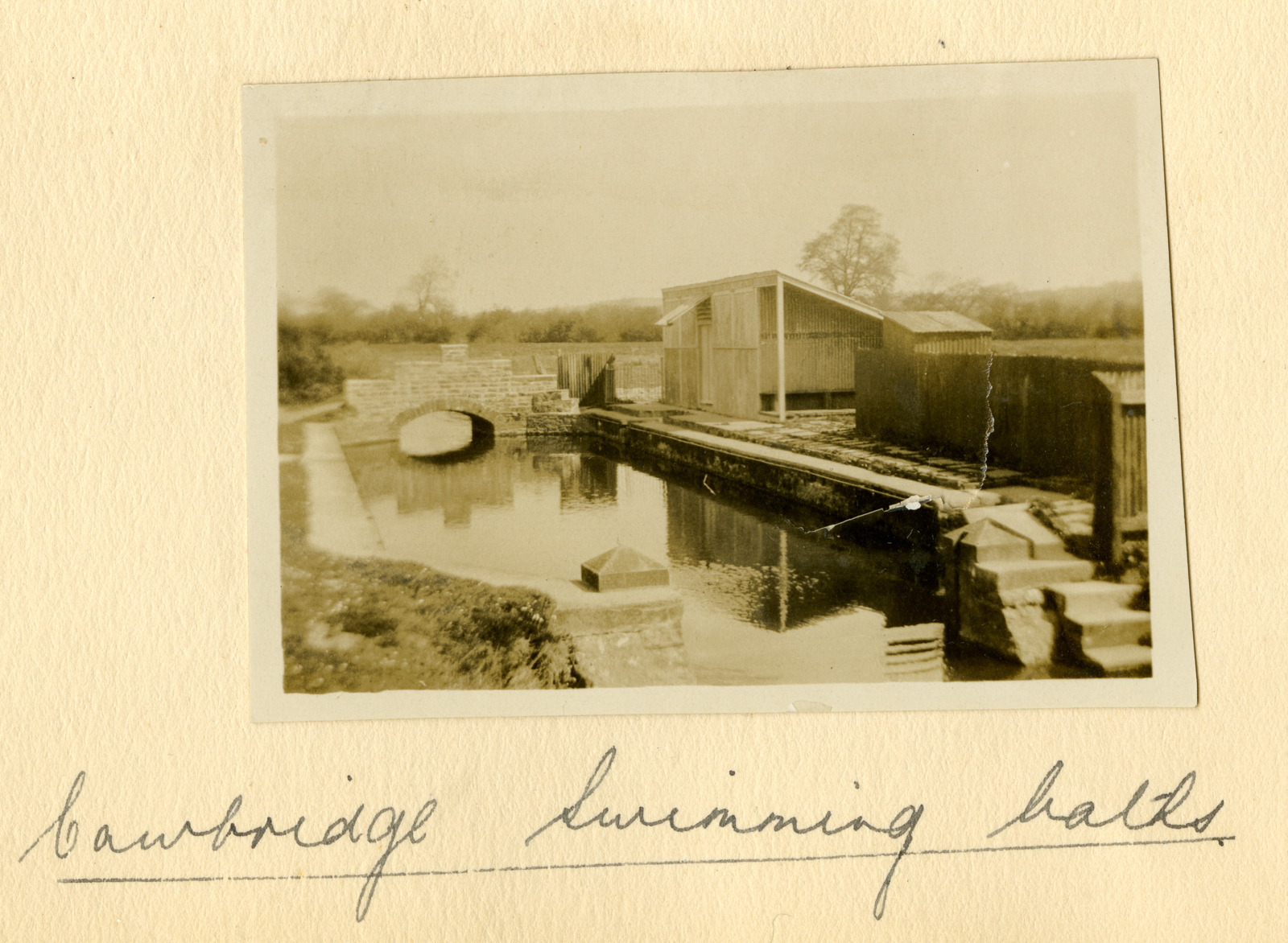
It seems that the wooden planks at the dam end were removed in the winter and the river allowed to flow normally for a period of time. In the spring, the planks were refitted into the stone recesses to recreate the pool. Efforts were made to remove mud deposits before swimming recommenced, but there must have always been some squelchy mud underfoot.
The pool was mainly for male bathers, with females only allowed on very limited occasions. The basic changing facilities certainly did not allow for any mixed bathing.
Swimmers had to pay an annual fee to use the pool; in 1936 this was 1/- (5p) for children, 2/6 (see 2) (12.5p) for adults and 5/- (25p) for families.
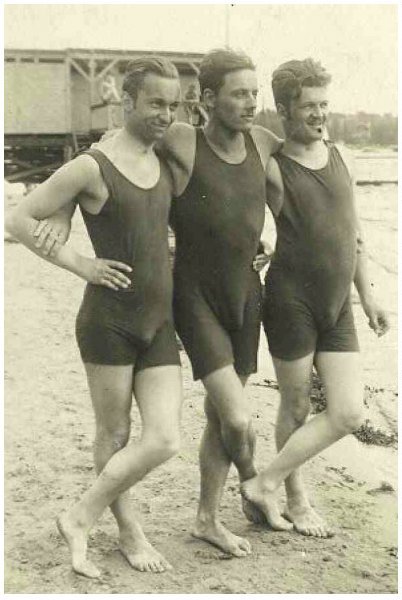
A 1934 regulation stated that all persons over 15 years of age had to wear an “Oxford Costume”. One assumes that this meant the one-piece swimsuit of the era that was a combination of singlet and trunks.

There is even a mention of the footpath in the regulations: “All persons approaching or leaving the baths must do so by the footpath; any person trespassing off the path on to the adjoining land will be liable to be prosecuted”.
History Group member Alun Jenkins remembers his father commenting on how cold the water was (see 3) and that he never wanted to go in, even in summer. Presumably it was a compulsory outdoor activity for local school children, dreaded by many!
The swimming pool survived two World Wars, but closed in 1951.
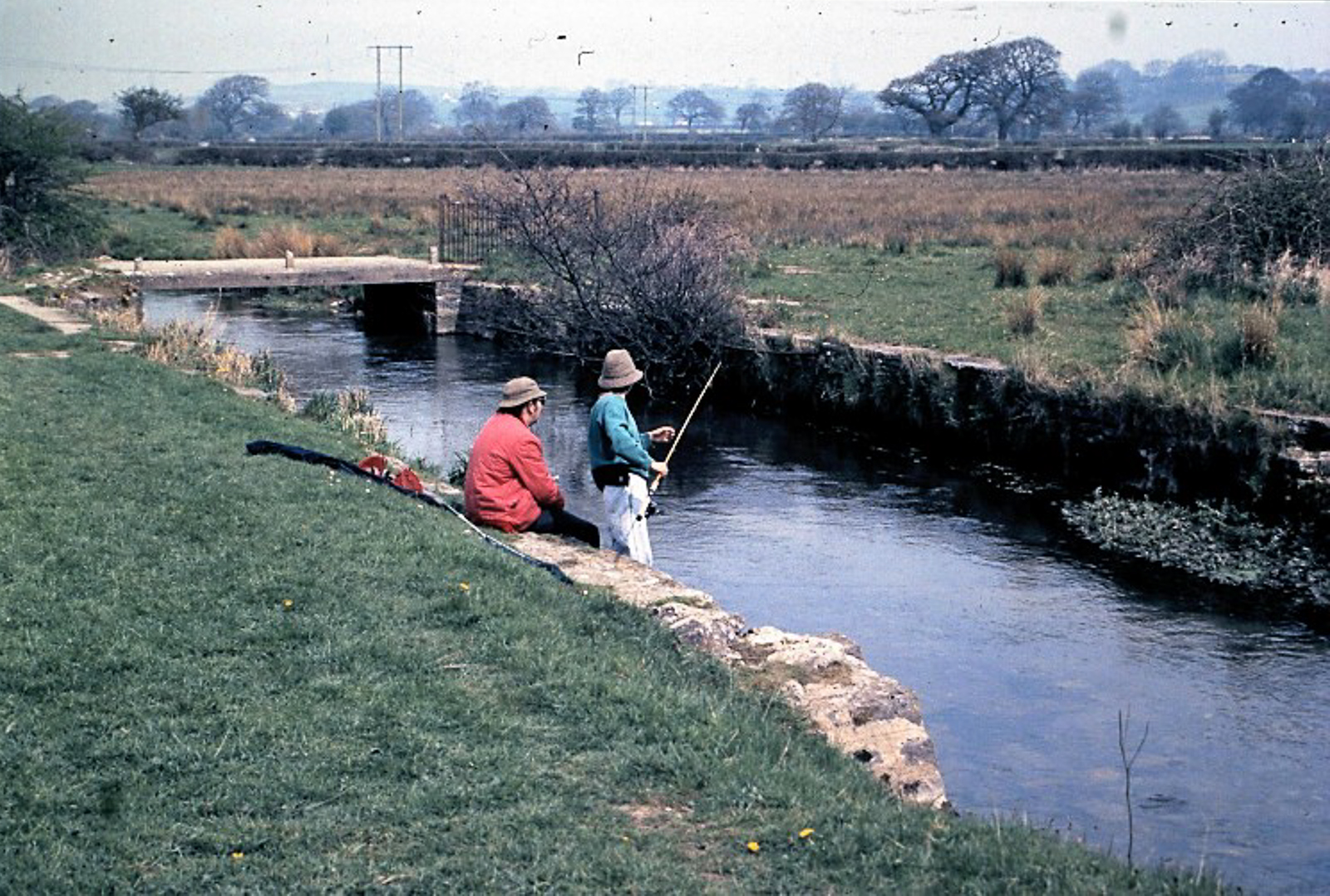
Fifty years later, the site was still recognisable, although the bridge had lost its walls (probably to allow its easier use by cattle and farm vehicles).
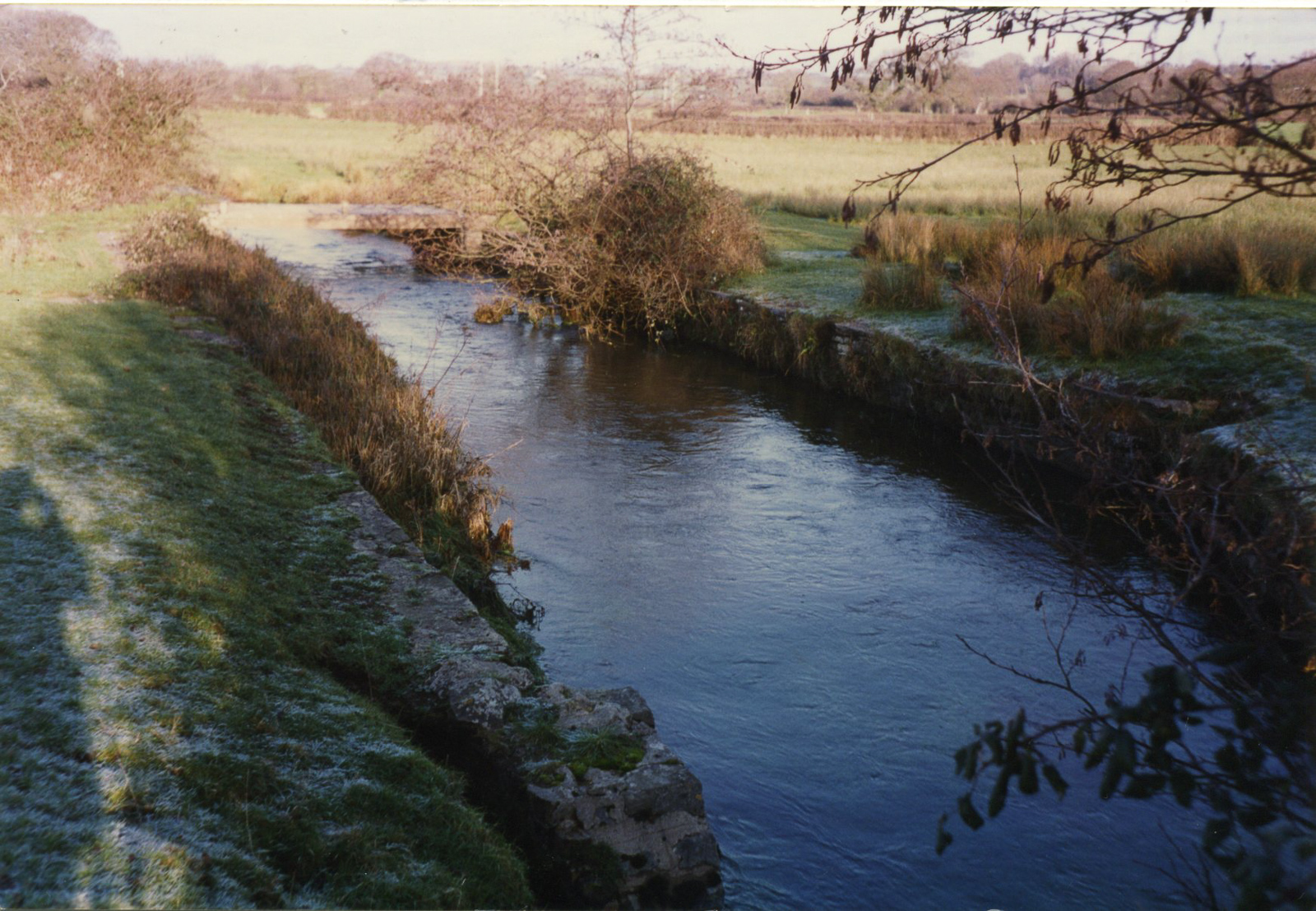
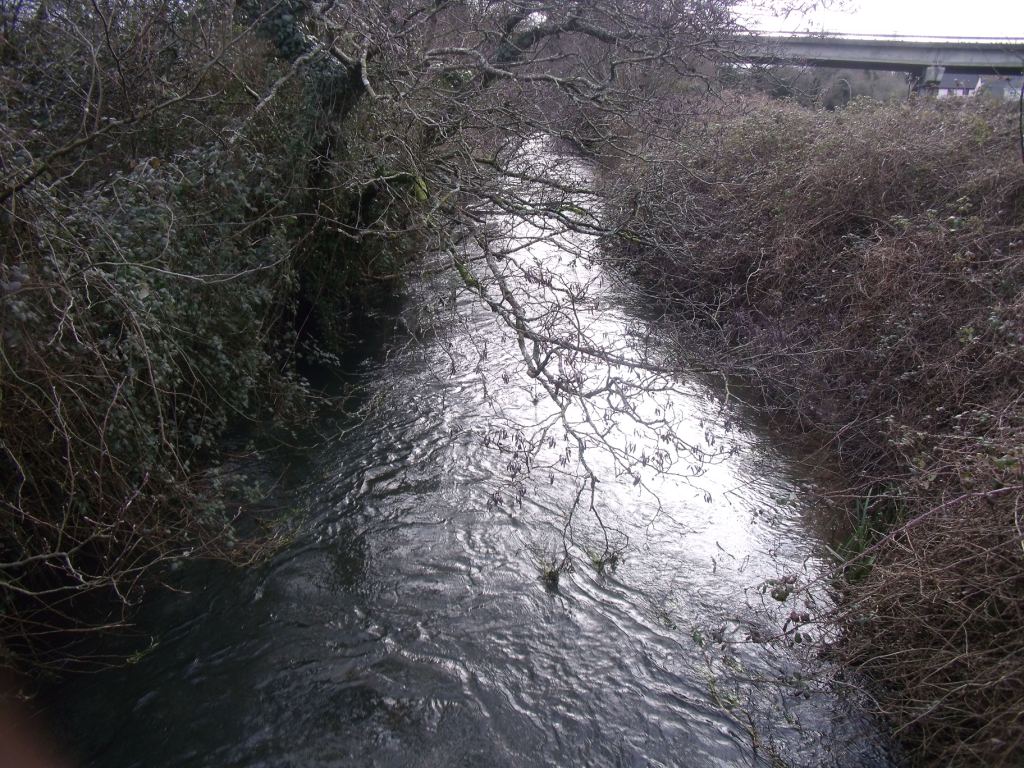

The situation today, seventy years on, is very different; thick vegetation on both banks prevents any access to the river and hides all the stonework that lined the swimming pool. It is only the bridge that provides the clue to identifying the location of the swimming pool – and the footpath that leads nowhere.
Steve Monaghan
1 a recommended read; several authors, including Betty Alden and naturalists Linda and Rob Nottage
2 probably around £10 today
3 the outdoor swimming pool in Taff’s Well was, by contrast, fed by water from the nearby thermal spring (which still runs constantly at 21C/70F)
The majority of the photographs come from "The People's Collection Wales" and were uploaded onto that site from the "Cowbridge History Society Archive".