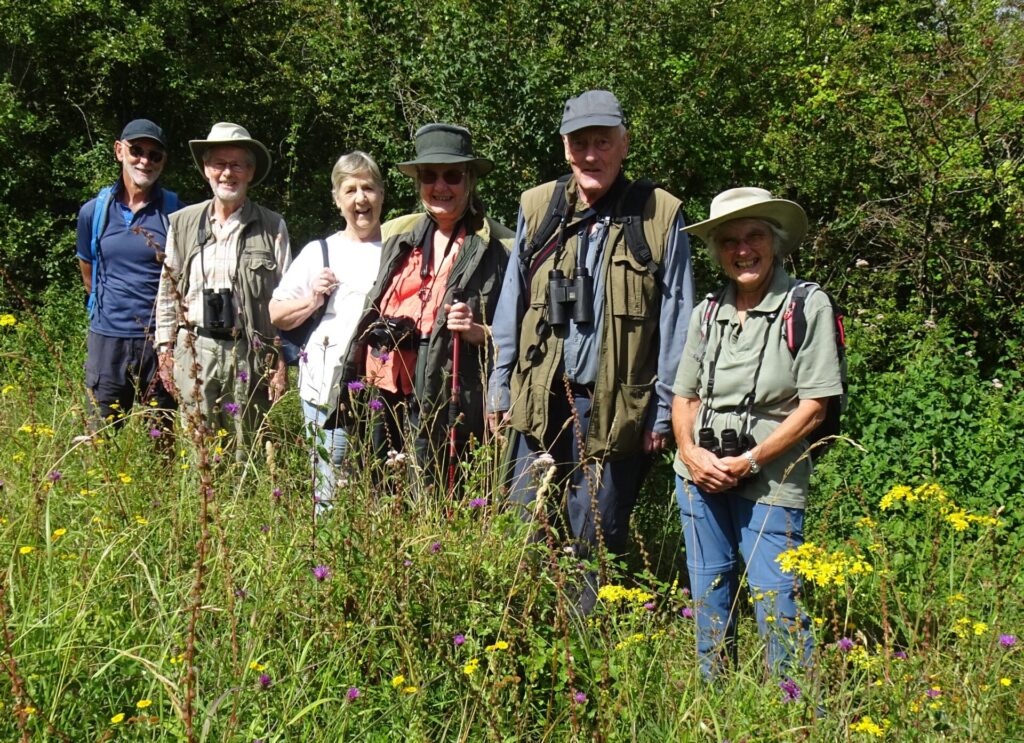
This reserve of the Wildlife Trust of South and West Wales is renowned for its flowery meadow grassland, so when 7 of us gathered at the entrance on a sunny morning with a welcome light breeze, we were apprehensive about its condition after the recent exceptional hot weather and current drought.
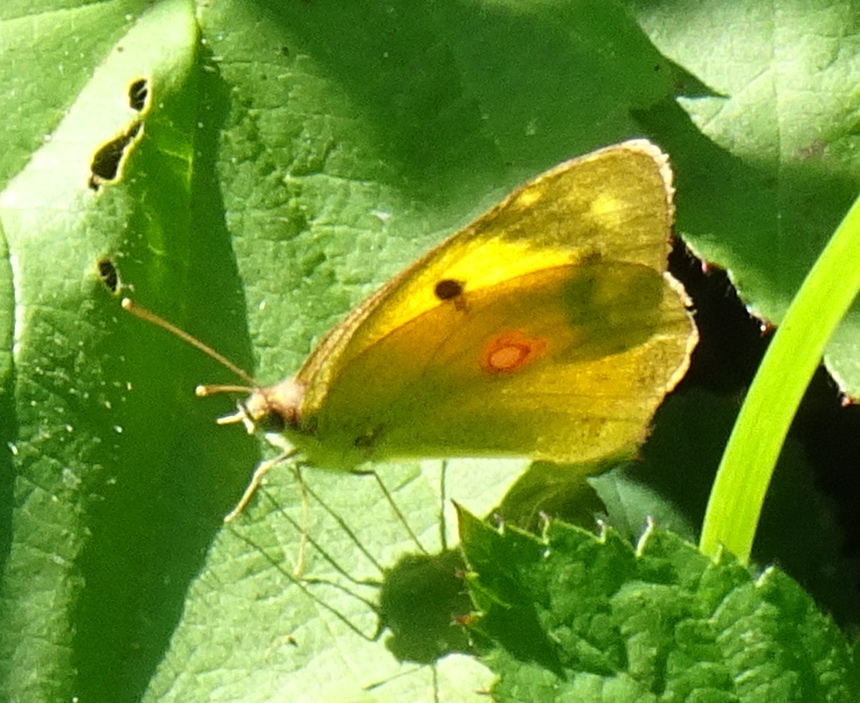
In the first field we were pleased to find plenty of flowers to enjoy, although somewhat hampered by the pressure from over-friendly horses with forelocks and tails decorated by the barbed seeds of agrimony. We quickly found butterflies amongst the fleabane, hemp agrimony, knapweed and willowherb. Two continental species that have turned up in some numbers this summer, painted lady and clouded yellow drew our attention; the perfect condition of the many individuals of the former indicated they were a second generation resulting from successful breeding locally.
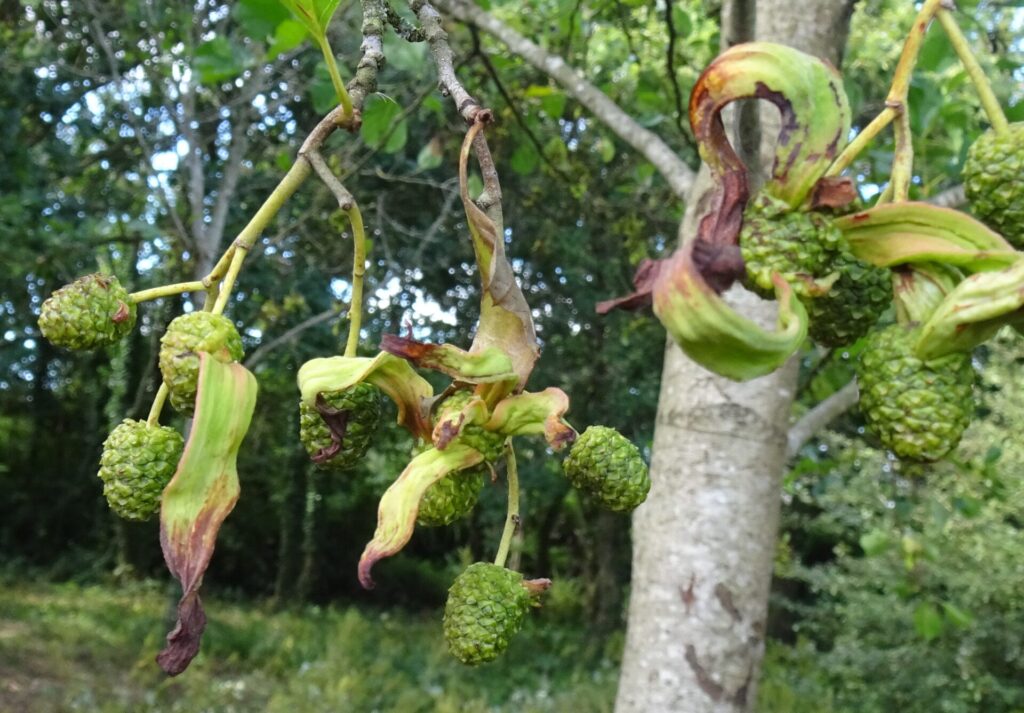
At a gentle pace allowing opportunities to share observations, we marvelled at the alder tree with all its seed cones infected by the fungus Tephrina alni that causes twisted tongue shaped outgrowths on them. Examining nearby oaks revealed knopper galls distorting their acorns, and, under one leaf, three tiny Sputnik-shaped egg-cases of the spider Paidiscura pallens.
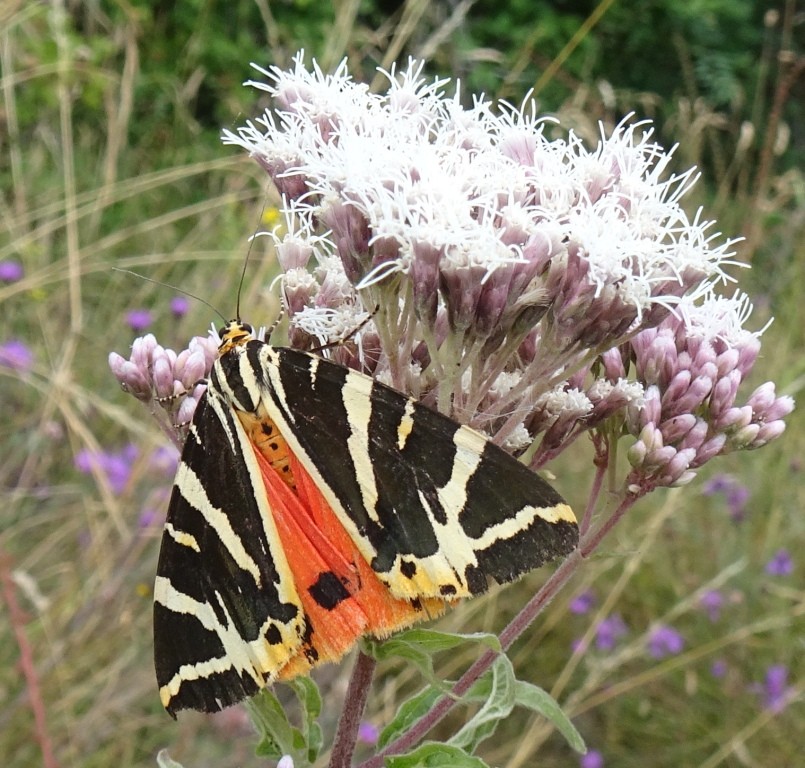
Near the dried up pond we struggled to see a Jersey tiger moth lurking in the bushes but further on came across another feeding on hemp agrimony and showing a flash of its spectacular orange hindwings. This is another scarce lepidopteran reported widely this year, although there is an established colony in the reserve.
Despite little evidence of the devil’s-bit scabious that can generate a purple haze over the meadow later in the month when in full flower, there was otherwise good coverage including from three umbellifers – hogweed, angelica and wild carrot with its red spotted centre – semi-parasitic red bartsia and yellow rattle, salad burnet and meadowsweet. Taking advantage of the nectar on offer were plenty of meadow brown butterflies along with smaller numbers of small white, common and holly blues, red admiral, comma, gatekeeper, speckled wood and brown argus. The latter attracted particular attention to see the resemblance in its patterned underwings to the closely related common blue, but with distinctly different brown upperwings edged with orange spots. Other insects were noticeably scarce, with the batman hoverfly, a six-spot burnet moth and a female long-winged conehead (bush-cricket) the highlights.
On reaching the cliff edge we took advantage of the seat to admire the view of St Mary’s Well Bay and Sully Island cut off by the full tide. Piping calls of some oystercatchers indicated their breeding season was over, but there was little evidence of the migration that this reserve is well placed for observation – just a couple of swallows and a calling chiffchaff.
After admiring or denigrating the spray-painted artworks/graffiti on the wartime searchlight building, we returned along the coast path, noting some of the botanic specialities of the site. We found dyer’s greenweed, sawwort, pepper saxifrage and spurge laurel as we made our way to the main anti-aircraft battery site and back to our starting point.
We all agreed we had enjoyed some outstanding wildlife at this exceptional site.
Linda and Rob Nottage