THE SOUTH WALES TORNADO OF OCTOBER 1913
Cowbridge U3A History Group welcomed back Pontypridd-based Keith Jones in October 2021 and was treated to an excellent, very well-illustrated talk on the South Wales Tornado of October 1913. This natural event left a trail of devastation in the Taff Valley, but is almost unknown today – few of the audience had heard of it.
There are, on average, 30 tornadoes every year in the UK but, fortunately, most cause little damage. The 1913 tornado, with winds up to 168mph, caused four fatalities, as well as much damage to properties, so is rated as the worst on record in the UK.
The Meteorological Office Official Report, published in 1914, stated that the tornado had its origins near Exeter, crossed the Bristol Channel to make landfall in South Wales at Aberthaw, where heavy rainfall was observed, but no damage. The tornado then relentlessly proceeded north through the Taff Valley, leaving havoc in its wake. Its track, with a path width of 300 yards at most, took it through Dyffryn Dowlais, Glyntaff, Treforest, Cilfynydd, Abercynon, Edwardsville, Cefn Methyr and Bedlinog.
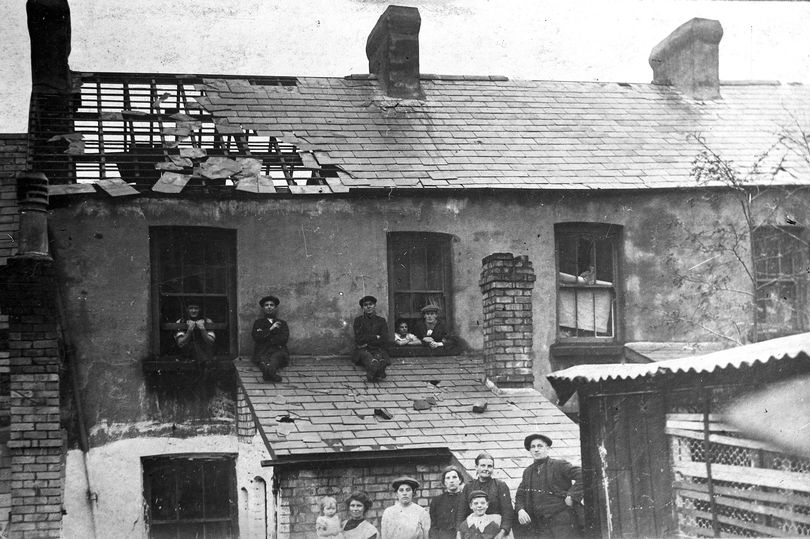
The tornado was characterised by torrential rain, severe lightning and a roaring noise. A trail of destruction was left behind: roofs destroyed, heavy roof beams tossed around like matchsticks, chimney stacks toppled, windows smashed, house walls collapsed, trees uprooted, dry stone walls knocked down, gravestones flattened and some flooding. A number of houses suffered significant collapse and whole terraces lost their roofs. At the very least, many buildings lost numerous roof slates, but the inhabitants could consider themselves fortunate. The luckless people in the path of the storm must have thought Armageddon had arrived.
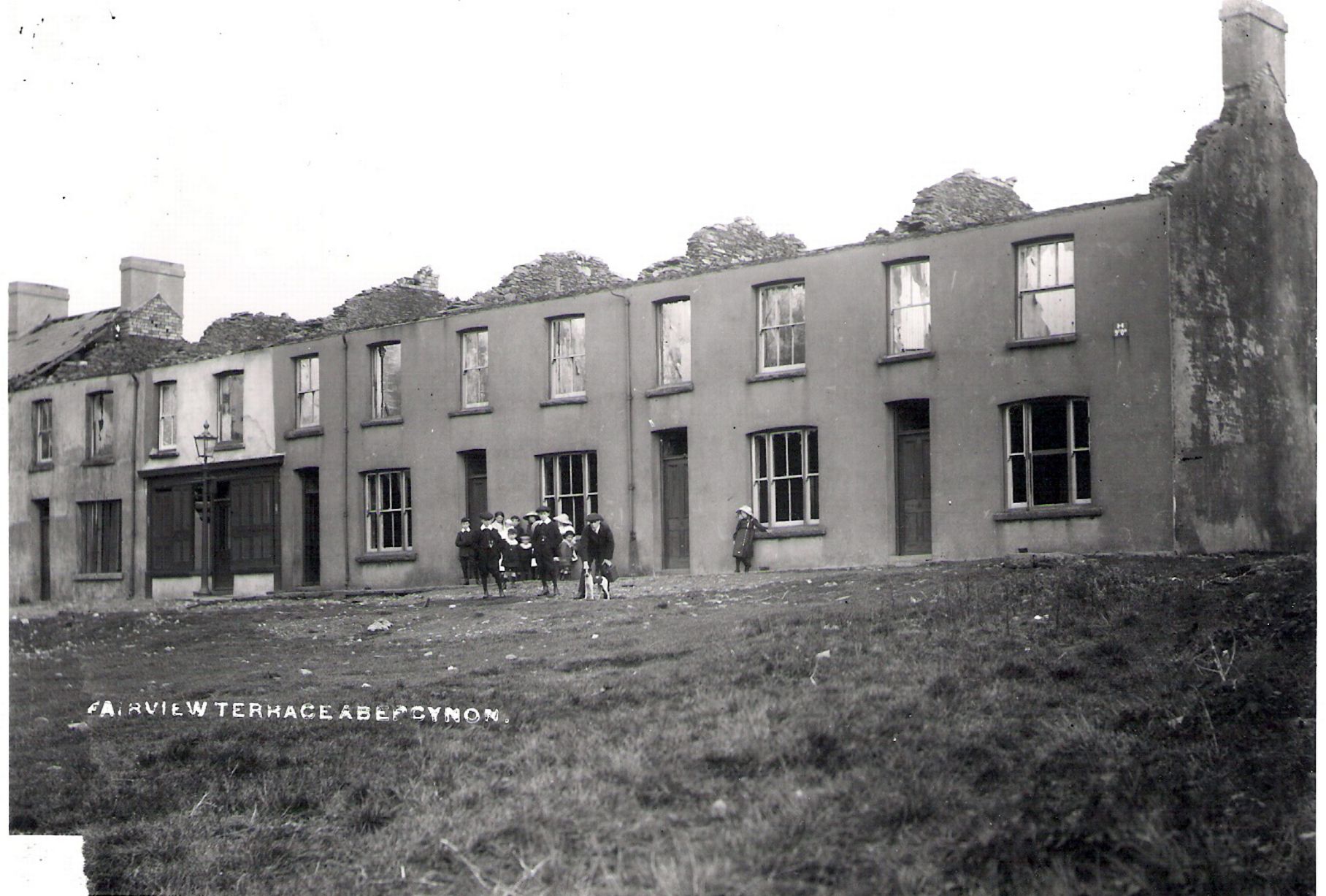
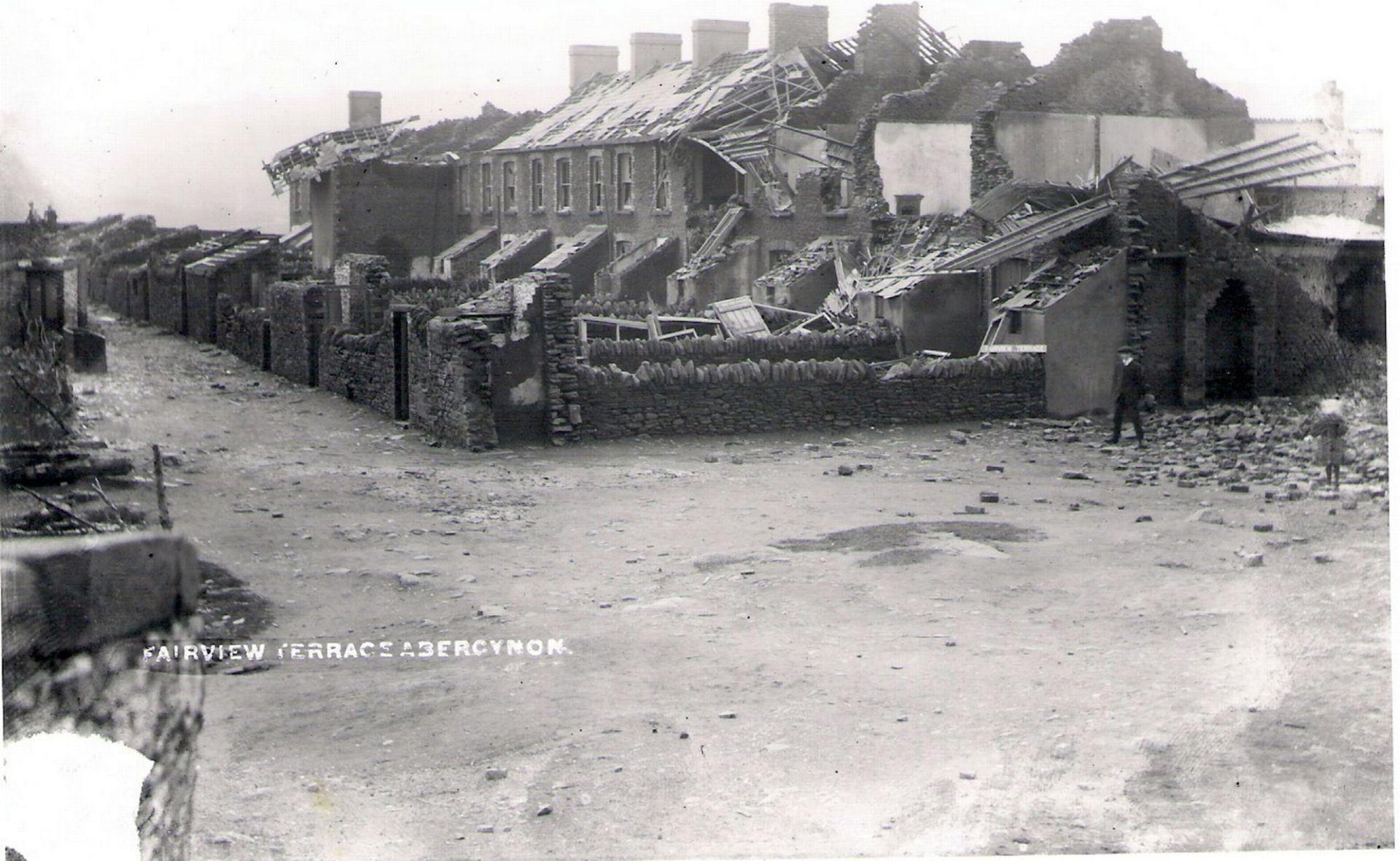
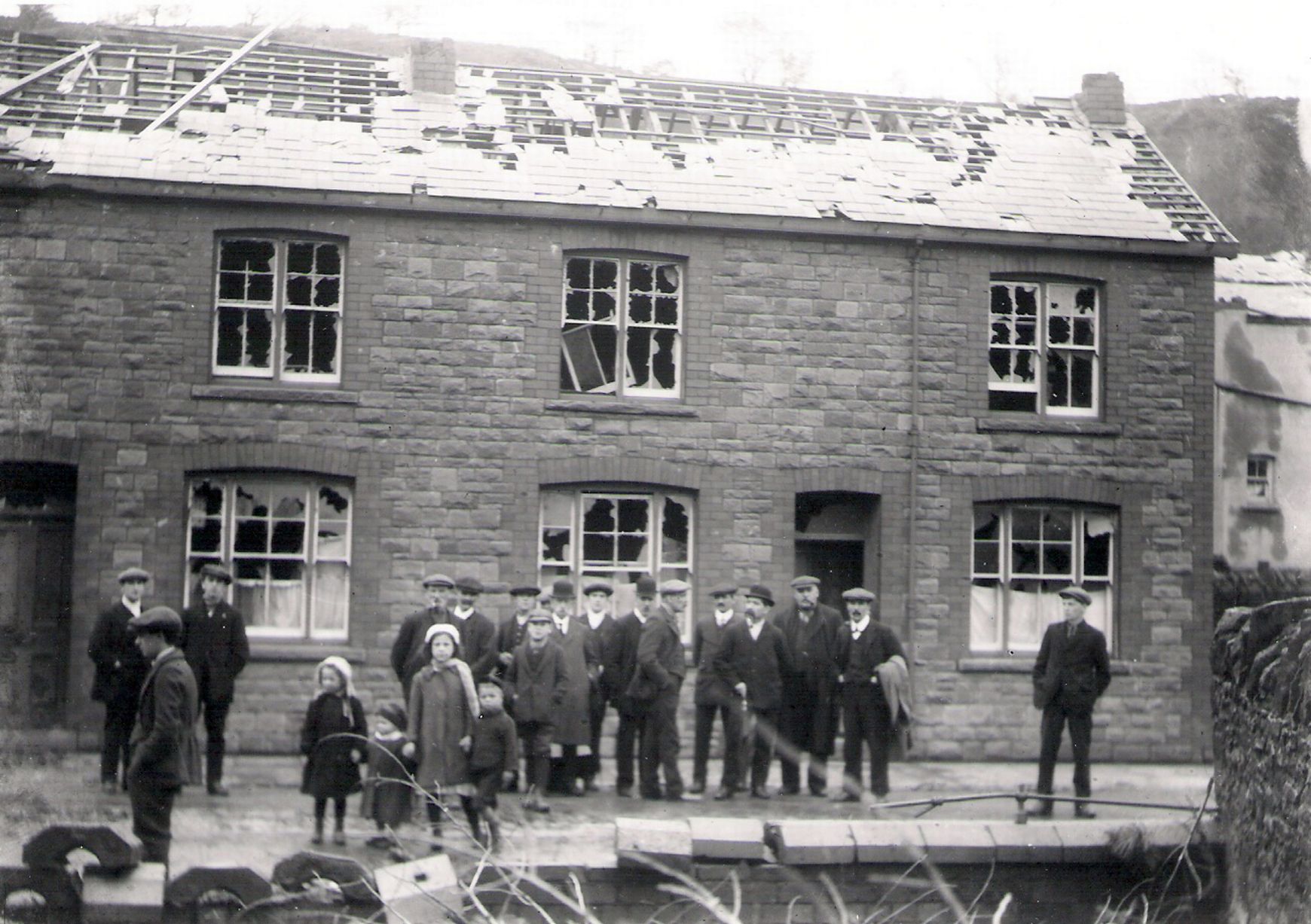
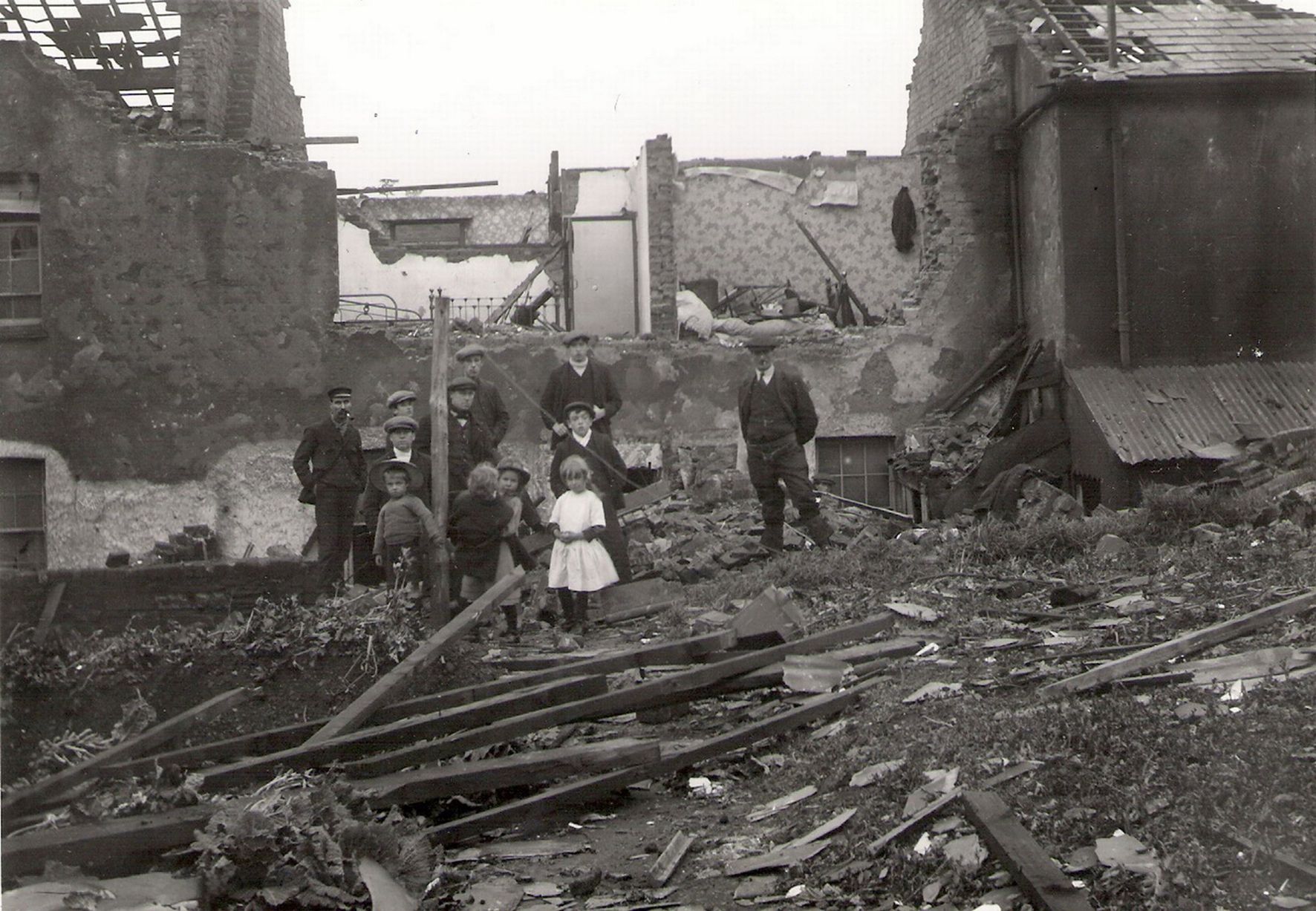
| Fairview Terrace in Abercynon front view | Fairview Terrace in Abercynon rear view | Cilfynydd |
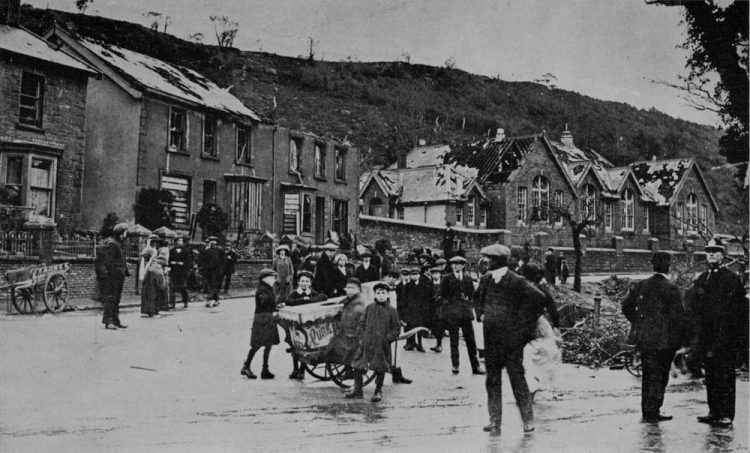
Contemporary photographs show scenes that to modern eyes appear to be the result of bomb damage: roofless and severely damaged buildings, windows broken and streets covered in debris – a war zone, in fact. One picture shows an ash tree from Cilfyndd lodged two miles away, in the fork of a tree in Abercynon. Another is of the inside of a Congregational church, empty apart from the pulpit; all the pews, despite being screwed to the floor, had been ripped out as the tornado passed through.
It seems amazing, given the scale of the destruction, that there were only four fatalities, but scores were injured and many were made homeless. Another remarkable feature is that there was no damage outside the limited boundaries of the tornado, which had, fortunately, missed the most heavily-populated areas of the towns it had struck.
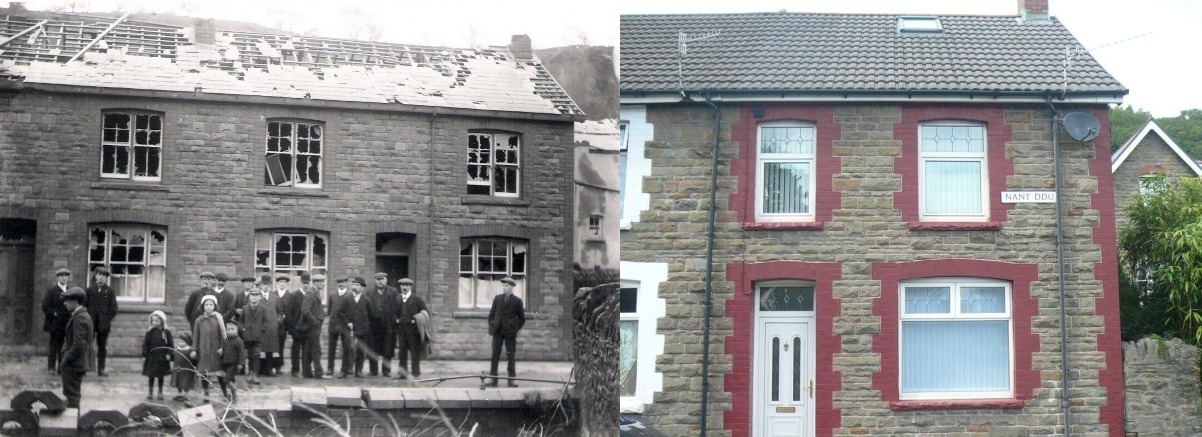
| Nantddu Terrace in Edwardsville | Nantddu Terrace House then and now | Edwardsville with school in background | Prospect Place in Edwardsville |
The official report stated that the tornado had advanced at 36mph and the maximum duration of the storm at any one place was a mere 17 seconds.
What is also remarkable is the amazing stoicism, endurance, fortitude and resilience of the communities devastated by the tornado. Perhaps this is not too surprising, given that many of the affected areas had developed through the rise of the coal mining industry, which was always linked to pit disasters and loss of life. Gradually, repairs and reconstruction were undertaken and people got on with their lives.
Indeed, one of the reasons that the South Wales tornado, with its trail of devastation, has largely been forgotten is that it happened just two weeks after the explosion at the Universal Colliery in Senghenydd, which claimed the lives of 439 men and boys. This was Britain’s worst mining accident. World War I, with its appalling loss of lives, was only 10 months in the future. Sandwiched between these two events, public awareness of the tornado has slipped into obscurity.
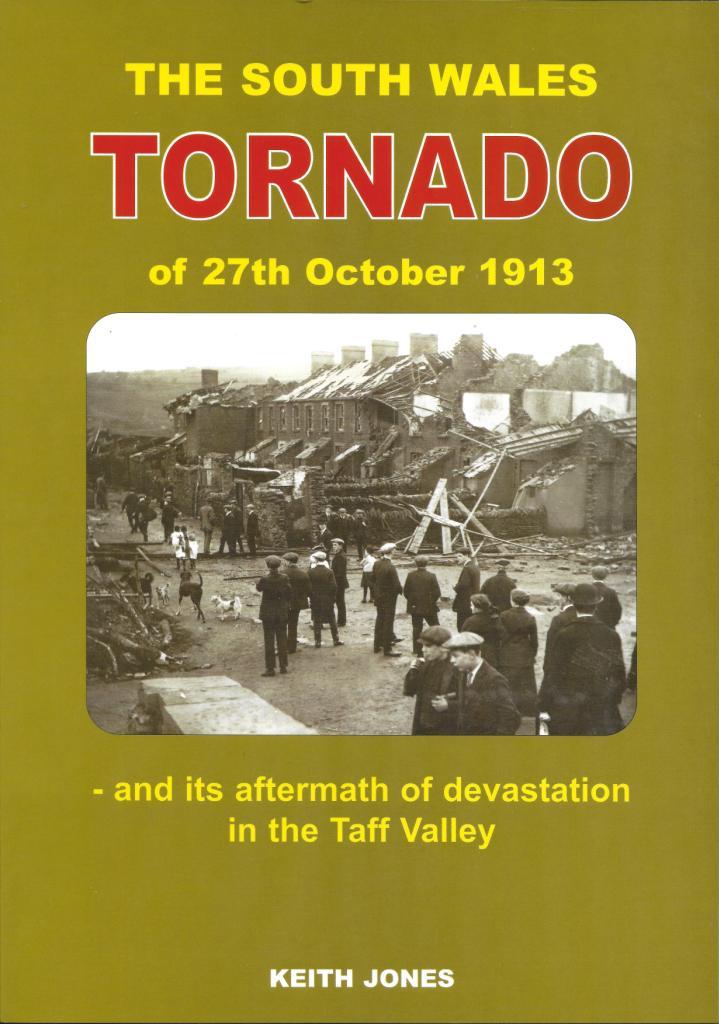
The book written by Keith Jones Mr Jones must be thanked for reminding the people of South Wales of a destructive natural disaster of just over 100 years ago.
Steve Monaghan