THE TONGWYNLAIS TOLL HOUSE UNCOVERED
Mention “Tongwynlais” and “Castell Coch” springs to mind. Sarah Barnes, co-founder of the Tongwynlais Historical Society, revealed to Cowbridge u3a History Group that the original idea had been to create a Tongwynlais Trail to promote interest in the village other than the fairytale castle.
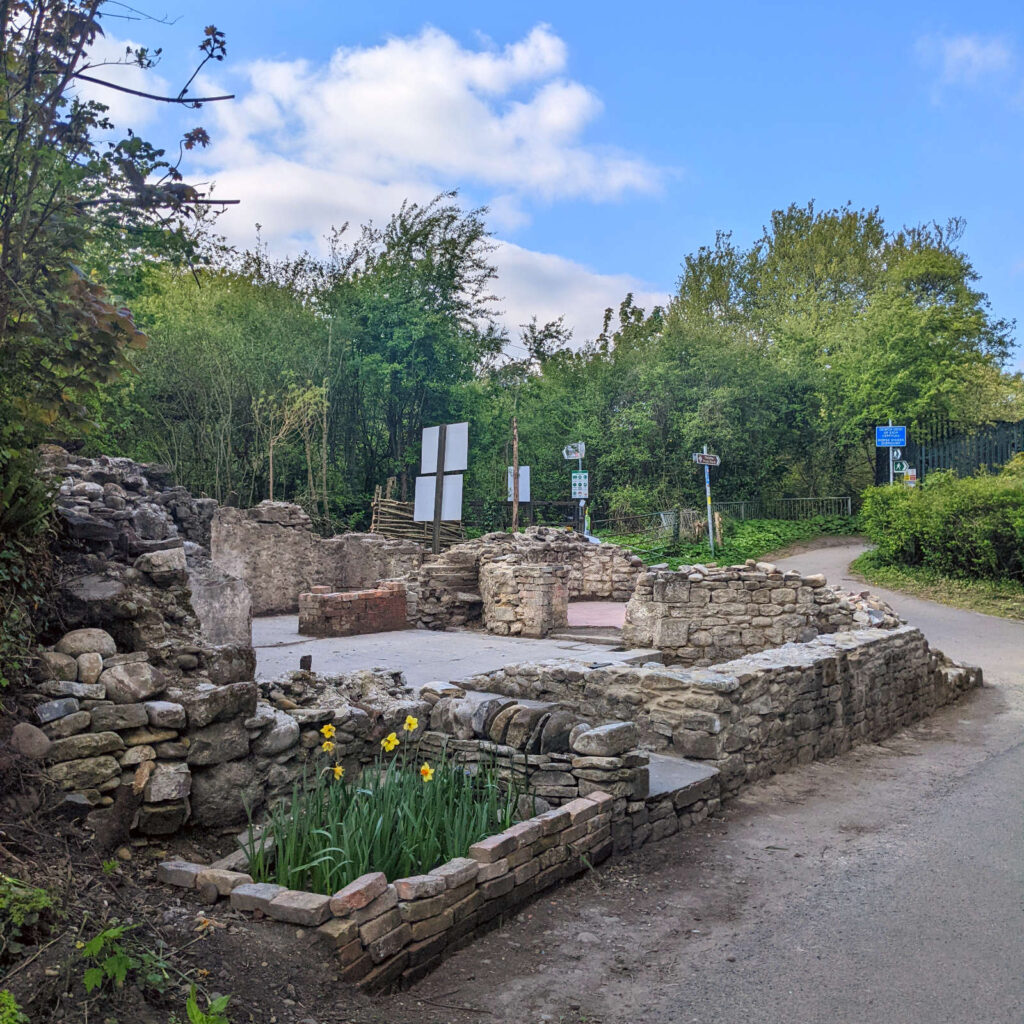
Sarah started a website with a multitude of local stories and photographs, and then organised crowd funding to excavate the site of an old toll house near the River Taff, which was just an overgrown mound of earth with a few scattered bricks.
The history of the building had been researched thoroughly by husband and wife team Glen and Marion Sweeney, and it was Glen who described its origin, occupants and even its profitability.
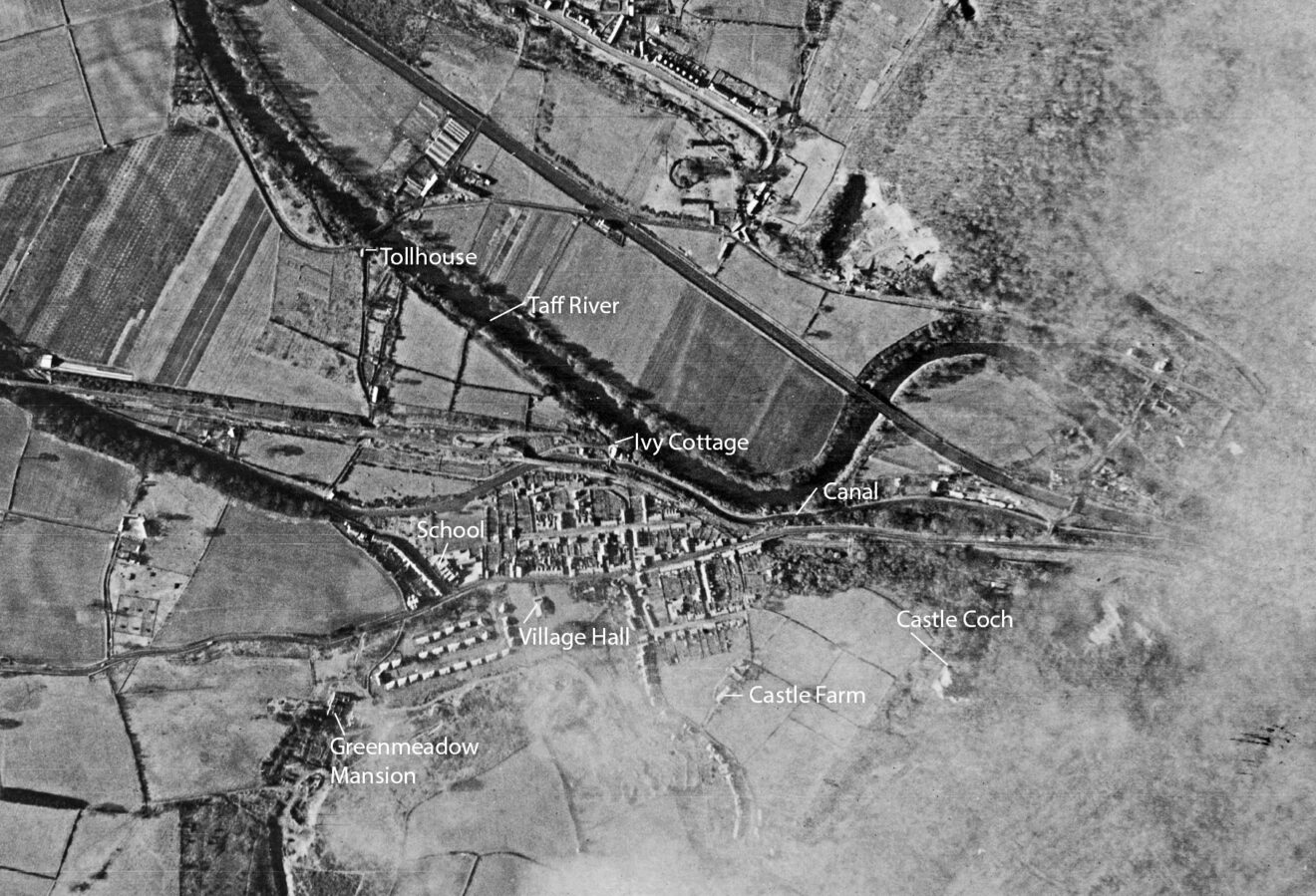
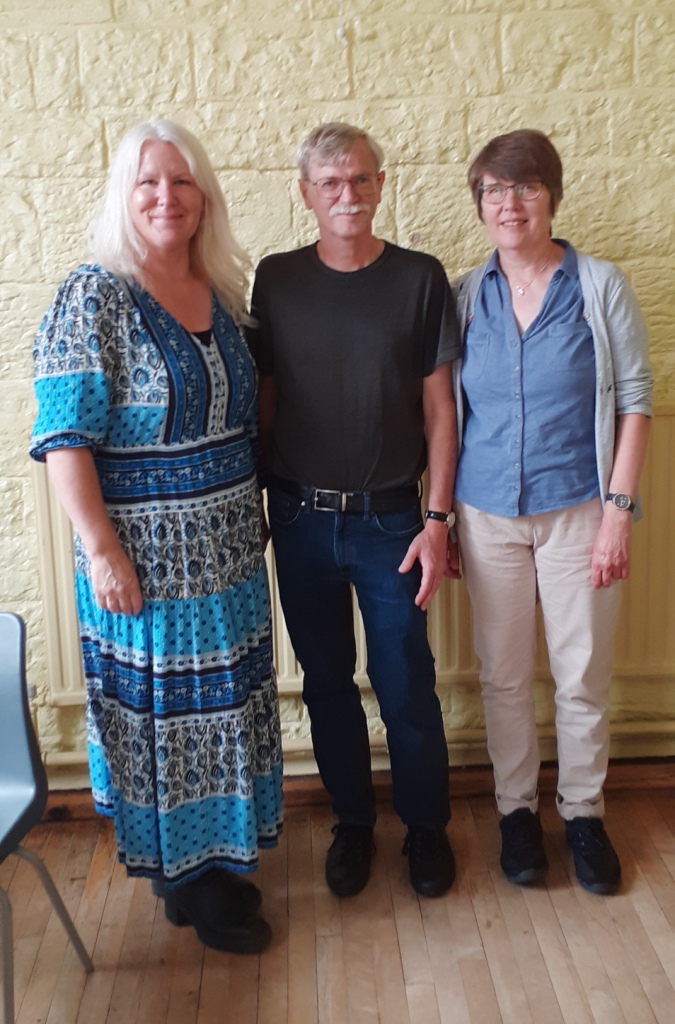
| Sarah, Glen and Marion | The Toll House in 1951 | 1941 Aerial photo of Tongwynlais |
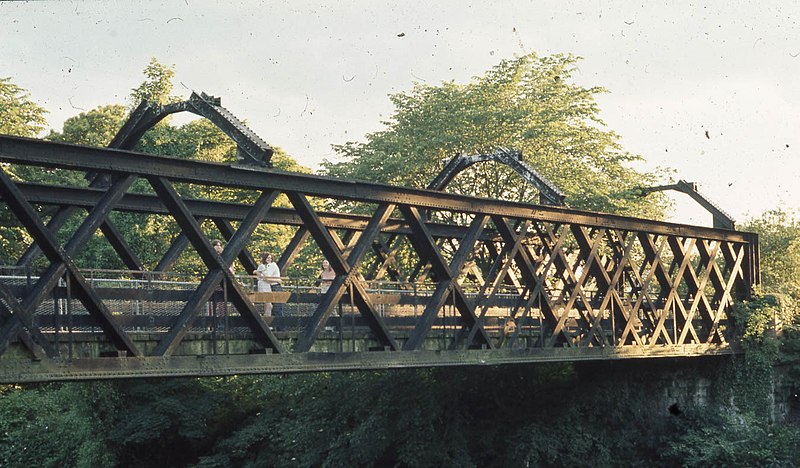
When the Pentyrch Iron Works, near Gwaelod-y-Garth, and the Melingriffith tin plate works in Whitchurch, came into the same ownership in the 1820s, a bridge was built to link them. This has been known as “The Iron Bridge” for many years, although the original may have been constructed of wood. The present crossing dates from 1887.
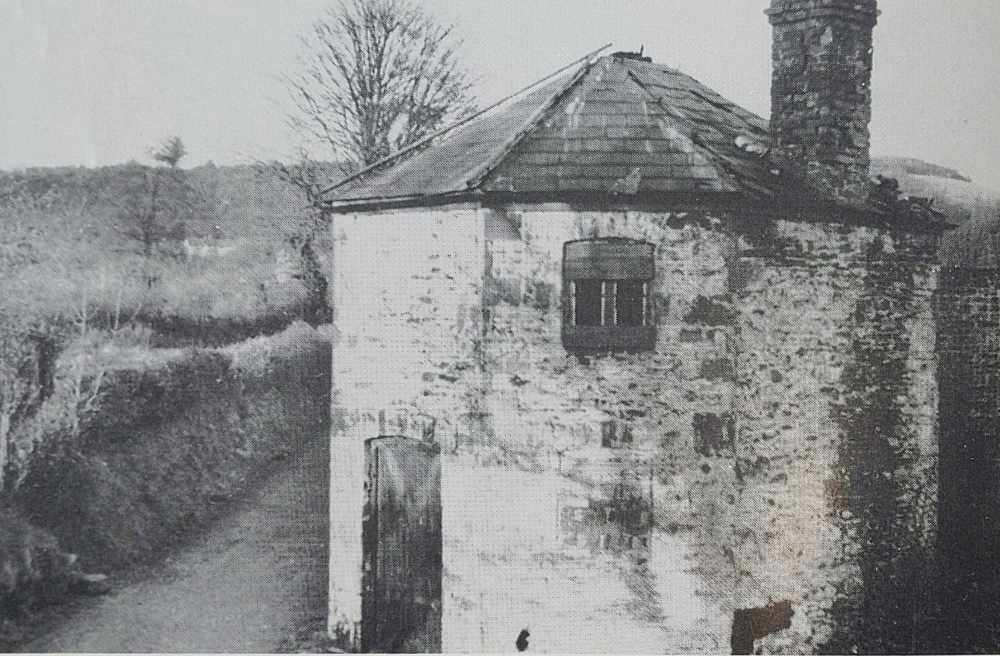
The toll house was built to collect money from pedestrians and a burial record of 1822 shows Richard Lloyd, 68, had lived there.
The 1841 census names Elizabeth Lloyd, aged 91, occupation “gatekeeper”, as living at the property with a servant. Probably the widow of Richard, Elizabeth lived to be 96.
The 1851 and 1861 censuses show Mary Howells as a gatekeeper, living with her niece in both records. Mary was listed as being 63 in the 1851 enumeration.
By 1871, there are 5 occupants, with Barbara Harry, 75, recorded as “gatekeeper”.
In subsequent census returns for the toll house, none of the occupants were shown as being a gatekeeper, indicating that tariffs were probably no longer being collected.
The toll house was demolished in the early 1950s.
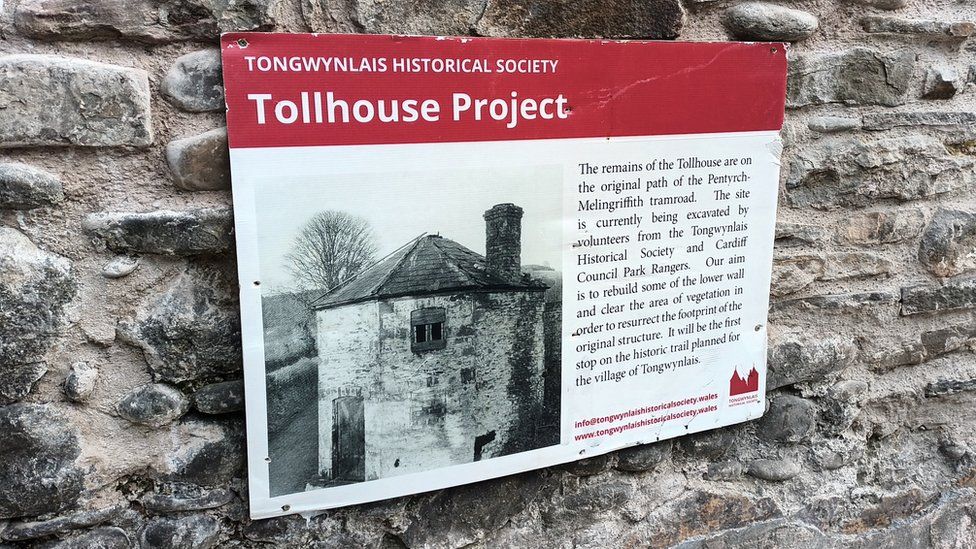
| Information board | The Iron Bridge today | The excavated toll house in April 2022 |
What immediately stands out is that all the official toll collectors were elderly females, without male support, not the type of person you would anticipate as collecting great amounts of cash from bridge users; surely they would be vulnerable to becoming victims of robbery?
Glen then explained that a review of existing toll records for 1853 and 1856 (during the tenure of Mary Howells) indicated that the annual receipts (£3 13 shillings and £1 13 shillings respectively) were much less than the gatekeeper’s wages (£15 12 shillings per annum). Given a minimum charge of one farthing (¼ of a penny), the smallest coin at the time, that would have meant only 4 or 5 paying pedestrians per day in 1856 – hardly worth collecting.
It is unlikely that the gatekeepers, given their ages, had additional duties, so the probability is that the tenancy was bestowed as a charitable gift by the owner of the works (a widow’s benefit?), as there was no state pension then.
Glen said that there are records of tolls being collected on 1st January in both 1916 and 1927, by gatekeepers who did not live on site, perhaps to maintain the legality of charging pedestrians for using the bridge.
It is known that the local postman had a vehement argument in 1927 with the toll collector and refused to pay. Imagine it– postal deliveries on New Year’s Day!
The Tongwynlais Trail is eagerly anticipated.
Steve Monaghan