DNA, FORENSICS AND CRIME

Dr Rhian Morgan of Wales Gene Park Dr Rhian Morgan of Wales Gene Park, returned, by popular acclaim, to Cowbridge u3a History Group in January 2023 to give an eagerly anticipated presentation entitled “DNA, Forensics and Crime”.
The first part of the talk was a layman’s description of how deoxyribonucleic acid (DNA) was the genetic material which carries the instructions for making all living organisms. An individual’s DNA structure (“genetic profile”) is unique, even though 99.9% is the same for all humans; it cannot be forged, faked or altered. Children inherit specific strands of DNA from their parents. Identical siblings have the same DNA code, but still have different fingerprints.
It was in 1984 that Professor Alec Jeffries developed techniques for genetic fingerprinting and DNA profiling which are now used worldwide in forensic science, paternity testing, genealogy, conservation and for identification purposes e.g. following disasters. Fortunately, only 16 short tandem repeat (STR) sequences of DNA are involved, not the whole strand of multibillion units.
Rhian continued her talk with examples of how DNA fingerprinting has aided the police in solving crimes.
The first case to involve DNA fingerprinting concerned the murders of two 15 year old girls in 1983 and 1986. The killer of both victims was identified as belonging to blood group A. A man had confessed to the second murder and the police approached Professor Jeffries to use DNA fingerprinting to link him with the first killing.
The result was not as anticipated; there was a complete mismatch (even after a re-check) between the suspect’s DNA and that of the murderer recovered from the victims.
Murderer Colin Pitchfork 5,000 local men were then invited to provide blood or saliva samples, but it was only when a man was overheard bragging he had provided a specimen for a friend that Colin Pitchfork was tested and identified as the double killer. He received a 30 year minimum sentence.
A national DNA database was subsequently started.
Michael Little died after a brick was thrown through the windscreen of his lorry on the M3 in 2003. There were no complete DNA matches, but the new familial searching technique was used to find individuals who were likely to be related to the offender. 25 close matches of relatives led to Craig Harman being convicted of manslaughter in 2004.
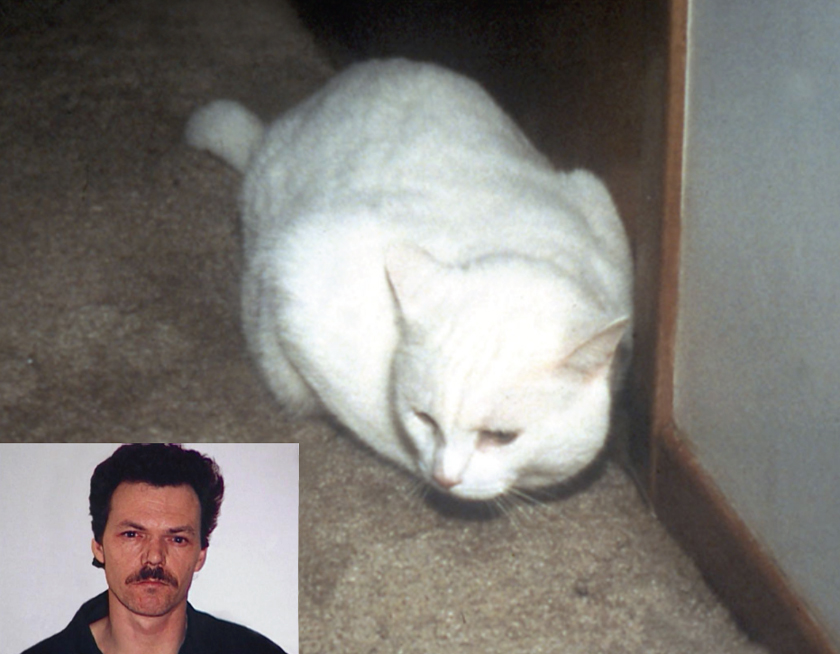
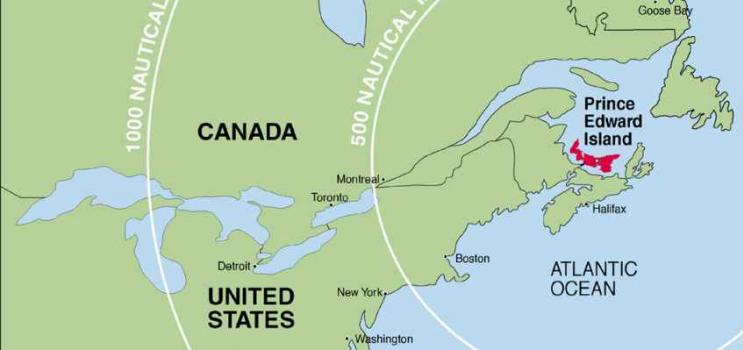
1994 saw the “Snowball case” on Prince Edward Island, Canada, where a woman’s body was discovered in a shallow grave soon after her abandoned, bloodstained car was found. The case centred on blood and hairs on a jacket. The blood was the victim’s, but the hairs belonged to a cat. All felines on the island were DNA tested. The hairs were Snowball’s, a cat living with the main suspect, who subsequently received 18 years in prison.

The final case was a girl fatally stabbed in Bath in 1984. The police unsuccessfully re-visited the murder evidence on several occasions as DNA techniques improved. It wasn’t until 2014 that a sample from a recently-arrested woman showed a partial match, which led to her father being identified as the killer. He was jailed for 32 years.
The author notes he has two cousins on the national DNA database so has to tread carefully!
Steve Monaghan