“Show and Tell” session after February 2023 AGM
The AGM was followed by a “Show and Tell” session, with contributions from Group members.
“The Coronation, but not that one!”
The first presenter was Valerie Monaghan, who had planned to give the talk last February, but time ran out on the day. Obviously, Valerie didn’t know then that there would be a coronation this year for King Charles III.
The coronation in question was that of King George VI and Queen Elizabeth (later the Queen Mother) in 1937 in Westminster Abbey, and the inspiration for the “Show and Tell” was a commemorative glass that had belonged to her grandparents. The planning for the crowning had initially revolved around the ceremony for Edward VIII, but after his abdication it was decided to use the same chosen date for his brother – most of the details would have been the same!
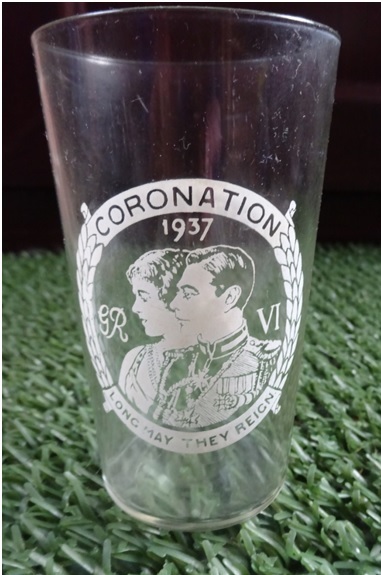

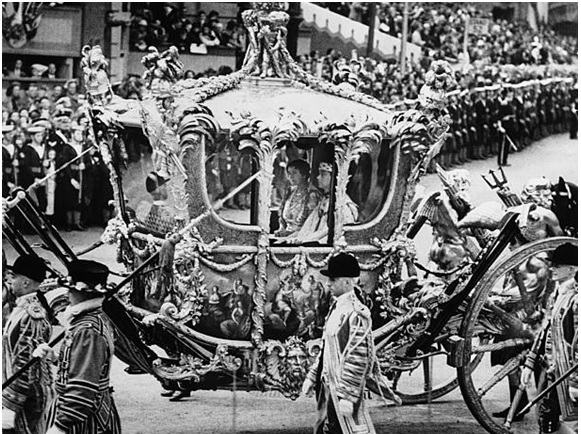
Valerie’s extensive slideshow featured the crown, the regal robes, the princesses, the gold coach, the procession (to and from the Abbey) and the huge crowds lining the streets, along with 20,000 police officers.
Although the ceremony was filmed by the BBC, it wasn’t televised live, but there was a radio broadcast.
Staff were on duty at 4.00am on the day, as guests arrived at the Abbey from 6.00am for an event scheduled to start at 11.00am and due to last 2½ hours - no wonder many took sandwiches to sustain themselves!
The inscription on the glass reads ”Long may they reign”, but this was not to be; George VI died in 1952, aged only 56. The strain of a rôle he had not been prepared for was surely a contributory factor.
Queen Elizabeth II ascended to the throne and, as Valerie concluded her talk, the rest is history.
“Dad’s Army”
The second participant was Thelma Jeeves, who had brought along several items connected with her father, who was an Air Raid Precaution (ARP) Warden in World War Two in Birmingham. The most well-known ARP warden is probably Chief Warden Hodges (Bill Pertwee) from the ‘Dad’s Army’ television series.
The service was established in 1937, with 200,000 volunteers in the first year and, eventually, 1.4 million served during the course of the conflict. Some wardens were employed on a full time basis for a weekly salary of £3, but most were unpaid. Around 7,000 would be killed on duty. They would patrol from dusk to dawn, equipped with a helmet, gas mask, whistle and rattle.
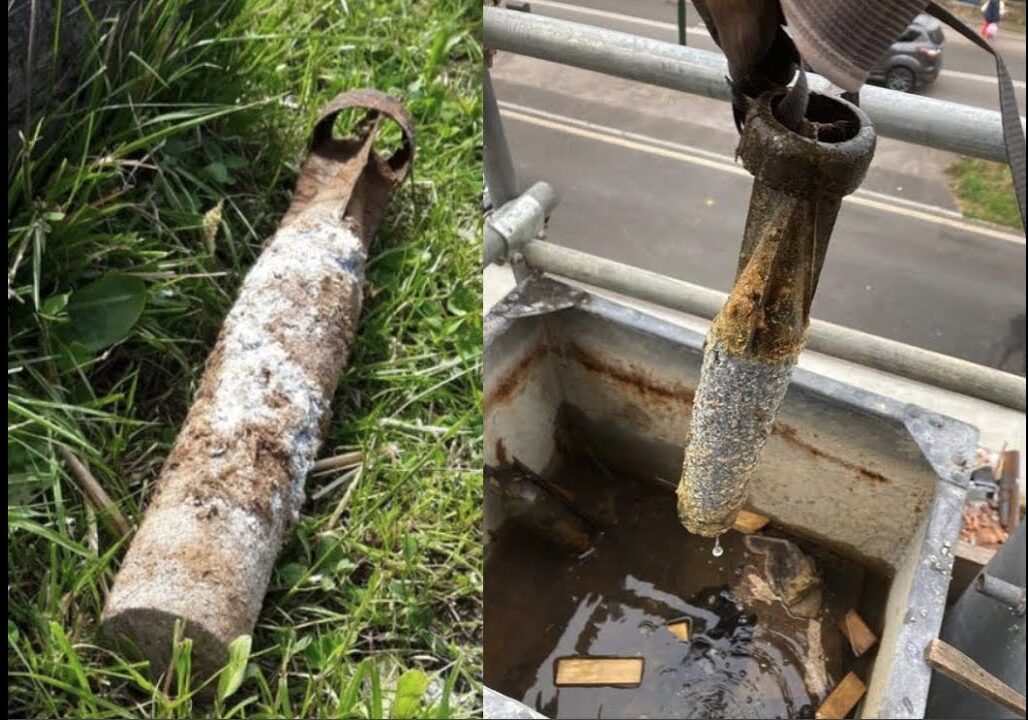
The wardens were responsible for enforcing the blackout, sounding air raid sirens, distributing and inspecting gas masks, maintaining air raid shelters and ushering the public into them during air raids, and, during and after any bombing, they had to deal with incendiary bombs and rescue those caught in the rubble.

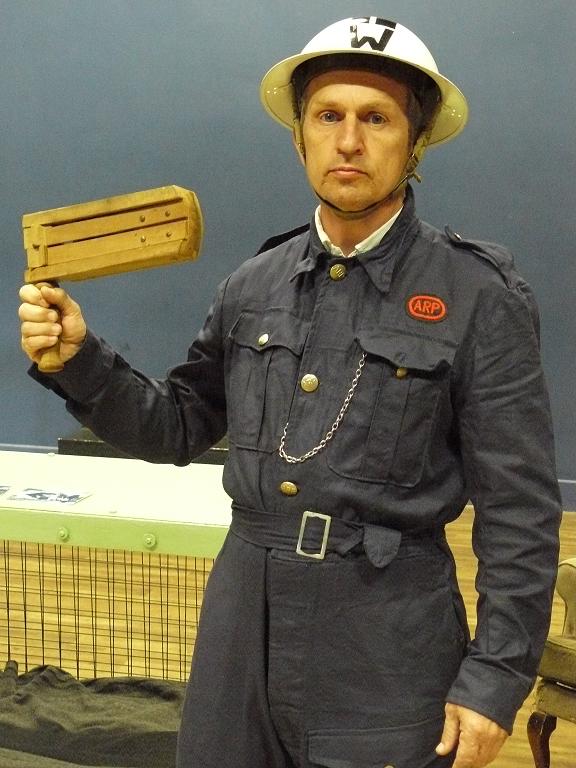
Thelma passed round her father’s ARP badge, a medal and several instruction leaflets.
He had retained his uniform after the war, but Thelma said the moths had damaged this beyond saving by the time she found it.
“King George V at the Fair of the Iron Horse”
The final item was shown by Keith Morgan and had a railway theme; it was a plaque of a King George V class locomotive, presented to his father, which Keith had discovered, forgotten in a cupboard. It is not surprising that Keith has “railways in the blood”, as his grandfather was an engine driver and his father a Great Western Railway (GWR) fitter and his enthusiasm showed during his talk.
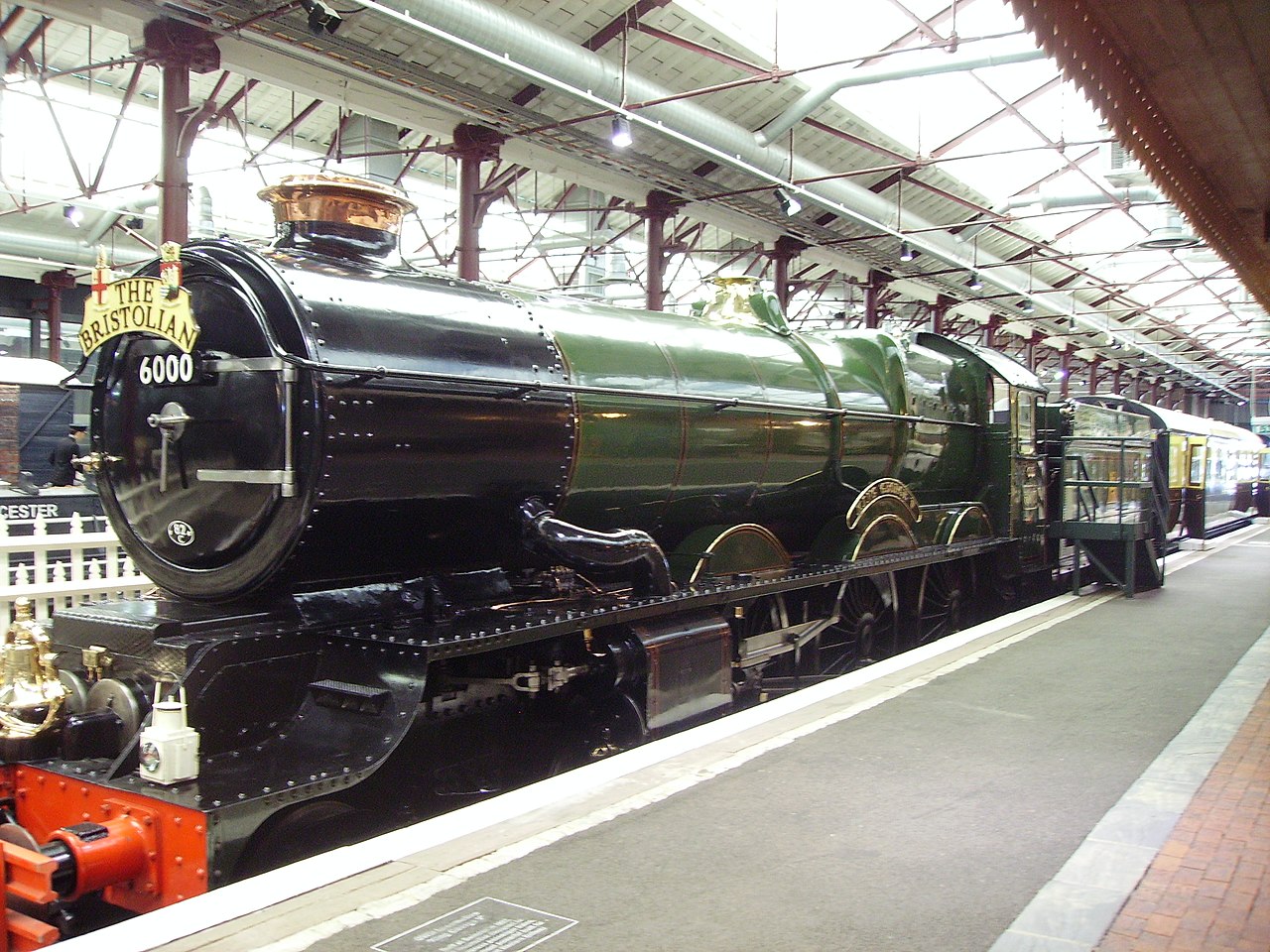
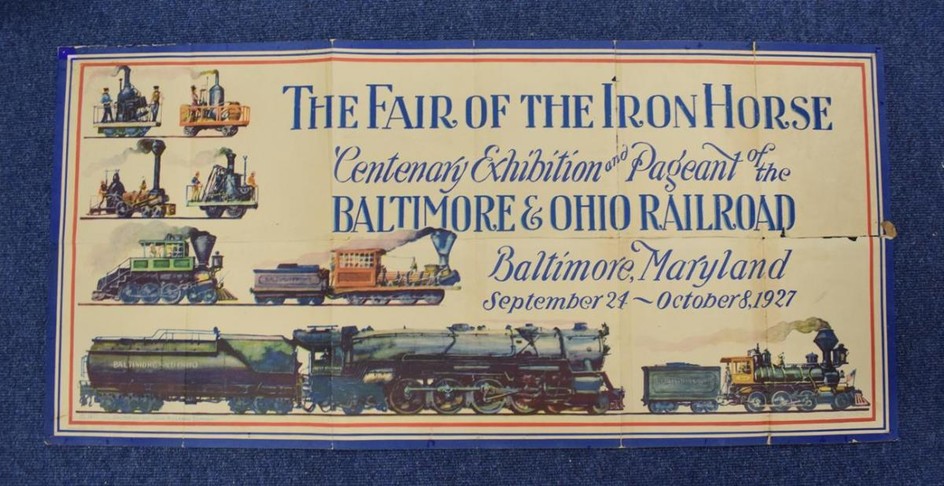

The powerful GWR 6000 Class King George V locomotives were built in the Swindon Works. The first of the class was completed in June 1927 and specifically named after the then monarch King George V. In light of an invitation to feature in the Baltimore and Ohio Railroad's centenary celebrations (“The Fair of the Iron Horse”, a travel and transport history of the USA), the impressive, 135 ton locomotive was shipped, in two separate parts, to the United States in August 1927. During the celebrations (which attracted 1⅓ million visitors), the locomotive was presented with a bell and a plaque.
After returning from the US, the engine was withdrawn from operation by British Railways in December 1962, after covering nearly 2 million miles.
In late 2015, the locomotive, now no longer in running order, was returned to the Museum of the Great Western Railway, located at the site of the old railway works in Swindon.
To complement the plaque, Keith had a photograph of the locomotive, a poster for the centenary exhibition and a copy of Bill Bryson’s book “One Summer: America 1927”.
Steve Monaghan