FROM TOP TO TOE – A LOOK AT FASHION OVER THE LAST 160 YEARS
The speaker Rosemary Scadden
Rosemary Scadden made another visit to the Cowbridge U3A History Group in January 2020, this time to give a fascinating, well-illustrated presentation on how clothing has changed over the last 160 years.
Women’s dress has generally evolved much more than men’s in that period, as ‘relaxed and comfortable’ has replaced ‘formal and restrictive’ and fewer layers need to be worn for warmth, indoors and out, thanks to car ownership and central heating (some might say global warming has had an influence as well).
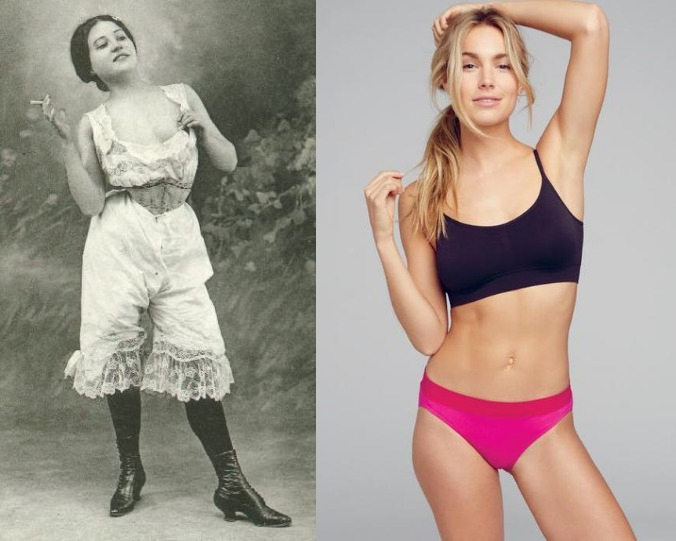
Female underwear has changed from crotchless drawers, through bloomers then briefs, to thongs, while male apparel has gone from woollen combinations (complete with rear buttoned trapdoor flap) to Y-fronts, then slips and boxer shorts. It’s not many generations ago that people were ‘sewn in’ for the winter months.
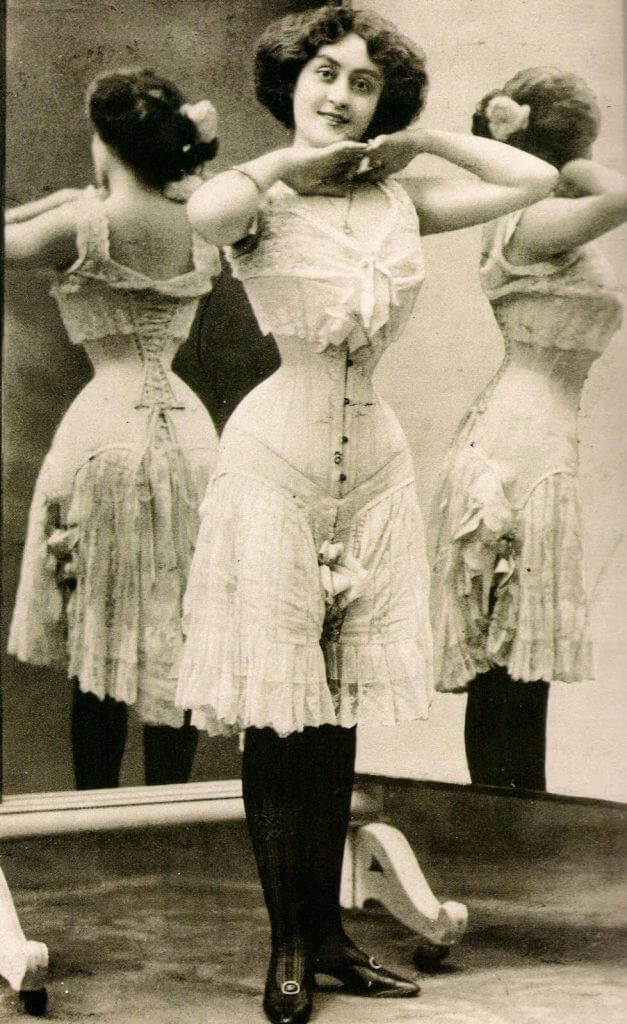
| A comparison of underwear | A Victorian corset and 18 inch waist |
The corset, designed to give ladies an 18 inch (46 cm) waist by being pulled as tight as possible, induced fainting fits and could even damage internal organs. Wearing such a garment precluded participation in most sports, except perhaps croquet, as movement was so restricted (high stiletto heels and tight skirts have the same affect). Female emancipation brought the end of the fashion for corsets, as well as the vote. The nearest modern equivalent is the foundation garment, used by some to achieve a more fashionable, slimmer figure.
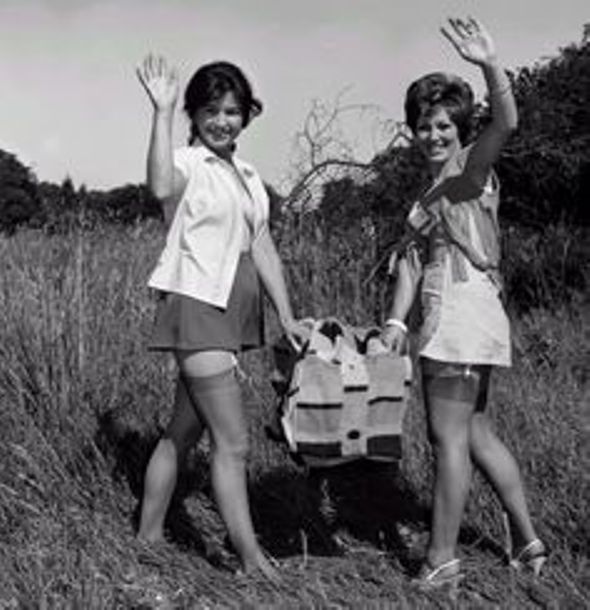
Why stockings did not suit mini skirts The advent of miniskirts in the 1960s created a problem, as wearing stockings and suspenders with them was not an option. Fortunately for ladies (and to the chagrin of many men), tights were introduced and now, much improved in quality, have become standard wear. Short skirts also heralded the fashion for knee-high boots.
It was during WWI that a large number of women began to wear trousers as they replaced men in the workplace, but this fashion did not become totally acceptable until the 1930s. A quick survey of the audience indicated that all the ladies were wearing trousers bar one, so common place are they now.
Wearing a tie was ‘de rigueur’ for men at one time – for example, even bricklayers in the 1950s wore a jacket and tie while working. Now, the tie is associated with formal attire for weddings, funerals and important social events (many younger men appear to be unable to knot one properly). Only one man in the ‘older generation’ assemblage present was sporting a tie.
The type of hat a man wore would often define his social standing. Working men would wear flat caps, middle class males wore felt hats such as trilbies, business men bowlers and the upper class the top hat (now seen only at Royal Ascot and some weddings). Few men wear hats these days and for those that do, the baseball cap would seem to be the most popular headgear.
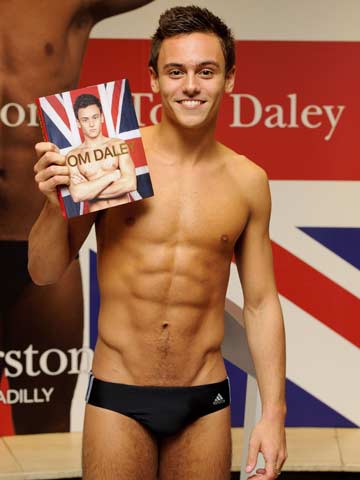
In the first half of the 20th century, holidaymakers would dress in their Sunday best to go to the beach – unimaginable today. For women, swimwear went from the ‘coveralls’ associated with mobile bathing huts to the classic one piece showing arms and legs, and then on to the skimpy bikini. Men used to wear a combination swimsuit, then woollen knitted swimming trunks (which were capable of absorbing copious amounts of water), followed by ‘budgie smugglers’ Tom Daley in budgie smugglers(just picture diver Tom Daley). Swimming shorts appear to be the latest fashion.
What of the future? Denim jeans are still popular, nearly 150 years after their invention, and will probably continue to be so. Will the trend towards gender-neutral clothing carry on? Will clothes become dirt-resistant, requiring fewer washings? Will people become more environmentally-aware and buy fewer new clothes? We shall see!
Steve Monaghan