MY GRANDFATHER WAS A MILK COURIER IN LONDON
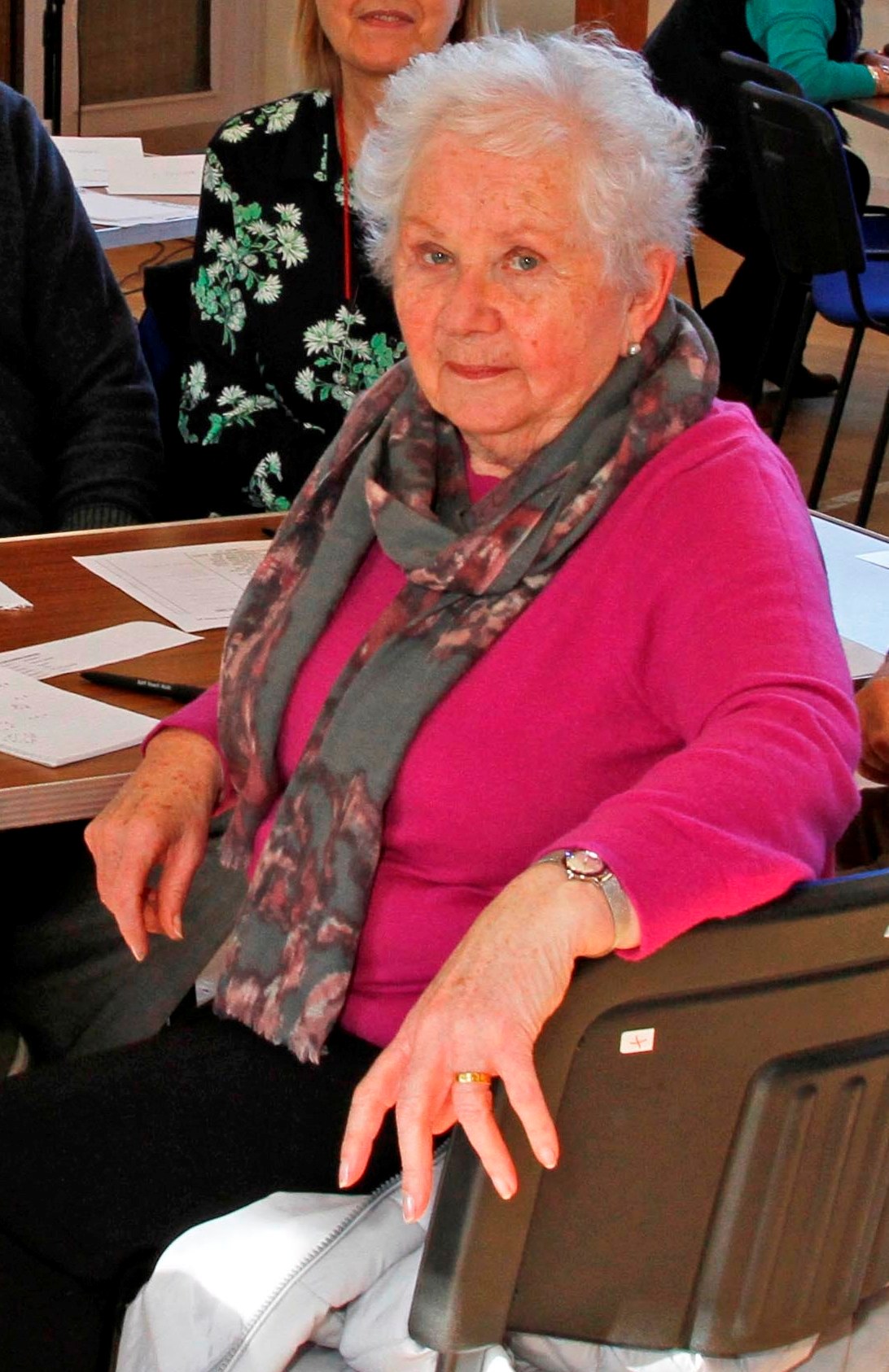
The speaker Gwerfyl Gardner Cowbridge U3A History Group member Gwerfyl Gardner gave the March 2022 presentation entitled “My Grandfather was a Milk Courier in London” to an appreciative audience.
Her grandfather, born in Denbighshire, was one of the many Welsh people who moved to London, some on a temporary basis (girls in service, for example), but others permanently.
The 1891 Census lists him as living in the house of a cowkeeper in Shoreditch, with his occupation given as “milk courier”. Two years later, he is registered as the more prosaic “milkman” on his marriage certificate. Clearly, Gwerfyl’s grandfather was one of the Welsh young men who became cowkeepers’ assistants in the big city.
The story was related how, for centuries, Welsh drovers took cattle and sheep to London’s Smithfield meat market on journeys that could take three weeks along well-trodden routes. The animals were grazed outside the city for a time to regain condition before sale. Drovers’ lanes can still be traced, with the Drovers Arms public houses along the roads being other tell-tale signs of old routes.
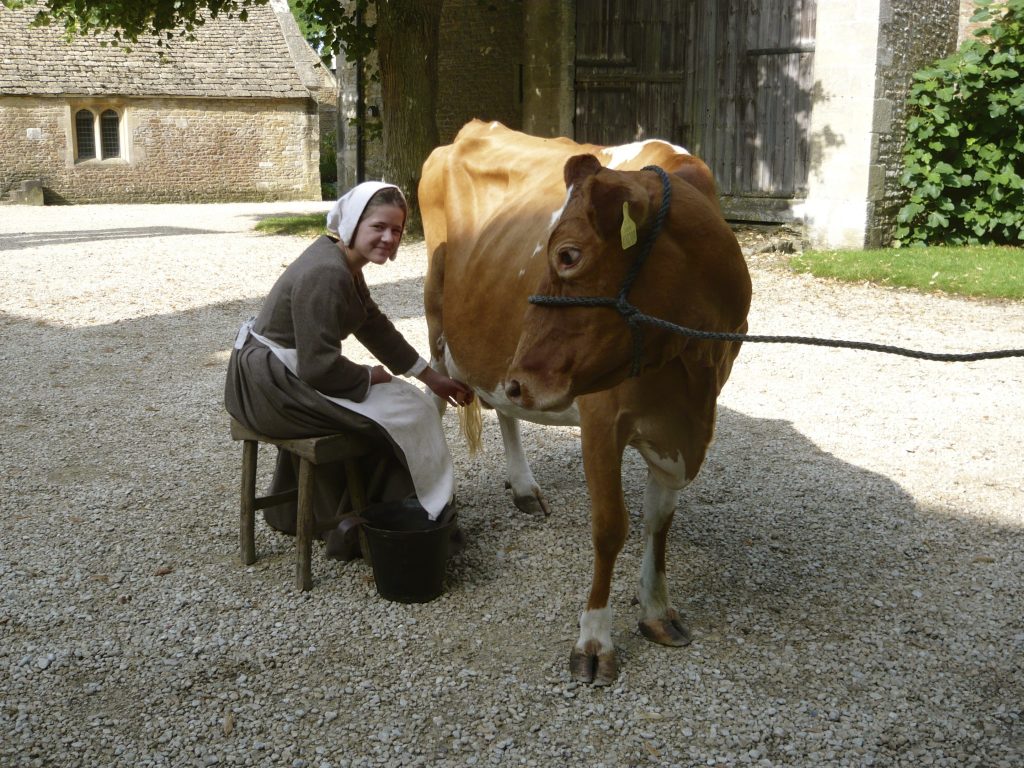
Before the railways provided quick transport, milk had to be provided locally (it soured quickly), which is why there were many domestic cowkeepers in cities like London and Liverpool. Several hundred Welsh people, like Gwerfyl’s grandfather, became involved in the capital’s dairy industry. Cows were kept for milking and “strong, robust Welsh girls” would carry heavy containers of milk on yokes to sell in the streets.
| Milkmaid milking a cow | Milk handcart displaying the name Davies |
Gradually, rounds of regular customers became the norm and milk was delivered directly to homes in bottles or churns on handcarts pulled by milk couriers. Horses and carts would later replace the handcarts as clientele numbers increased.
Stories abound about the poor hygiene, with both the milk being diluted down and the containers being washed with poor quality water.
Gradually, the small-scale cowkeepers were replaced by larger, more hygienic dairies, although cows were still often kept on the premises and milked twice daily. The names Jones and Davies can be seen in photographs of London milk carts and dairies.
Some Welshmen made fortunes from the dairies as London became their adopted permanent home, although many made arrangements to be buried in their home villages in the family churchyard plots.
Most of the Welsh, however, like Gwerfyl’s grandfather, returned to Wales after several years away, but their legacy remains in London in the form of the Welsh chapels, built to service their spiritual needs, and in the London Welsh Rugby Club, formed in 1885, to satisfy other national requirements.
One of the best examples of a Victorian dairy can be found in Finsbury Park. “The Old Dairy” complex was in use as a dairy from the middle of the 19th century by, firstly, Davis & Co (note the Welsh name). There are stunning friezes on the exterior walls, representing grazing, milking, cooling, butter and delivery. The premises were let in the 1920s to United Dairies, which continued to use them until 1968.
Steve Monaghan