2nd February 2023 TALK ON SHETLAND
The first meeting of the Natural History Group for 2023 took place in the Llanblethian Church Hall. There were 16 of us present in total.
Jeff Stamatakis presented a talk on Shetland with particular emphasis on the sea birds, following a trip undertaken in 2012. There were fine photos of puffins, gannet, fulmar, the kleptoparasitic great skuas (bonxies), arctic skua, common and bridled guillemots amongst others.
Jeff took us on a tour of the archipelago and triggered a wide-ranging discussion. The lighthouse of Muckle Flugga, Unst, was one of many built by several generations of the Stevenson family. The Broch of Mousa is a great example of a dry- stone round tower dating back to the Iron Age. Possibly once made for human habitation, it now gives a home to storm petrels which nest in the crevices. A night ferry takes birdwatchers to the island to watch the birds come in under the cover of darkness to tend to their young. We even had geomorphological features such as the tombolo of St Ninian’s Isle. This is a 500m stretch of back- to- back arcuate beaches which illustrate a story of a recently drowned landscape.
Further discussion ensued variously about orcas, and avian flu and a very recent report that this condition is now affecting otters .
As Jeff ‘s tour brought us back to Lerwick, the capital ,he pointed out the town hall and recommended a visit there to see the stained glass windows, particularly those illustrating Margaret of Denmark and James III of Scotland who married in 1469. The impecunious father of the bride, the king of Denmark, Norway and Sweden, offered Shetland in lieu of a dowry and it has never been reclaimed.
The talk revived happy memories for those of us who had visited Shetland and inspired a number of those who had not ,to do so.
Jeff was thanked warmly with a prolonged round of applause.
On 9th March, 5 of us went to Talbot Green to the SEWBReC office to undergo training. This was a combined effort with Porthcawl. It was quite a feat finding a day to suit us all and we had a very intensive session of instruction from Emma Williams on the do’s and don’ts of recording species. The weather was poor so we did not manage any outdoor practical work which will hopefully be organised for a future date.
On April 3rd some members of the group attended the Porthcawl meeting held in Kenfig NR and given by Rob Parry on the re-introduction project for the Marsh Fritillary butterfly. ( See later)
Our meeting was the same week and also at Kenfig N R this was led by Gaina Morgan and organised by Fran Jones. Eleven people turned up which included one member from Porthcawl , 2 guests and a dog. We had a walk around the dunes and were regaled by the leader with stories of life in Sker House during her childhood. We saw a kestrel and heard willow warblers and were hopeful of seeing golden plover on the beach but were disappointed ---and then got caught in a heavy shower of rain. The day was made particularly memorable by difficulties encountered with the parking ticket machine, made even worse when a couple of weeks later 5 of us were issued with fines. All was resolved after intervention by the Kenfig Trust.
May 2nd saw our trip to Crymlyn bog with and organised by the Porthcawl group. This was a re-run of a trip we did last year. Claire Jenkins co-ordinated it and the leader was Jamie Bevan again. Five of us made it to re-explore this site on a lovely day. There were no fen raft spiders to be seen as it was too early for their nurseries to be established ( which makes the females more obvious) however we were very pleased to see a female marsh harrier not too far away.
On May 25th eight of us met at Llantrisant Common with the aim of finding the recently emerged Marsh Fritillary butterflies. The sun was shining and it didn’t take too long to find them, thanks to our leader, Rob Parry. This is a SSSI so not surprisingly there was plenty of other wildlife to see and hear.
1st June 2023 VISIT TO HOWARDIAN NATURE RESERVE
Unfortunately, the two Natural History Group members were outnumbered by the four Nature Reserve guides who led us round, but it meant at least that there was no “long string” problem where those at the rear often struggle to hear what information is being imparted at the head of the column!
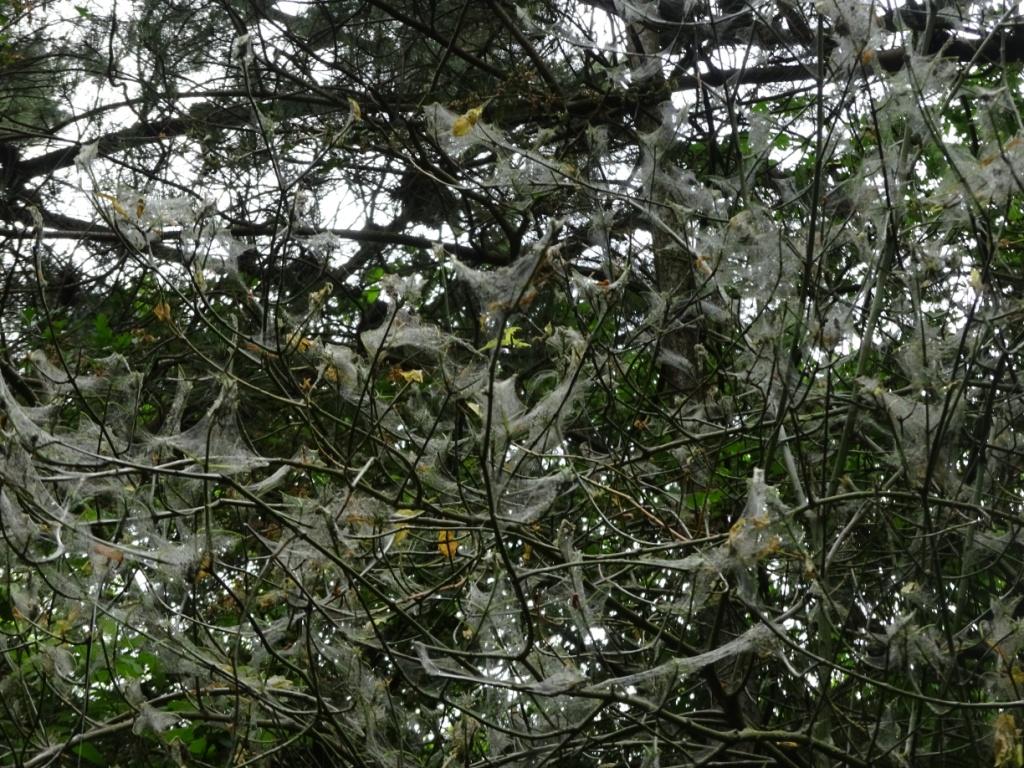
The visit was to see the orchids (4 or 5 species usually found on site), but before we reached the grassy areas, at least six trees were encountered which seemed to be completely covered in spiders’ webs. These were spindle trees and the webs were woven by spindle ermine moth caterpillars to protect themselves from birds.
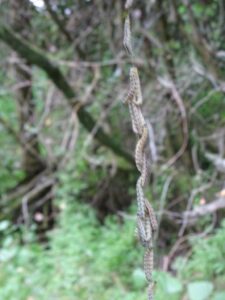
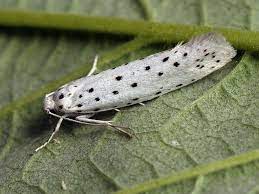
At one of the last affected trees, we found two individual strands of silk stretching from a tree branch to the ground with brown caterpillars on them – one strand must have had more than 100 of the larvae on it, individually and in clumps of wriggling masses. The wind was moving the threads all the time, so getting a photograph in focus was well-nigh impossible, tempting though it was to try to hold the strand still!
Bryony, maple, winter heliotrope, wild plum, cranes-bill, wild privet, sloe, native dogwood and cherry had all been seen by the time our first orchid made an appearance; a southern marsh- common spotted hybrid.
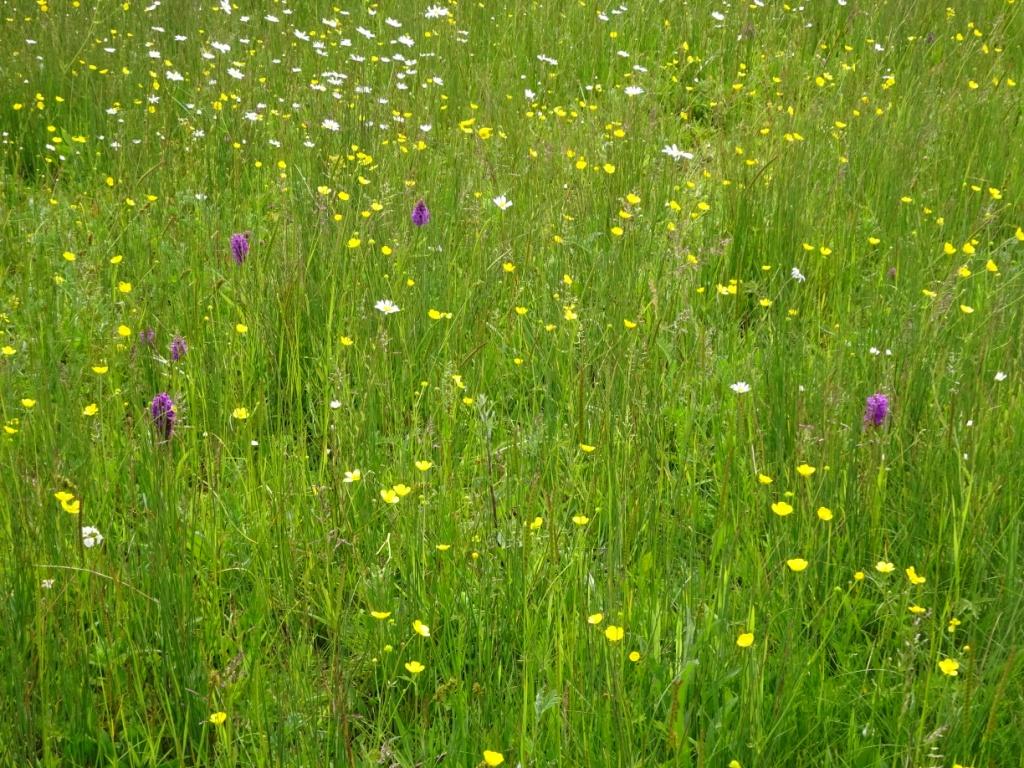
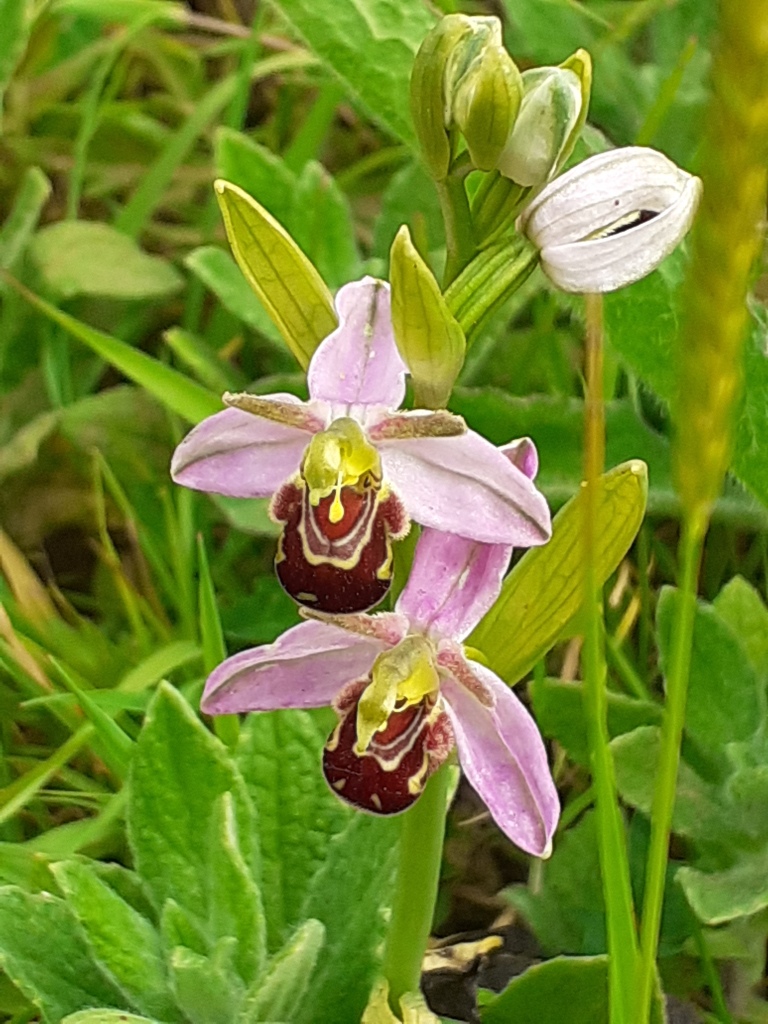
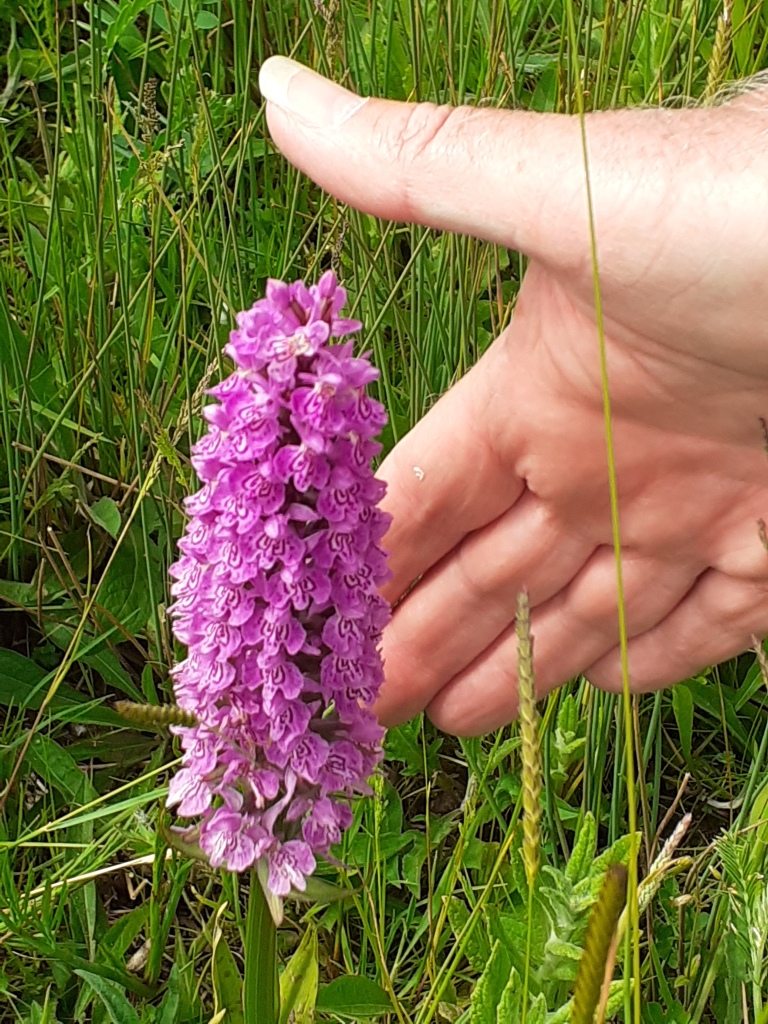
On an open area of land (much drier than normal), there was a profusion of orchids among the ox-eye daisies, buttercups, red vetchling (which looks like a grass with a small red flower) and yellow rattle. There were bee, southern marsh and common spotted orchids as well as many hybrids.
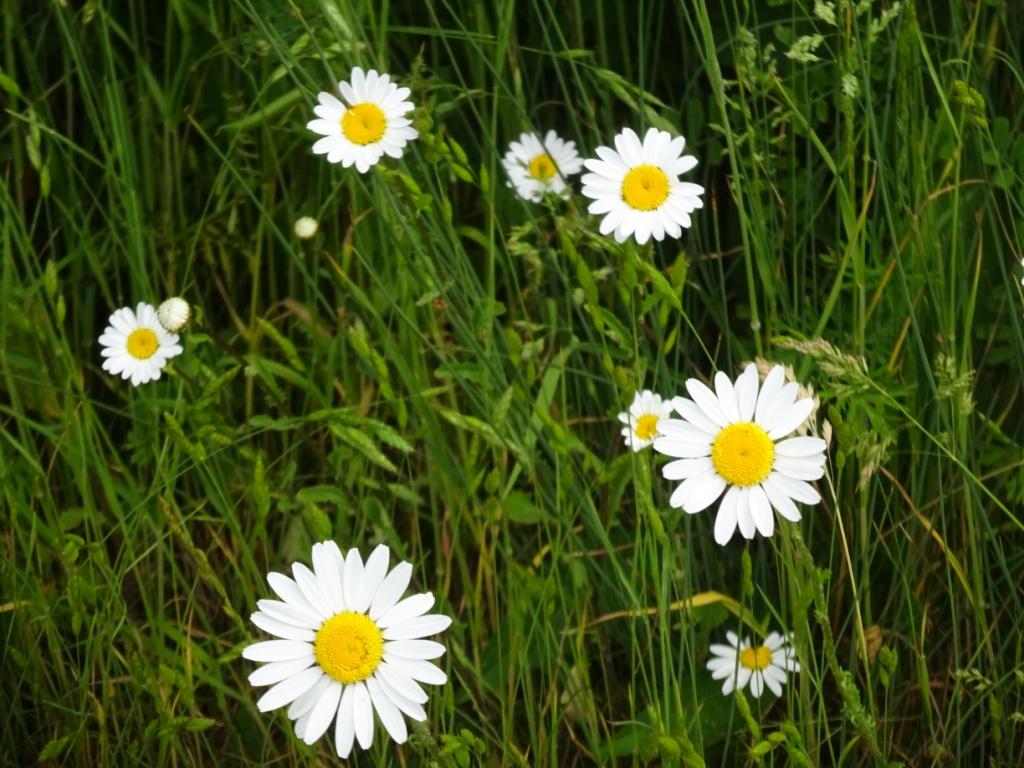
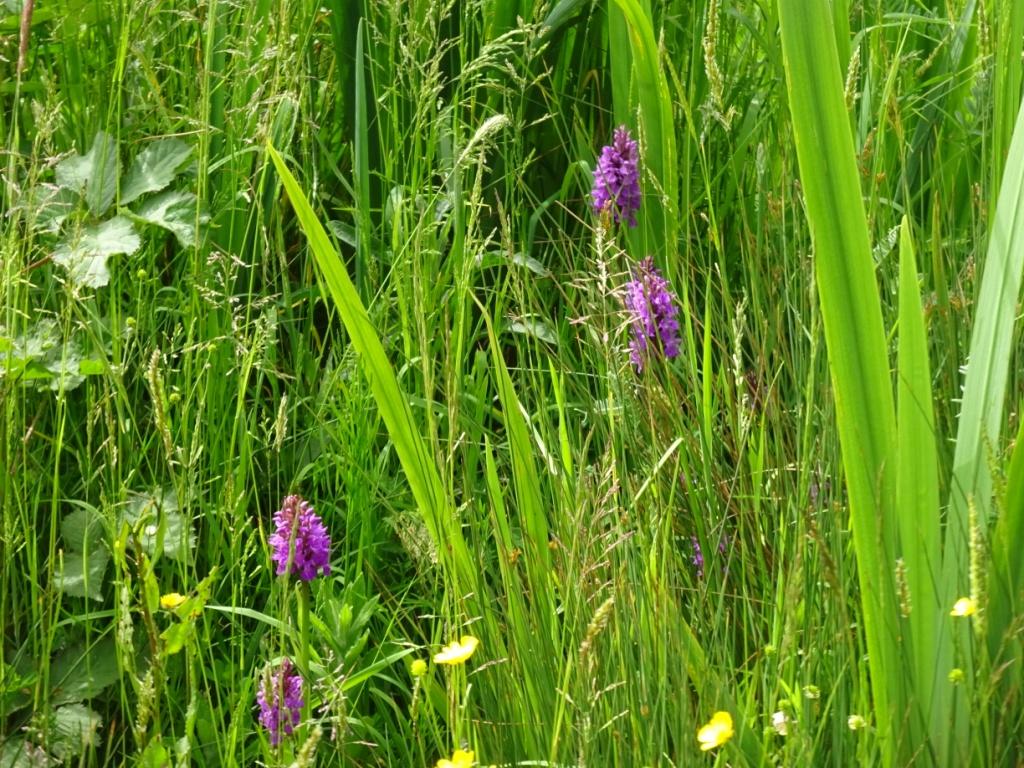
One of the guides, an orchid expert, took us to a see twayblade orchid, which is green and hardly distinguishable from the surrounding grass – how he ever found it is a mystery!
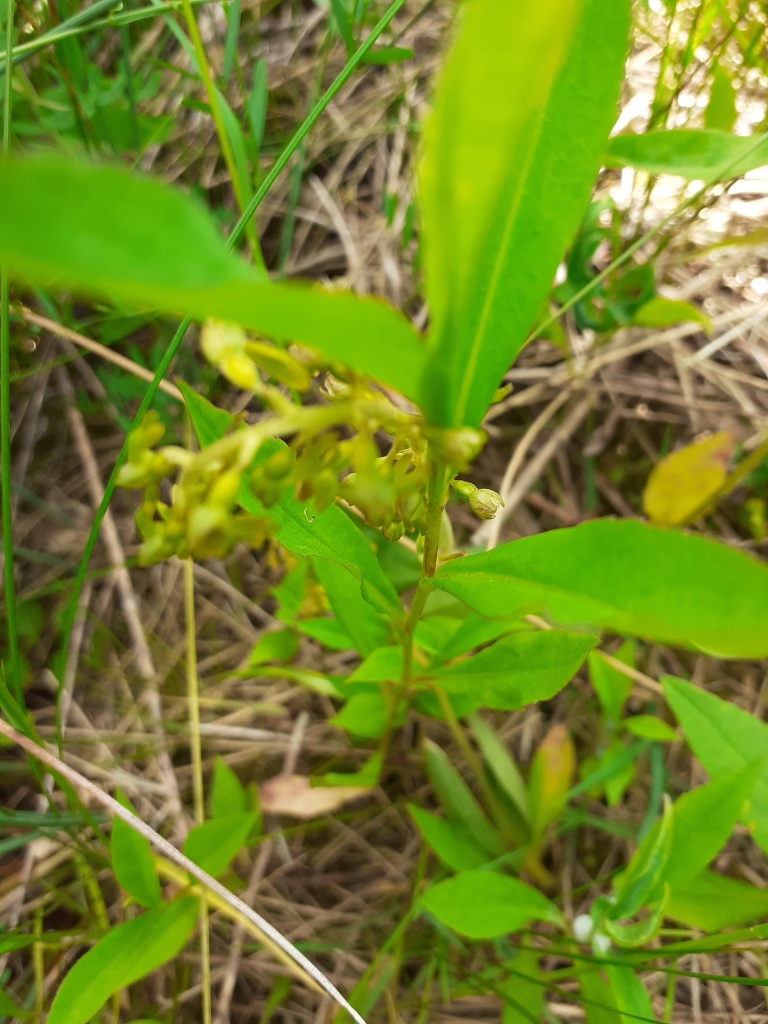
There were moorhens with chicks on the pond, demoiselle damselflies and a large, patrolling carp.
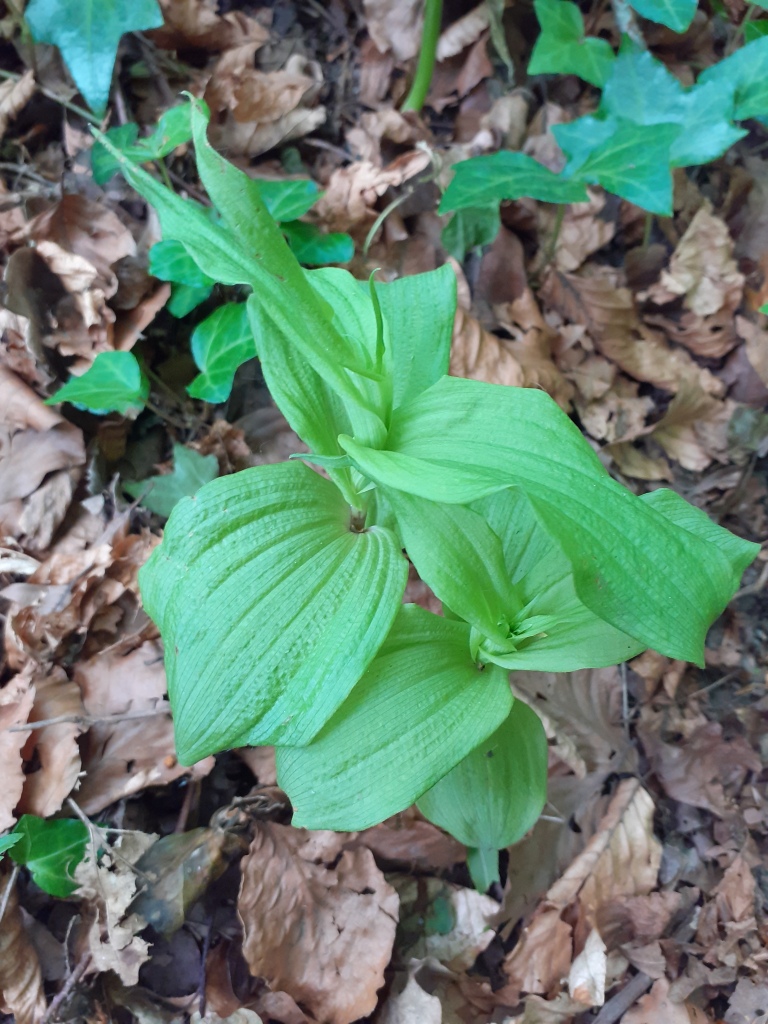
In the woods beyond were several helleborine orchids; these can grow tall (unlike the ones we saw!) and flower from July.
On our return route to the entrance, there was a very large wild rose which had enlisted the aid of two nearby trees to grow so big. The result of the monitoring of 52 dormice boxes, suspended through Covid lockdowns, is anticipated soon.
We had seen all five species of orchid on the visit. Since the reserve opened in 1973, seven species of orchid have been recorded on site, but two have not appeared for some years. 5 out 7 ain’t bad!
Thanks must go to Valerie for organising the visit, and Martin and his fellow volunteer guides for giving up their time.
Steve Monaghan
15th June
Orchid walk, aka Walk to examine conservation aspects of a small game shoot.
The conservation benefits of the management of land for game shooting are vastly underappreciated. The area visited is managed for this purpose rather than for farming, and only includes one footpath across it the remainder being undisturbed, the grass land is largely unmown and unfertilised, and the hedges loosely cut if at all. The wood is unfelled but suffering from ash dieback. There are large undisturbed ponds, the relicts of ancient fishponds.
The wet wood holds breeding woodcock, the coarse hedges many finches including yellow hammers and linnets, and in the Winter fieldfares and redwings are attracted in large numbers to the sloes. Winter seed crops have been planted for the finches which also benefit from spilt game feed. Lack of Winter feed is a known factor affecting finch populations. The marshland holds many snipe in the Winter. The grassland has multiple orchids , less evident this year in the drought, and one specific site holds a thriving colony of great butterfly orchids. The fishponds were very low due to the drought, but there were several Odonata species present. Kites and goshawks hunt the area. Because the shoot is part of a larger area where there is predator control, particularly of foxes, hares are well established, and like the woodcock protected not shot. We put up one only ten yards away giving a wonderful view.
Just imagine the ecological sterility that would result should this magical place be drained and cultivated and the timber sold!
DW