THE KING’S DNA: FROM CAR PARK TO CATHEDRAL, by Dr Rhian Morgan
Because of Covid-19 restrictions, Dr Morgan’s talk had been postponed three or four times in 2021, but, at last, she was welcomed to Cowbridge U3A’s History Group in January 2022 to give her presentation.
Rhian, the Senior Education and Engagement Officer of Wales Gene Park, began with a short history of the War of the Roses, with particular reference to Richard III, who was born in 1452 in Fotheringay Castle. Richard’s father, Richard of York, was killed at the Battle of Wakefield, but his elder brother, Edward, was to become King of England in 1461. Richard was made Duke of Gloucester.
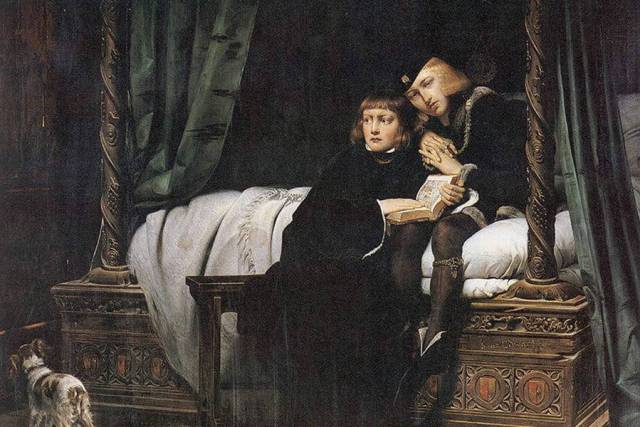
When Edward IV died in 1483, his two young sons were placed under the protection of Richard, their uncle. But before the coronation of the elder boy, as Edward V, he and his brother were declared illegitimate. The Duke of Gloucester ascended the throne as Richard III. The two “Princes in the Tower” disappeared from history, presumed murdered*.
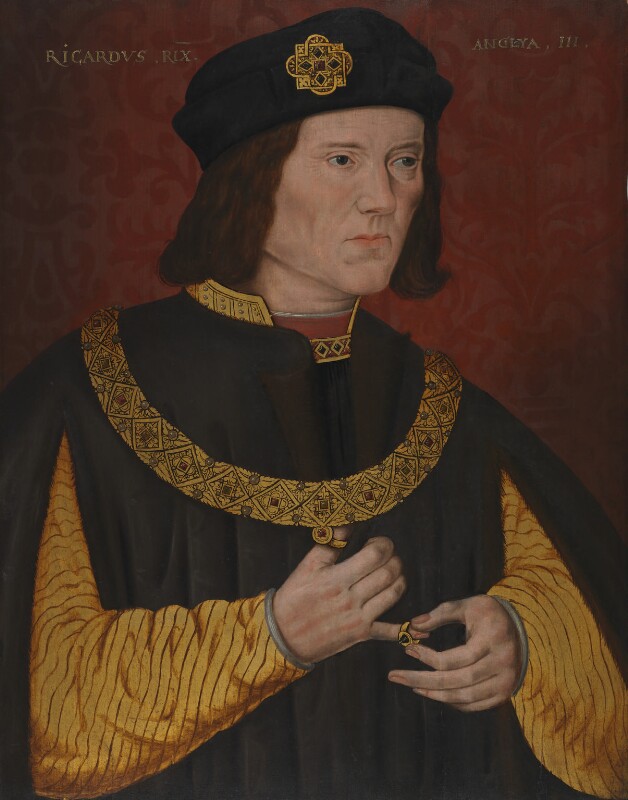
Richard’s reign was unpopular. In 1485, Henry Tudor landed in Wales and, allied with his uncle, Jasper Tudor, marched through Pembrokeshire, recruiting soldiers, in a direct rebellion against the King. Henry's forces defeated Richard's army in a battle near the Leicestershire town of Market Bosworth.
The story is well-known; reputedly, Richard’s horse became trapped in marshy ground and the monarch was brutally slain, making him the last English king to die in battle. Henry Tudor then ascended the throne as Henry VII.
The late king’s body was stripped, slung over a horse and taken back to Leicester, where it was publically displayed as proof of his death. Folklore had it that the corpse was then buried, without ceremony, in the church of the Grey Friars Priory in Leicester. This establishment had been founded in the 13th century and remained in use until the dissolution of the monasteries during the Reformation. It was believed that Richard’s remains had been exhumed and thrown into the river around this time.
The priory site was purchased by an ironmonger, who built a house on it. In 1612, it was reported that a stone monument in the garden bore the inscription “Here lies the body of Richard III, one-time King of England”. In later years more houses and then a school were built on the land. Leicester Council acquired part of the estate and some of their holding became the “Grey Friars car park”.
In 2012, an archaeological excavation was commissioned by the Richard III Society on the site of the car park, with a view, with increasing perceived levels of difficulty, to finding the remains of the Grey Friars Priory, identifying the position of the buildings, locating the church, identifying the choir within the church and, finally, finding the remains of Richard III.
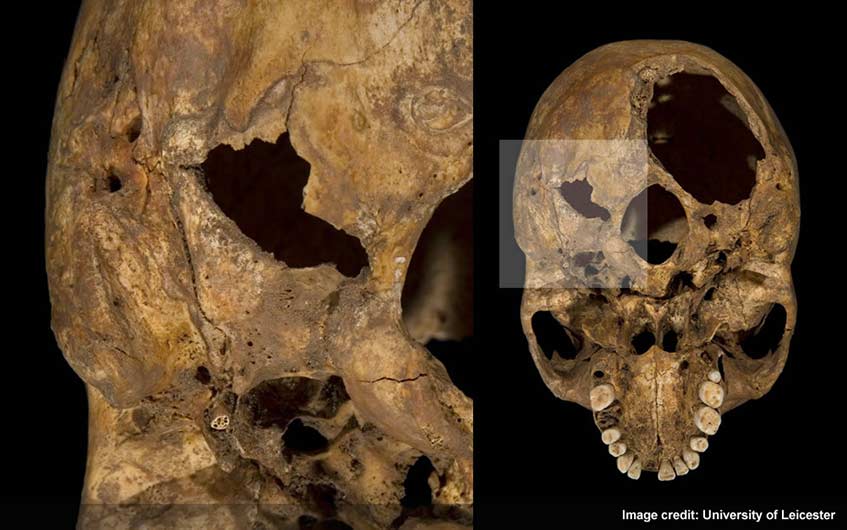
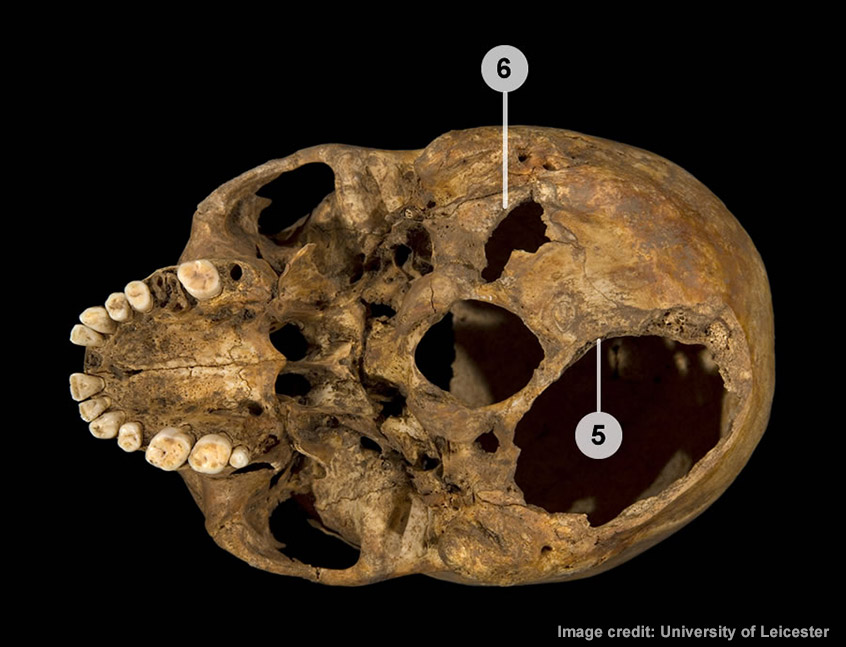
Amazingly, the archaeologists located a grave in the choir which contained a skeleton with a pronounced curvature of the spine and significant injuries on the skull. The feet were missing (probably cut off during the building of foundations in Victorian times) as were some finger bones, but the skeleton was remarkably complete. The grave was too small for the body, so the skeleton was curled over. The position of the hands indicated that they may have still been bound when the corpse was buried.
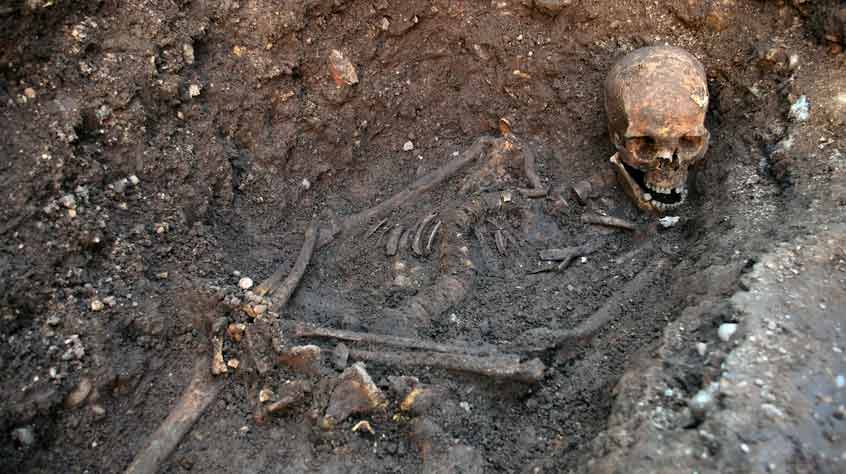
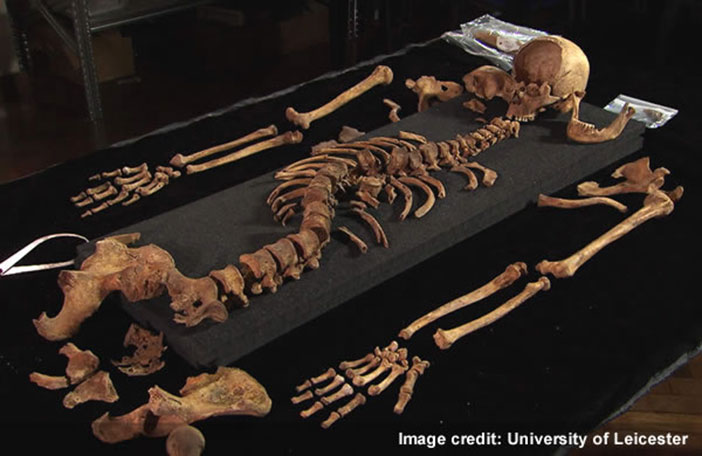
An examination of the bones indicated a slender male individual, about 5’ 8’’ tall, with severe scoliosis, two teeth missing and some wear on the remaining teeth.
Two different laboratories produced similar radiocarbon dating results for the skeleton: 1475-1530.
Stable isotope analysis showed that the individual had eaten a diet high in protein, indicating wealth. Soil samples from the abdomen area of the grave showed the presence of round worms.
The skeleton displayed the signs of 11 injuries inflicted around the time of death (there was no indication of healing), from blade marks on the top of the cranium and lower jaw, to the fatal blows: a large injury to the base of the skull from a large, sharp blade and a jagged hole in the lower left skull. The spine deformity probably developed after the age of 10 – he hadn’t been born with it.
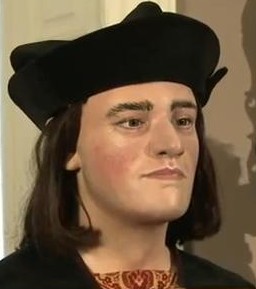
Richard III had no children, so Rhian explained how comparison of the mitochondrial DNA (samples were taken from a femur and a tooth of the skeleton) with that of two matrilineal descendants of his sister Anne showed a match.
Five male descendants through the male line were investigated, but none showed a match (probably because of false paternity issues in the intervening years).
The skeleton unearthed in the Grey Friars church was the right age, it had sustained multiple battle injuries, it exhibited severe scoliosis and it had probably been buried hastily, without shroud or coffin. There was a DNA match through his sister. There were few dissenting voices that this was Richard III.
In March 2015, his body was taken with full ceremony from Leicester to the Bosworth battlefield and the reputed location of his last moments, before a return to the city and re-interment, with Roman Catholic rites, in Leicester Cathedral. Richard’s coffin had been made by one of his descendants, a carpenter by trade.
It is sobering to reflect that, if the foundations of the Victorian out building constructed above the grave had been dug deeper, the burial would have been lost forever; they were just 90mm (3•5 inches) above Richard’s resting place.
An unprecedented number of fulsome compliments about Rhian’s talk have been received, both verbally and by e-mail, from attendees.
A short video clip on the excavation of the grave:

Steve Monaghan
*In 1674, workmen at the Tower of London dug up, from under a staircase, a wooden box containing two small human skeletons. The bones were widely accepted at the time as those of the princes, but this has never been proven. The bones were buried in Westminster Abbey, where they remain.