| Status: | Active, open to new members |
| Coordinator: | |
| When: | Usually on a Monday, roughly once a month except in Winter. |
This is a Regional Group, with members from U3As across South Wales and Severnside. Typical field trips are often on the Glamorgan Heritage Coast, Gower, Pembrokeshire, Y Bannau Brycheiniog, and the occasional quarry.
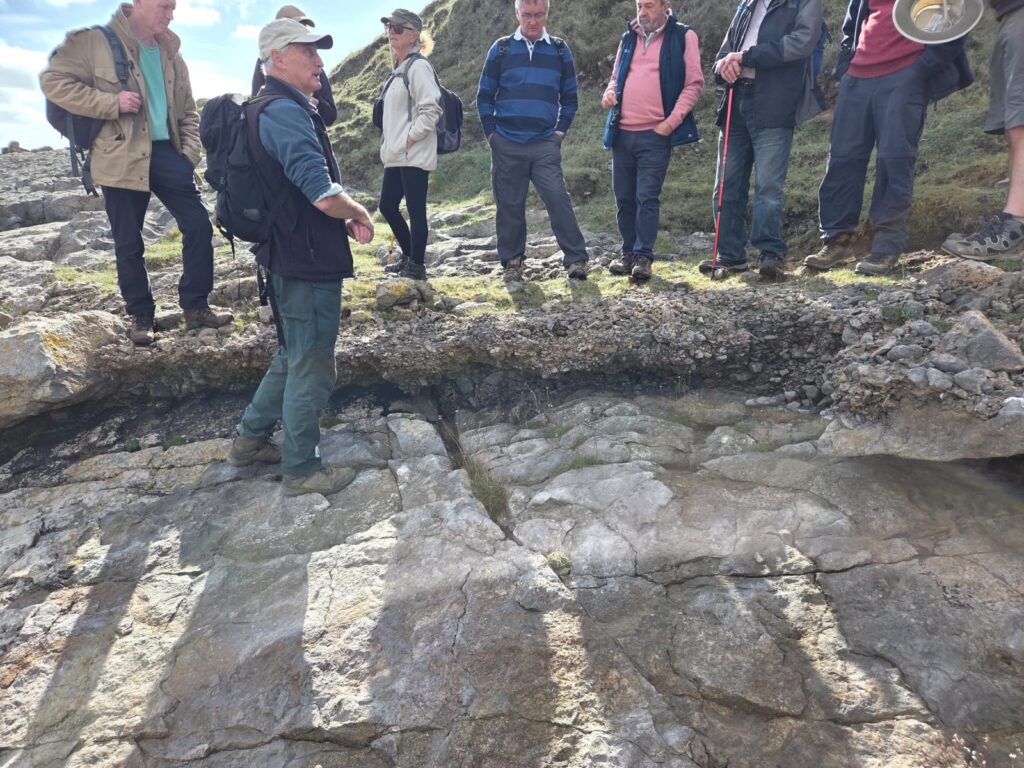
By their very nature, field trips may involve walking on rocky shores , uneven , rough or steep ground, covering around 5 miles in the day.
It is not suitable for those with health or mobility issues.
Contact Teresa Jenkins
Forthcoming events
Geology Group Report 2025.
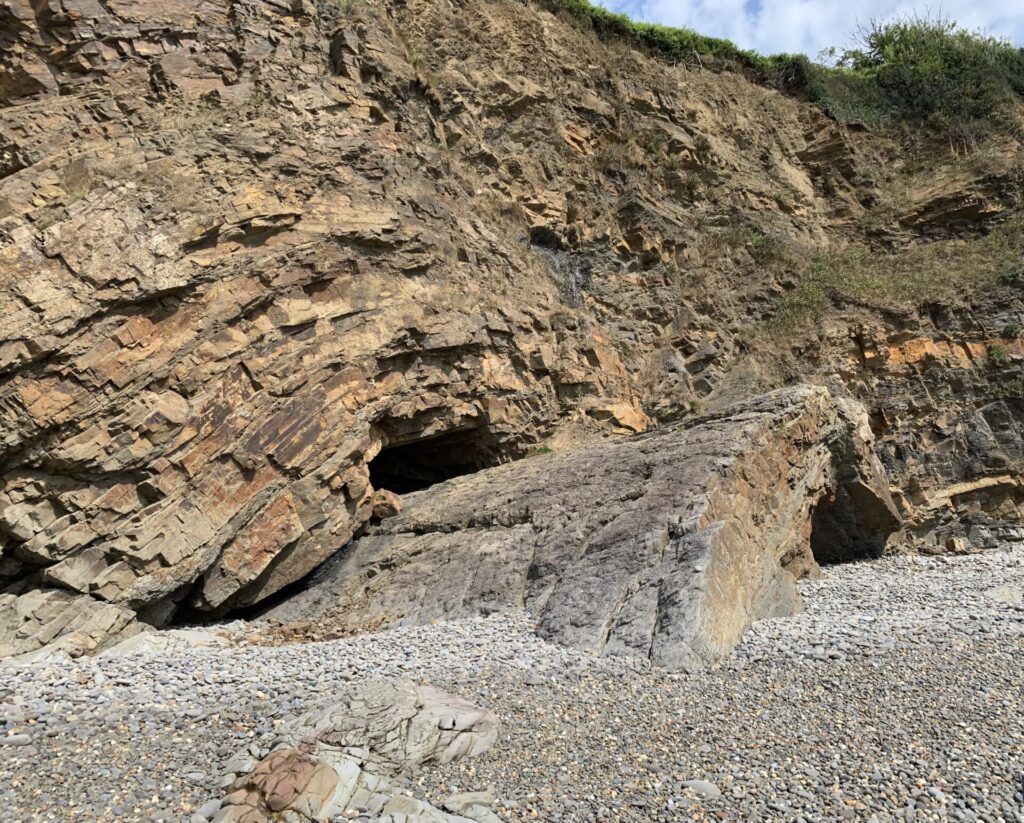
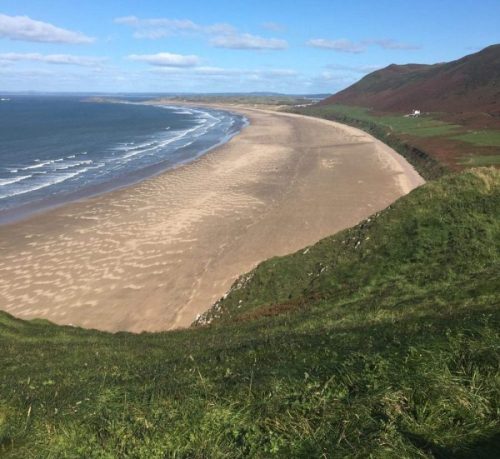
Despite it being more difficult to find leaders for the field trips the group has managed an entertaining Geology programme this year. Starting in April, and led by our own group organiser, Nigel McGaw, the first event was a two-centred trip to Ogmore-by-sea and Rest Bay, Porthcawl, with the aim of showing the differing features and structures in an alluvial fan deposited in an arid environment. Ogmore is near the top of the fan with coarser deposits and Rest Bay is nearer the toe, with finer sediments.
In May we travelled to Saundersfoot, Pembrokeshire, where Sid Howells showed us the Geology which includes typical sedimentary rocks of the Coal Measures with some spectacular folding and faulting from the Variscan Orogeny. In his handout it could be seen that the Geology of this area has a modern day equivalent in the Niger Delta in Mali.
June saw us visiting Carreg Cennen in Carmarthenshire with Geraint Owen. Here we admired the castle situated on a splendid crag of Carboniferous Limestone and observed the effects of the Carreg Cennen disturbance. After lunch, we moved to another site to see karstic features including sink holes, and the resurgence of Llygad Llwchwr.
The trip originally planned for July had to be postponed. Fortunately, one of our members, Elen Statham, stepped up and led a walk from Llanbadoc featuring the Usk Inlier. This Geology Trail, which Elen has written, took us to Silurian mudstone rocks and soon progressed to the rim of the Usk Inlier - a dome of older Silurian rocks surrounded by younger Old Red Sandstone. The walk took us through the Cefn Ila Woodland Trust site. We had our picnic lunch in the shade of an enormous oak tree. Branching out from Geology for a moment we devised a method to measure the circumference of the tree at chest level and applying a formula we looked up later, calculated the approximate age of the tree. We reckoned around 425 years old.
Back to the Geology, within the woodland were rocks formed from a coral reef and packed with crinoids (sea lilies).
The trail takes you within sight of Alfred Russel Wallace’s house, a memorial stone to him and a dedicated bench. Wallace was a contemporary of Charles Darwin and made a huge contribution to the theory of evolution.
In August we travelled back to Pembrokeshire, this time to Wiseman’s Bridge where we had two leaders—Huw Williams and Paul Davies. Again, we noted the Upper Carboniferous coal- bearing sediments which produced high quality anthracite from the 14th century, making Saundersfoot a prominent coal exporting region until it was overshadowed by the South Wales Coalfield.
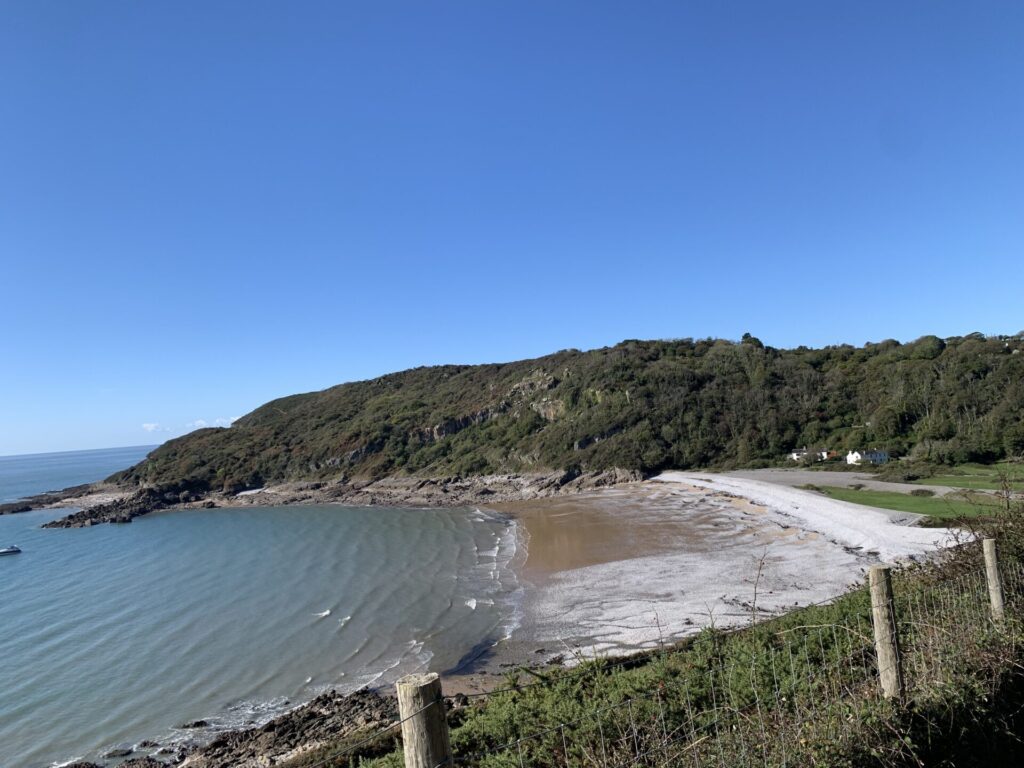
It was a glorious sunny day in September when we went to Pwlldu, Gower, led by Prof Peter Kokelaar. At low tide it was possible to appreciate the storm beach development formed in seven separate sections. We also explored and discussed at length some very unusual rocks. Sometimes you just have to try to think in 3D and then add in a time dimension on top to get some idea of what went on. For example, the unusual rocks are believed to have been formed by glacial debris infilling a pre-existing cave system in the extensive karstic landscape long since eroded away. An added extra were some fossilised bones and teeth ---the remains of a medium sized ancient mammal. The final trip of the season in October, was to Rhossili, under the leadership of Stephen Howe, to see the magnificent solifluction terrace at the base of Rhossili Down(a legacy of the last glaciation about 20,000 years ago) and incidentally noting the National Trust cottage which featured in the recent TV drama The Guest. Moving on, the next stop was at Fall Bay, to observe the huge deposits of Carboniferous Blackrock Limestone, laid down 350 million years ago when Britain was situated 20 degrees south of the equator. The beds are very fossiliferous with the remains of sea creatures which lived in warm shallow seas which lapped over the land at the time. Later, these beds became distorted and eroded by tectonic movements and weathering.
Teresa Jenkins