WHAT DID THE ROMANS DO FOR US?*
Speaker Liz Mayor Liz Mayor of the Classical Education Forum, based at Insole Court in Llandaff, has the special talent of being able to hold an audience’s rapt attention without the aid of a slide show, as Cowbridge u3a History group discovered on her recent visit in September 2022.
Liz’s talk was on how Roman traditions and methods have percolated down through time to our society, without many realising it.
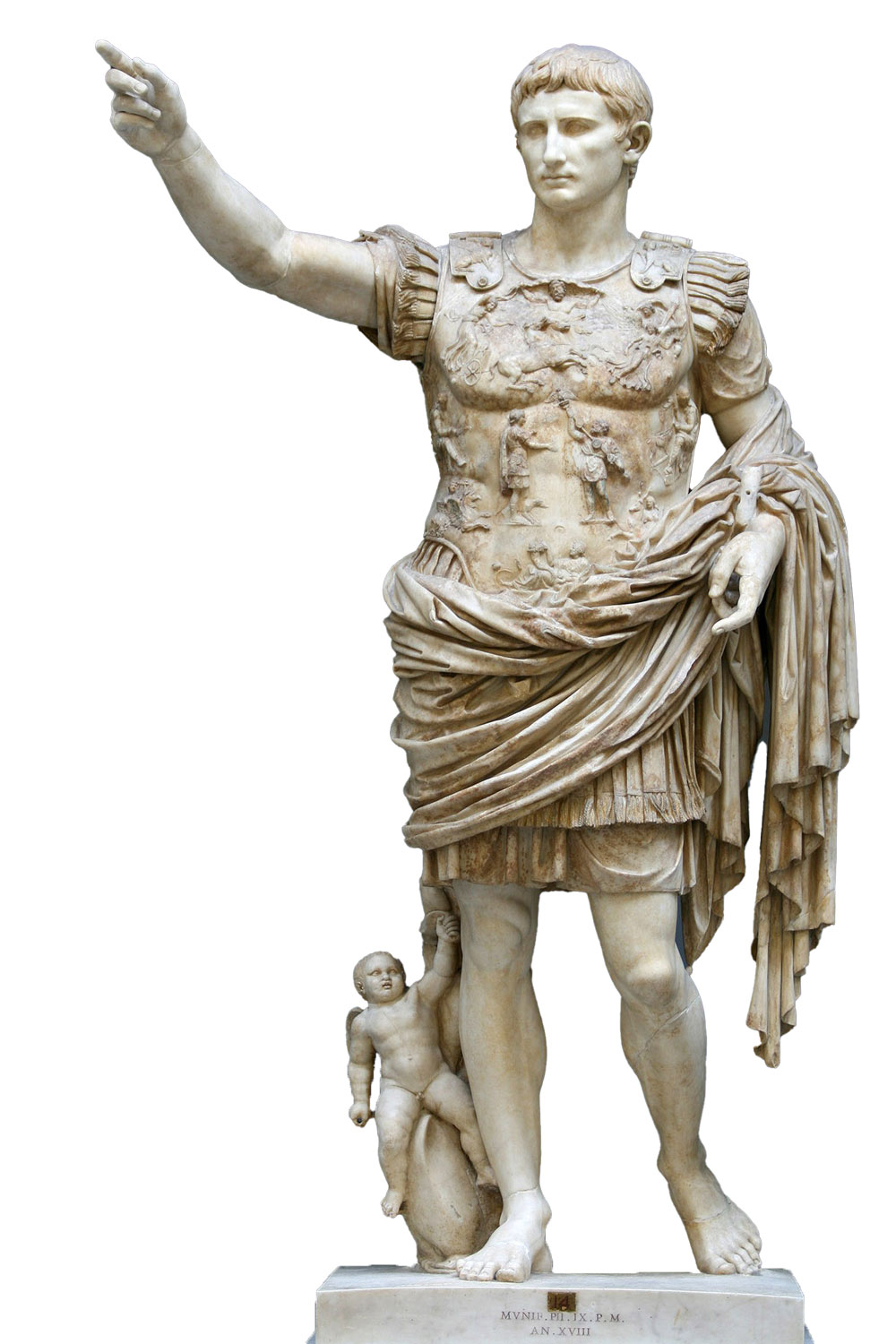
The Emperor Augustus The new king, Charles III, was visiting Llandaff and Cardiff the following day, presenting himself to his people. The Roman emperors were as shrewd about publicity and the need to be seen to be “the right man for the job”. Augustus was used as an example. He was a young man, heir to Julius Caesar, adept at self-marketing, who was able to present himself to the Romans as the leader their vast empire needed. Under his rule, the Roman world was largely free from large-scale conflict for over 40 years.
New emperors ensured that coins were struck showing their image; the man depicted held the power. Our coins, banknotes and stamps will soon portray the new monarch.
Just as a Poet Laureate is appointed now, Augustus had Horace and Virgil to write about the golden age of Rome.
The Romans quickly absorbed good practices from other parts of the empire; the postal service was inherited from the Persians. Letters exist which were sent from Rome to Athens in the 1st century BC. The safe, speedy and cheap delivery of letters did not happen again in the UK after the Romans left until the introduction of the Penny Post in 1840.
We now have forms of identification such as passports and driving licences. Foreigners can apply for citizenship or residential rights. The Roman Empire was huge, but many of its inhabitants were classed as Roman citizens, through being born in a designated “Roman” city (e.g. St Paul of Tarsus), marriage or business. This gave specific rights as well as a sense of identity.
Most emperors were declared to be divinities after their deaths. Charles I lost his head by adhering to the principle of the “divine right of kings” in the face of opposition from Parliament. The British monarch is still the head of the Church of England, a conduit from God.
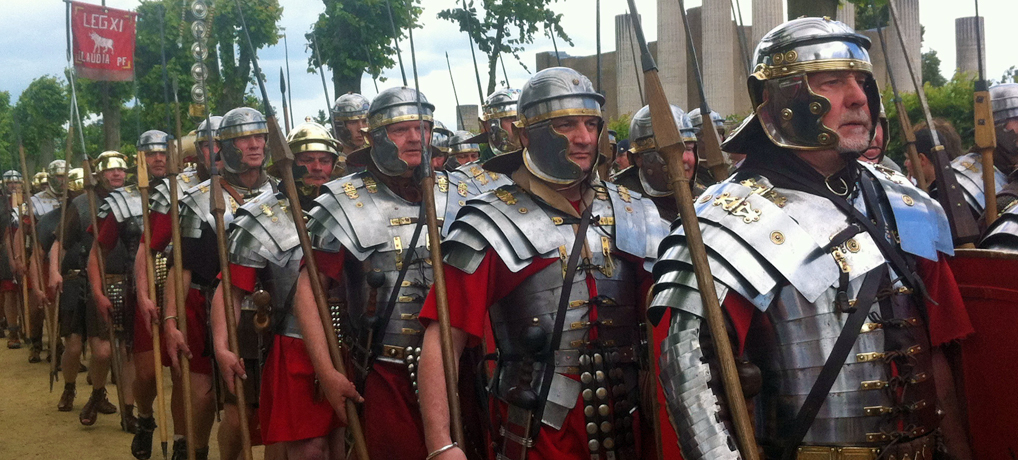
The professional Roman Army The Roman army, the cornerstone of power, was initially formed of citizens of the republican city, but by 100BC the demands of empire required the formation of a professional army. Like today, a career could be forged in the military and specialist skills learnt. The battles of Julius Caesar are still studied at Sandhurst.
The Romans had under floor heating (the hypocaust system) and few will be unaware of the Roman roads in Britain; straight as possible and not surpassed until the days of tarmac. Many major routes still faithfully follow their Roman forebears.
The Romans developed cement that sets underwater, which has been called the most durable building material in human history.
The Romans introduced turnips, peas, garlic, cabbages, celery, onions, leeks, cucumbers, figs, cherries and plums, as well as the grape, and thus created the wine industry in Britain.
The Romans had regular censuses, to determine who owed taxes and how much. Today we still have censuses, as well as PAYE and tax returns.
Finally, there was the statesman Cincinnatus who retired to farm, but was recalled to Rome during a major crisis. Boris Johnson, during his final speech as Prime Minister, compared himself to the Roman – a promise (or threat) of “I’ll be back!” perhaps?
Steve Monaghan
* Those who saw “The Life of Brian” film may remember the following line of dialogue from the scene showing Jewish freedom fighters.
“All right, but apart from the sanitation, the medicine, education, wine, public order, irrigation, roads, a fresh water system, and public health, what have the Romans ever done for us?”